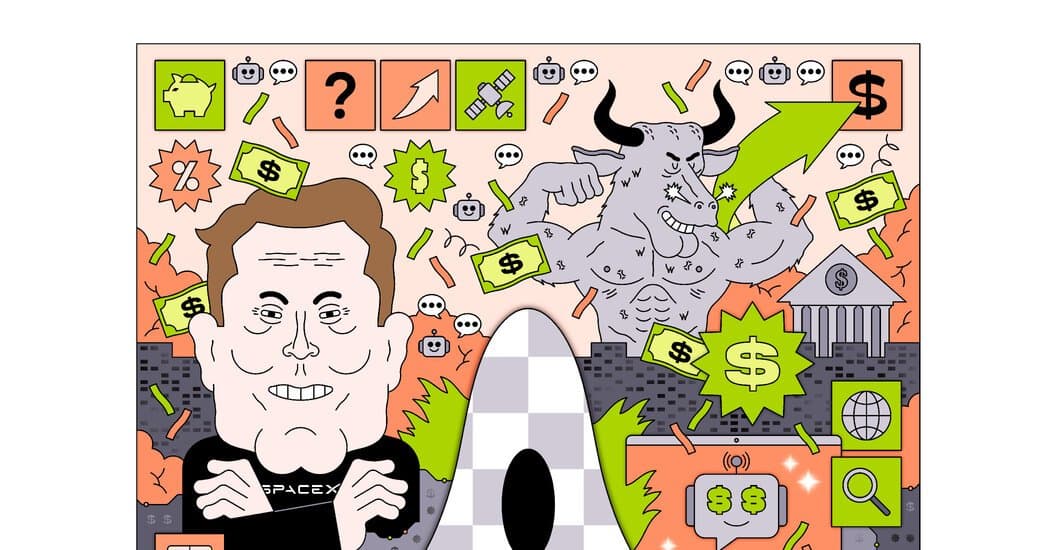
Sources indicate that Anthropic, OpenAI, and SpaceX have initiated early steps toward going public in 2026, potentially marking a watershed moment for the AI industry. However, the path to an IPO for these companies involves complex financial valuations, infrastructure scaling challenges, and regulatory scrutiny that could temper the initial hype.
The prospect of a public market debut for the titans of the artificial intelligence and space sectors has moved from rumor to preliminary action. According to recent reports, Anthropic, OpenAI, and SpaceX have all taken early steps toward an Initial Public Offering (IPO) in 2026. This convergence of potential listings suggests a maturing sector, but the journey from private valuation to public scrutiny is fraught with technical and financial hurdles.
The Financial and Technical Claims
The narrative surrounding these potential IPOs centers on the immense capital required to sustain the current AI boom. For OpenAI and Anthropic, the primary driver is the insatiable demand for compute power. The recent report that OpenAI struck a multibillion-dollar agreement with Cerebras for 750 MW of computing capacity over three years—valued at over $10 billion—illustrates the scale of investment needed. These companies are not just selling software; they are operating hyperscale infrastructure businesses that rival traditional cloud providers in complexity and cost.
For SpaceX, the motivation is likely continued capitalization for its Starship and Starlink ambitions. While the company has historically relied on private funding and government contracts, an IPO could provide the liquidity needed for its Mars colonization goals without diluting existing shareholders excessively.
What Is Actually Happening
It is important to distinguish between "taking steps" and filing an S-1. "Early steps" likely involve selecting investment banks, auditing financials, and preparing for the intense regulatory scrutiny that comes with being a public company.
For AI companies specifically, the "going public" process requires a viable business model that goes beyond burning venture capital. We are seeing a shift in how these companies operate:
- Enterprise Integration: Microsoft has reportedly become one of Anthropic's top clients, spending nearly $500 million annually. This signals that AI models are moving from experimental demos to essential infrastructure for major software ecosystems.
- Consumer Hardware Integration: The report regarding Apple and Qualcomm scrambling to secure glass cloth fiber for chip substrates highlights the physical constraints of the AI boom. The IPO valuations of these companies depend on the supply chain's ability to manufacture the necessary hardware.
Limitations and The Reality Check
While the headlines suggest a "monster listing mania," several limitations could delay or devalue these IPOs:
Profitability vs. Growth: Most AI companies are currently loss-making. OpenAI, despite its revenue, faces massive operational costs. Public markets are currently less forgiving of "growth at all costs" than private markets. The recent volatility in tech IPOs suggests investors are looking for proven unit economics.
Regulatory Headwinds: The investigation by the California Attorney General into xAI regarding non-consensual sexualized images generated by Grok serves as a stark reminder. As AI companies become public entities, they become subject to shareholder lawsuits and intense regulatory oversight regarding content moderation and model safety. This adds a layer of risk that traditional tech IPOs did not face to the same degree.
Infrastructure Bottlenecks: The PJM grid operator trimming its peak demand forecast for 2027 suggests that the energy demands of AI data centers might not materialize as explosively as predicted. If power availability constrains growth, the revenue projections underpinning high IPO valuations could be revised downward.
The Broader Context
The potential IPO of these firms coincides with a broader shift in the technology landscape. We are seeing a move away from the "move fast and break things" era toward a more regulated, infrastructure-heavy reality. The fact that Airbnb recently hired a Meta AI executive as its CTO, and that McKinsey is using its AI tool Lilli to screen candidates, shows that AI is no longer a side project—it is the core business strategy.
However, the market is also pushing back against unchecked AI proliferation. Bandcamp's decision to ban music generated wholly by AI is a consumer-driven correction, signaling that "human-made" may become a premium category. Similarly, the UK government dropping mandatory digital IDs suggests that public trust in centralized tech solutions is fragile.
Conclusion
The potential 2026 IPOs of OpenAI, Anthropic, and SpaceX represent a critical test for the technology sector. It is not merely a liquidity event for early investors, but a validation of the trillions of dollars invested in AI infrastructure. The market will ultimately decide if these companies are the next generation of utility-like monopolies or if they are overvalued on the promise of a technology that is expensive to run and difficult to regulate. The steps have been taken, but the ground remains shaky.
Comments
Please log in or register to join the discussion