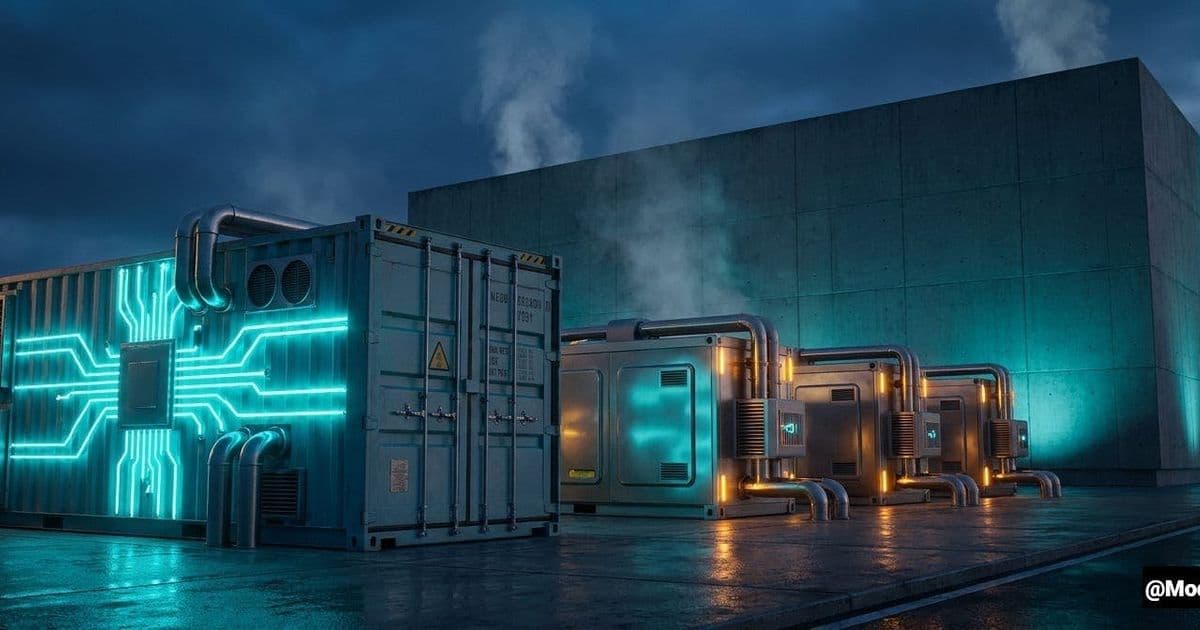
A new opinion series argues that hyperscale AI campuses should be legally barred from plugging their gigawatt loads into municipal grids, and instead made to generate baseload power on-site with small modular reactors and solid-oxide fuel cells. The proposal arrives as Virginia regulators approve a roughly 9% residential rate hike tied directly to data center demand.
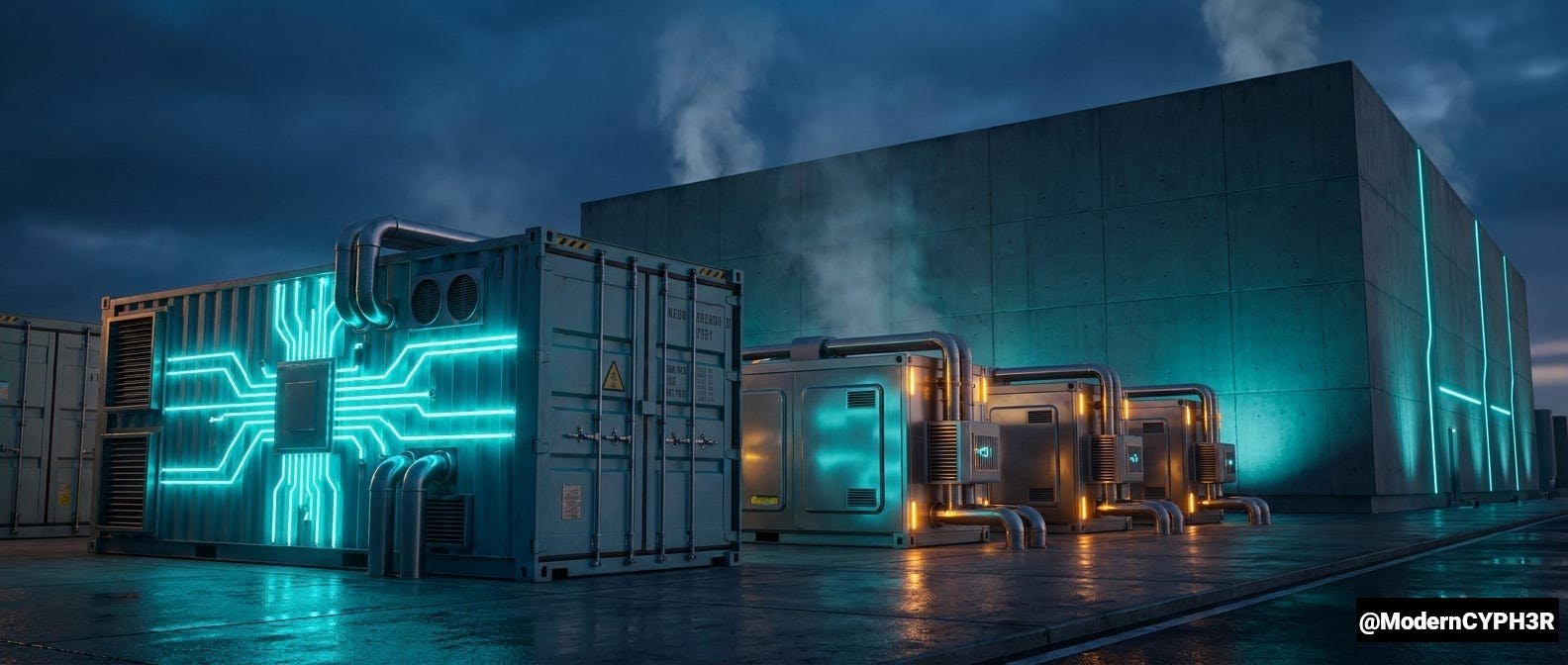
The pitch is blunt: if a trillion-dollar company wants to train its next model, it should generate its own electricity rather than borrowing capacity from the grandmother down the street. That is the core of the "Bring Your Own Power" (BYOP) mandate laid out by ModernCYPH3R in the latest installment of a HackerNoon series dissecting the physical infrastructure behind the AI buildout. The argument lands at a moment when the economics are no longer abstract. The Virginia State Corporation Commission has approved a residential rate structure that adds roughly 9% to household bills, 7.5% beginning January 2026 and another 1.5% in January 2027, and created a new "GS-5" rate class that forces any data center drawing more than 25 megawatts to sign 14-year contracts and pay for 85% of its contracted capacity whether it uses the power or not.
That regulatory move, documented in Docket No. PUR-2025-00058, is the financial backdrop for what the author frames as an engineering failure. A 500-megawatt AI campus draws a flat, continuous load, 24 hours a day, with none of the seasonal ebb the North American grid was designed around. Plugging that kind of industrial demand into transformers built for residential air conditioners is, in his words, a guarantee of localized blackouts.
The diesel problem
The immediate target is the failover strategy sitting behind most server farms in places like Loudoun County: acres of industrial diesel generators. When the local grid struggles under AI training cycles, these facilities fire up diesel fleets to keep their GPUs running, often under emergency air-pollution waivers issued by regulators when systems are stressed.
Beyond the obvious emissions, the piece points to a specific mechanical failure mode called wet stacking, where unburned fuel accumulates in the exhaust because oversized generators spend most of their lives idling. It is a reliability liability dressed up as a backup plan, and the proposal wants it banned outright at the permitting level.
What BYOP would actually require
The mandate rests on two architectural shifts.
Primary power from small modular reactors. The argument is that nuclear is the only baseload source dense and clean enough to run a gigawatt campus continuously. Small modular reactors (SMRs) are factory-assembled rather than built on-site over two decades, and the design case includes the Department of Defense's gas-cooled Project Pele microreactor and NuScale Power's water-cooled module. The author pre-empts the water-consumption objection by noting that Gen-IV gas and liquid-metal designs need zero operational water feedstock, and that even water-cooled SMRs can be paired with dry, radiator-style condensers at a 2 to 5% efficiency penalty. The Department of Energy has experimental microreactor testing slated for 2026, which the piece treats as the readiness milestone that makes the mandate plausible rather than speculative.
Backup power from solid-oxide fuel cells. In place of diesel, the proposal points to Bloom Energy's Energy Servers, modular units roughly the footprint of a parking space that convert natural gas, biogas, or hydrogen to electricity without combustion. Bloom's deployment record already includes Google, FedEx, Yahoo, and eBay, companies that adopted the technology specifically to route around legacy utility constraints. No smog, no vibration, no wet stacking.

The author does not let the clean-energy side off easily either. On-site solar feeding electrolyzers to make green hydrogen still consumes water feedstock, even when the source is desalinated seawater, because splitting the molecule destroys it. The only honest version, he argues, captures the water byproduct through closed-loop exhaust condensers and feeds it back into the electrolyzers. There are, as he puts it, no free lunches in thermodynamics.
The policy lever
The technical case is paired with a zoning fight. Much of the data center buildout in Loudoun County moved through "by-right" approvals, a land-use designation that let developers bypass public hearings and environmental review. That changed on March 18, 2025, when the Loudoun County Board of Supervisors repealed by-right data center development, forcing new facilities to secure a Special Exception with public planning commission votes. The series promises a fourth installment aimed at the legislative playbook, including open letters to the Virginia Governor and the county board.
Whether BYOP is realistic is a fair question. SMRs remain pre-commercial in the United States, Nuclear Regulatory Commission timelines are slow, and the capital expenditure argument cuts both ways for companies already spending tens of billions on compute. The counterpoint the author offers is straightforward: when your market cap sits in the trillions, the cost of generating your own baseload is a rounding error against the bill currently being socialized onto residential ratepayers. The grid was never designed to absorb this load, and the question of who pays to fix that is no longer theoretical in Virginia.
For anyone tracking where AI infrastructure spending collides with public utilities, the through-line is worth watching. The next wave of data center economics may be decided less by chip supply than by who is forced to build a power plant next to the building.
Comments
Please log in or register to join the discussion