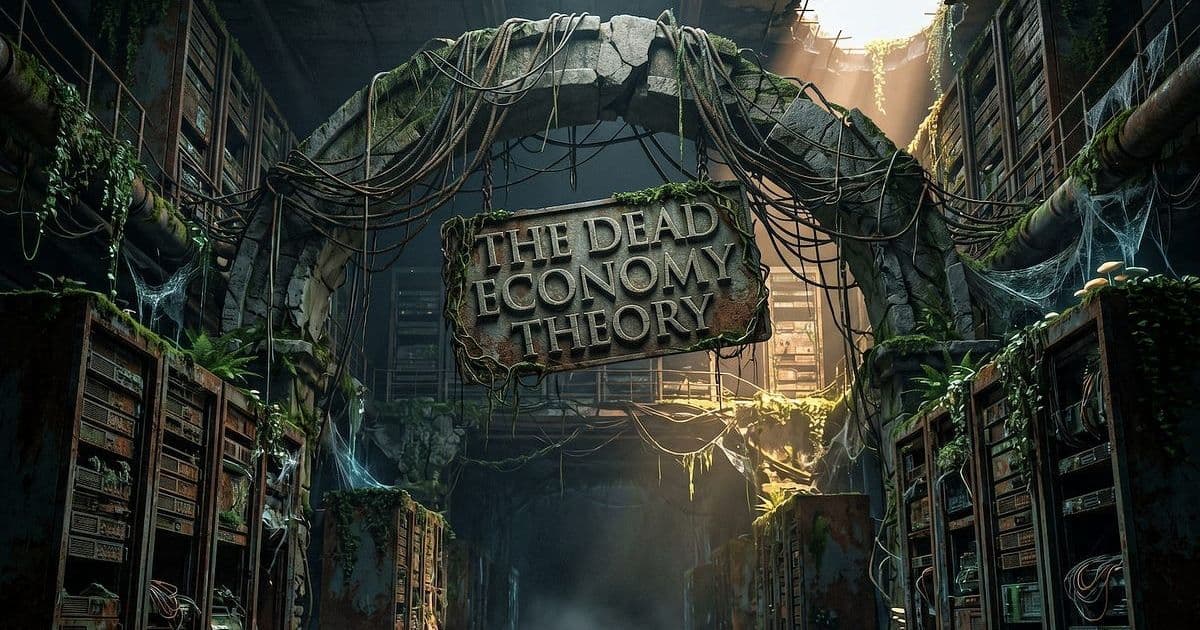
Owen McGrann argues that the rush to replace human labor with AI creates a self‑defeating cycle: firms cut costs, boost margins, and raise stock prices, but the displaced workers shrink consumer demand, eventually harming the very firms that automated. He backs the claim with market data, academic studies, and recent corporate actions, while noting counter‑arguments about historical automation, potential new job categories, and policy ideas such as UBI or a shorter workweek.
A pattern emerging in the tech‑driven economy
The conversation around AI has shifted from what can it do? to how much of the global labor market can it replace? McGrann points out that the valuation of AI firms—OpenAI’s $800 bn, Anthropic’s comparable figure, and the combined multi‑hundred‑billion‑dollar investments of Google DeepMind, Meta AI, and Microsoft—only makes sense if the market they intend to serve is massive enough to absorb those sums. The obvious candidate is the world’s workforce, now being pitched as a set of “cognitive tasks” that AI agents can perform for a fraction of the cost of human labor.
Evidence of the “dead economy” cycle
- Corporate incentives are already aligned with massive layoffs. When Jack Dorsey announced that roughly half of Block’s staff would be replaced by AI‑driven coding agents, the company’s share price jumped 25 % in after‑hours trading. The immediate reward to shareholders is clear: lower payroll, higher margins.
- Academic analysis frames the macro‑dynamic. Economists Brett Hemenway Falk and Gerry Tsoukalas (Wharton) describe the “AI Layoff Trap”: each firm captures the cost savings from automation but only feels a tiny slice of the demand contraction caused by the displaced workers. In a market with many competitors, the collective outcome is a classic prisoners’ dilemma—every firm over‑automates, even though the socially optimal level would be far lower.
- Historical analogues show the speed of disruption. Bharat Ramamurti (former NEC deputy director) compares the AI shock to the “China shock” that reshaped American politics, but compressed into a two‑year window rather than several years. Earlier industrial transitions—horse‑powered labor in the 19th century, the spread of power looms, spreadsheets—took decades to adjust; AI threatens to compress that timeline dramatically.
- Empirical data on productivity gains are modest. Acemoglu’s recent work finds that only about 4.6 % of tasks are currently cost‑effective to automate with AI, with an estimated 0.66 % productivity impact over the next decade. By contrast, many firms report no measurable change in employment or output despite spending a quarter‑trillion dollars on AI tools in 2025.
Counter‑perspectives and alternative readings
- Automation has always created new jobs. David Autor (MIT) notes that roughly 60 % of today’s occupations didn’t exist in 1940. Proponents argue that AI will spawn roles we cannot yet imagine—AI‑system auditors, prompt engineers, and new service sectors built around AI‑enhanced creativity.
- Policy levers can soften the blow. Proposals such as a universal basic income, a 32‑hour workweek, or a public wealth fund (outlined in OpenAI’s “Industrial Policy for the Intelligence Age” white paper) aim to decouple income from employment and preserve demand.
- The timeline may be overstated. Some analysts, citing McKinsey’s 0.5‑3.5 % annual productivity forecasts, suggest that the market will adapt gradually, allowing time for retraining programs and sector‑specific upskilling.
- AI can augment rather than replace. The “copilot” narrative emphasizes that AI tools can handle repetitive sub‑tasks, freeing professionals to focus on higher‑order problem‑solving. If firms adopt this model, the net labor reduction could be modest, preserving a sizable consumer base.
Where the debate converges
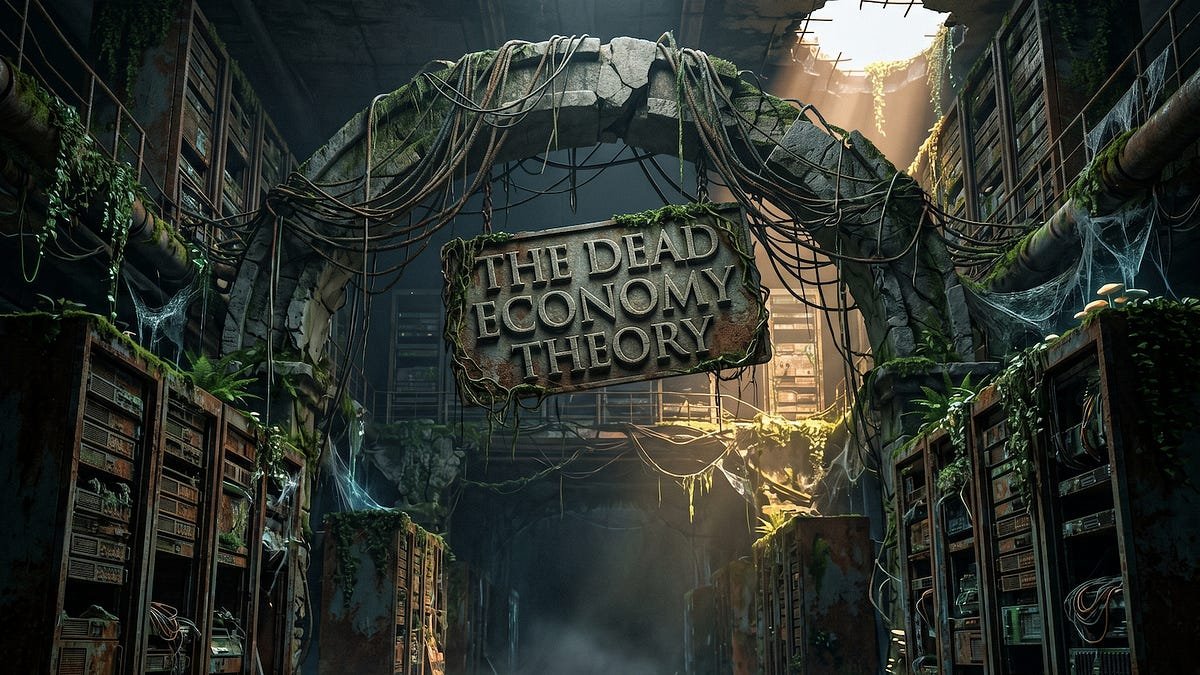
Both sides agree that AI will reshape work, but they diverge on how quickly and with what net effect on aggregate demand. The “dead economy” thesis warns that unchecked, profit‑driven automation can erode the very market that sustains corporate growth, leading to a feedback loop of layoffs, reduced spending, and stalled revenue. Optimists counter that historical precedents, policy interventions, and the emergence of entirely new industries will absorb displaced workers and keep demand alive.
What to watch next
- Regulatory responses. Antitrust actions targeting AI‑driven market concentration, and tax proposals that treat automated labor as a taxable input, could alter the profit calculus for firms.
- Corporate governance shifts. If companies like Anthropic or OpenAI begin to fund political candidates who champion redistribution, the gap between public rhetoric and private action may narrow.
- Labor‑market data. Real‑time tracking of employment trends in sectors most exposed to AI (finance, law, radiology, software development) will reveal whether the “AI Layoff Trap” materializes or remains a theoretical concern.
The core question remains: can a capitalist system that rewards short‑term margin expansion accommodate a future where the majority of cognitive labor is cheaply automated, or will the resulting demand collapse force a re‑thinking of how value is created and shared?
Comments
Please log in or register to join the discussion