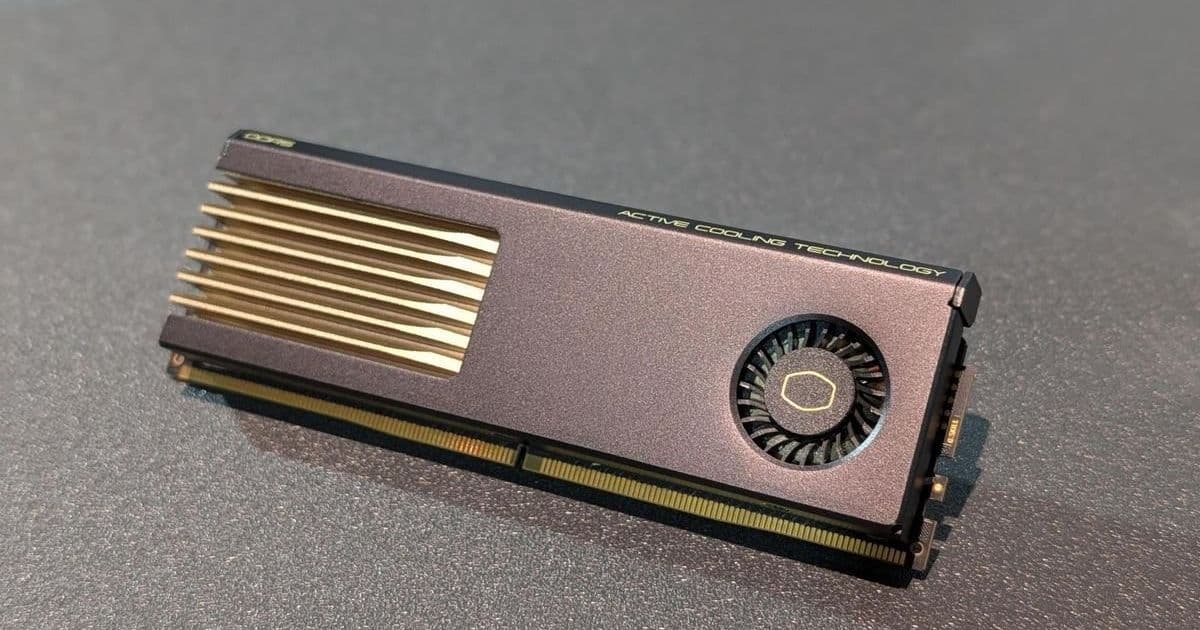
Cooler Master teams with G‑Skill to launch MasterDIMM, a DDR5 memory kit that integrates a blower‑style fan into a large copper heatsink. The design promises up to 15 °C temperature reduction, speeds of 6 000 MT/s (EXPO) to 8 400 MT/s (XMP 3.0), and configurations up to 128 GB. The product will debut at Computex 2026, raising questions about motherboard clearance, power draw, and pricing in an already expensive DDR5 market.
Announcement
Cooler Master and G‑Skill have announced MasterDIMM, a high‑end DDR5 memory family that adds an active cooling solution directly onto the DIMM module. The kits will be showcased at Computex 2026, and the companies say the integrated fan can cut module temperature by up to 15 °C compared with passive‑cooled DDR5 sticks. The product targets enthusiasts building “next‑gen” workstations or gaming rigs that push memory bandwidth and latency limits.
Technical specifications
| Feature | Detail |
|---|---|
| Memory chips | G‑Skill Trident Z5 series, 1 Gb per chip |
| Capacity options | 32 GB (2 × 16 GB), 64 GB (2 × 32 GB), 128 GB (2 × 64 GB) |
| Speed range | 6 000 MT/s @ CL26 (AMD EXPO) – 8 400 MT/s @ CL38 (Intel XMP 3.0) |
| Voltage | 1.35 V (standard), 1.40 V (overclocked profiles) |
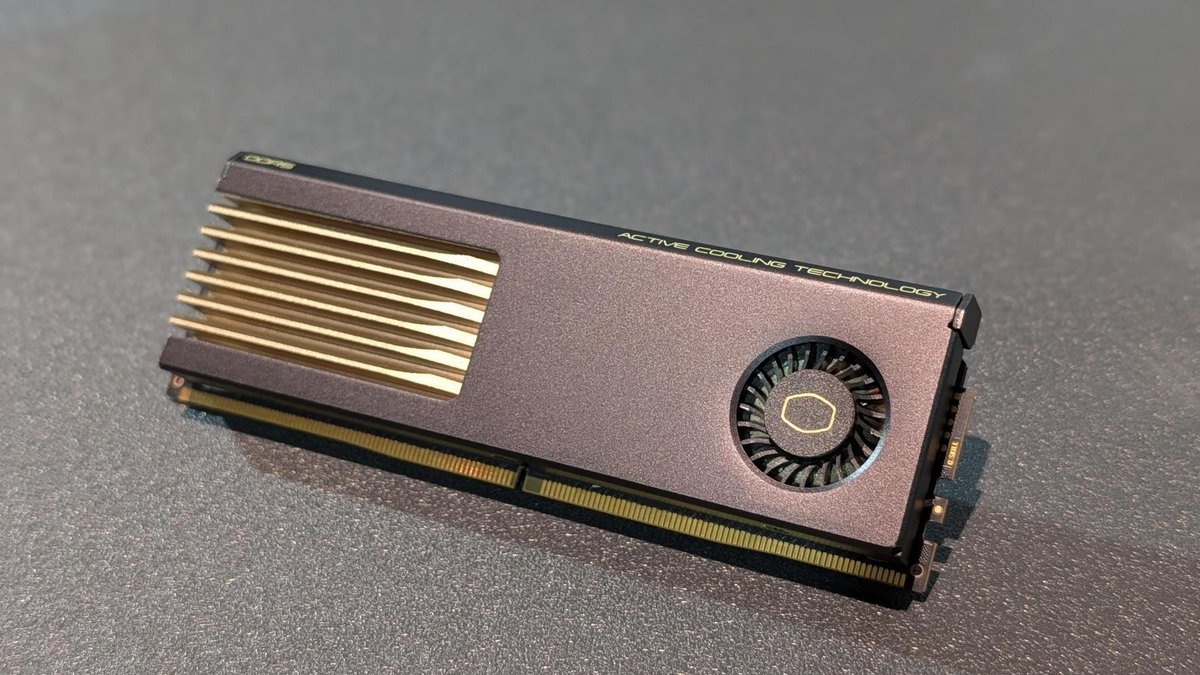
| Cooling solution | 30 mm × 30 mm copper heat‑pipe array with a 30 mm centrifugal fan, rated at 35 dBA |
| Dimensions | 147 mm × 38 mm × 5 mm (approx.) – ~5 mm taller than a typical DDR5 DIMM |
| RGB | Dual‑strip addressable LEDs, configurable via G‑Skill’s AORUS Engine |
The fan is a blower‑type unit that exhausts hot air toward the rear of the motherboard, mirroring the airflow pattern used on many graphics cards. At 35 dBA the noise level is comparable to a quiet office, and the fan’s PWM control is tied to the module’s temperature sensor. In preliminary thermal tests, the active cooler kept the hottest DRAM chip at 68 °C under a 100 W memory load, versus 83 °C on a comparable passive‑cooled 8 400 MT/s kit.
Performance impact
- Latency – The added thermal headroom allows the 8 400 MT/s profile to sustain CL38 timings without throttling, a 5 % latency improvement over the same speed on a passive module that would drop to CL40 under load.
- Power draw – The fan consumes roughly 0.6 W at full speed, adding a negligible load to the system’s total power budget but requiring a modest increase in the motherboard’s VRM headroom for stable operation.
- Form factor – The extra 5 mm height may conflict with low‑profile CPU coolers or dense VRM heatsinks. Users should verify clearance on the motherboard’s DIMM slots and adjacent components.
Market implications
- Pricing pressure – DDR5 kits already sit above $150 for 32 GB 6 000 MT/s modules. The added fan, copper heat‑pipe, and dual‑RGB system will likely push MasterDIMM prices into the $300‑$400 range for 64 GB kits, positioning them alongside high‑end graphics cards rather than mainstream memory.
- Supply chain considerations – Both Cooler Master and G‑Skill source copper heat‑pipes from Taiwan and fan assemblies from mainland China. Current logistics bottlenecks in the Asia‑Pacific region could delay volume production, especially given the need for precise fan‑to‑heatsink integration.
- Competitive response – Intel’s upcoming Xe‑on S series and AMD’s Ryzen 9000 line both advertise higher memory bandwidth ceilings. If MasterDIMM delivers the claimed thermal advantage, OEMs may adopt it for workstation‑grade platforms where sustained high‑speed memory is critical for AI inference or scientific workloads.
- Adoption hurdles – The larger DIMM profile may limit compatibility with compact builds and some high‑density server motherboards. Additionally, the modest 35 dBA fan noise, while low, could be a concern for silent‑PC enthusiasts who currently rely on massive passive heatsinks.
Outlook
If the thermal claims hold up in independent testing, MasterDIMM could become the reference solution for users who need to run DDR5 at the upper edge of the speed envelope without risking thermal throttling. The product will likely carve out a niche among overclockers, content creators, and AI‑focused workstations that can justify the premium. However, the combination of higher cost, potential clearance issues, and ongoing supply‑chain volatility means the mainstream market will probably continue to favor conventional passive‑cooled DDR5 for the next 12‑18 months.
Stay tuned for detailed benchmark results after Computex 2026, when the kits will be available for hands‑on testing.
Comments
Please log in or register to join the discussion