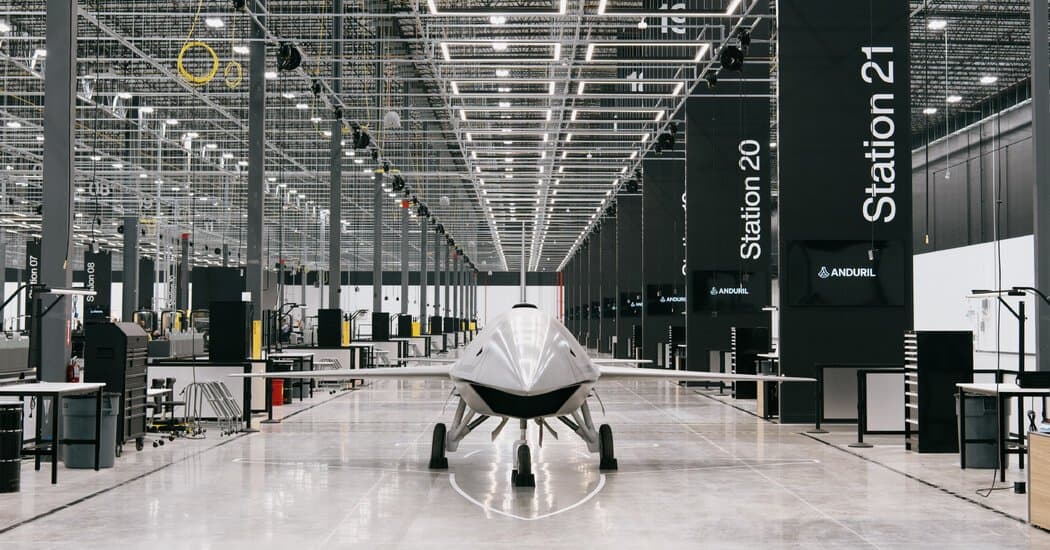
A New York Times report examines the escalating competition between major powers to develop AI-backed autonomous weapons and defense systems, raising urgent questions about the future of warfare and global security.
The world's superpowers are engaged in an escalating technological arms race that could fundamentally reshape the nature of warfare and global security. According to a comprehensive report by the New York Times, the United States, China, Russia, and other nations are rapidly advancing their development of artificial intelligence-backed autonomous weapons and military systems, creating a new frontier of strategic competition that experts warn could have profound consequences.
The Scale of the Competition
The AI arms race represents a dramatic shift in military technology development. Unlike traditional weapons systems that rely on human operators, AI-powered autonomous systems can process information, make decisions, and execute actions at speeds and scales far beyond human capabilities. This technological leap is driving unprecedented investment and research across multiple nations.
China has emerged as a particularly aggressive competitor in this space. The country has announced ambitious plans to become the world's primary AI innovation center by 2030, with military applications receiving significant attention and funding. Chinese researchers and military strategists view AI as a "leapfrog technology" that could help overcome traditional U.S. military advantages.
The United States, while maintaining technological leadership in many AI domains, faces challenges in keeping pace with the rapid development cycles enabled by AI itself. The Pentagon has launched several initiatives, including the Joint Artificial Intelligence Center, to accelerate AI integration across military operations. However, bureaucratic hurdles and ethical concerns have sometimes slowed deployment compared to commercial sector advancements.
Russia, under President Vladimir Putin's leadership, has declared AI development a national priority, with Putin famously stating that whoever becomes the leader in AI "will become the ruler of the world." Russian military doctrine emphasizes the integration of AI into existing weapon systems and the development of new autonomous platforms.
The Technology Race
At the heart of this competition are several key technological domains:
Autonomous Weapon Systems: These range from drones that can independently identify and engage targets to ground vehicles capable of navigating complex terrain without human intervention. The speed and precision of these systems far exceed human-operated alternatives.
AI-Powered Surveillance and Intelligence: Advanced computer vision and data analysis capabilities are being deployed for real-time monitoring of potential threats, with some systems capable of processing vast amounts of sensor data to identify patterns invisible to human analysts.
Cyber Warfare Capabilities: AI is being used to both defend against and launch sophisticated cyberattacks, with machine learning algorithms capable of identifying vulnerabilities and crafting targeted exploits at unprecedented speeds.
Decision Support Systems: Military command structures are being augmented with AI systems that can analyze battlefield conditions, predict enemy movements, and recommend tactical responses in real-time.
The Ethical and Strategic Implications
The rapid advancement of AI weapons technology has sparked intense debate among military strategists, ethicists, and policymakers. Several critical concerns have emerged:
Autonomous Decision-Making: The prospect of machines making life-or-death decisions without human oversight raises fundamental questions about accountability and the laws of war. Current international law is largely based on human decision-making frameworks that may not adequately address AI-driven warfare.
Escalation Dynamics: AI systems can process information and react at speeds that could compress decision-making timelines, potentially leading to rapid escalation in crisis situations. The speed of AI-driven warfare could outpace human ability to de-escalate conflicts.
Proliferation Risks: As AI technology becomes more accessible, there are concerns about its potential acquisition by non-state actors, terrorist organizations, or rogue states, potentially democratizing access to advanced military capabilities.
Strategic Stability: The introduction of AI weapons could undermine traditional deterrence strategies based on mutually assured destruction, as autonomous systems might be perceived as more reliable or less vulnerable to counterforce measures.
International Response and Regulation
Efforts to regulate or ban autonomous weapons have gained momentum in recent years. The Campaign to Stop Killer Robots, a coalition of NGOs, has been advocating for a preemptive ban on fully autonomous weapons. However, major military powers have resisted such restrictions, arguing that they need to maintain technological parity with potential adversaries.
The United Nations has established a Group of Governmental Experts on Lethal Autonomous Weapons Systems to discuss potential governance frameworks, but progress has been slow due to disagreements among member states about definitions and scope.
Some nations have taken unilateral steps. For example, the United States has adopted a policy requiring "appropriate levels of human judgment" in the use of nuclear weapons, though the interpretation of this requirement remains somewhat ambiguous.
The Commercial Connection
The AI arms race is intimately connected to commercial technology development. Many of the advances driving military AI capabilities originate in the private sector, particularly in companies like Google, Microsoft, Amazon, and various Chinese tech giants. This dual-use nature of AI technology creates both opportunities and challenges for military applications.
Defense contractors are increasingly partnering with tech companies to accelerate AI integration, while also facing pressure from employees concerned about the ethical implications of military applications. Google's decision to withdraw from Project Maven, a Pentagon initiative to use AI for analyzing drone footage, highlighted the tensions between commercial AI development and military applications.
Looking Ahead
The AI arms race shows no signs of slowing. As nations continue to invest heavily in these technologies, several trends are likely to shape the future landscape:
Increased Autonomy: Systems will likely become more autonomous over time, with human oversight potentially diminishing as confidence in AI capabilities grows.
AI vs. AI Warfare: As both sides deploy AI systems, warfare may increasingly become a contest between competing AI algorithms, with humans playing a supervisory rather than direct control role.
New Strategic Doctrines: Military strategies will need to evolve to account for AI capabilities, potentially leading to new forms of deterrence and conflict management.
International Competition Beyond Military: The AI arms race is part of a broader technological competition that includes economic, scientific, and diplomatic dimensions, with military applications serving as both a driver and a consequence of broader technological rivalry.
As the New York Times report concludes, the world is entering uncharted territory where the pace of technological change may outstrip the ability of international institutions and ethical frameworks to keep pace. The decisions made in the coming years about how to develop and deploy AI weapons could have consequences that reverberate for generations, making this one of the most critical technological and strategic challenges of our time.
Comments
Please log in or register to join the discussion