
Mark Seemann demonstrates how the Visitor design pattern is fundamentally equivalent to sum types (discriminated unions), revealing deep connections between functional and object-oriented programming paradigms through step-by-step refactoring.
The Core Equivalence: Algebraic Foundations in Practical Patterns
Mark Seemann's exploration begins with a foundational insight: static type systems enable developers to make illegal states unrepresentable, a principle championed in functional languages like F# and Haskell through algebraic data types. While product types (combinations of data) exist across most languages, sum types (mutually exclusive alternatives) remain conspicuously absent in mainstream object-oriented languages like C# and Java. This gap, Seemann argues, creates preventable design weaknesses. His thesis reveals that the Visitor pattern—a staple of object-oriented design—is structurally isomorphic to sum types, providing equivalent guarantees through disciplined implementation.
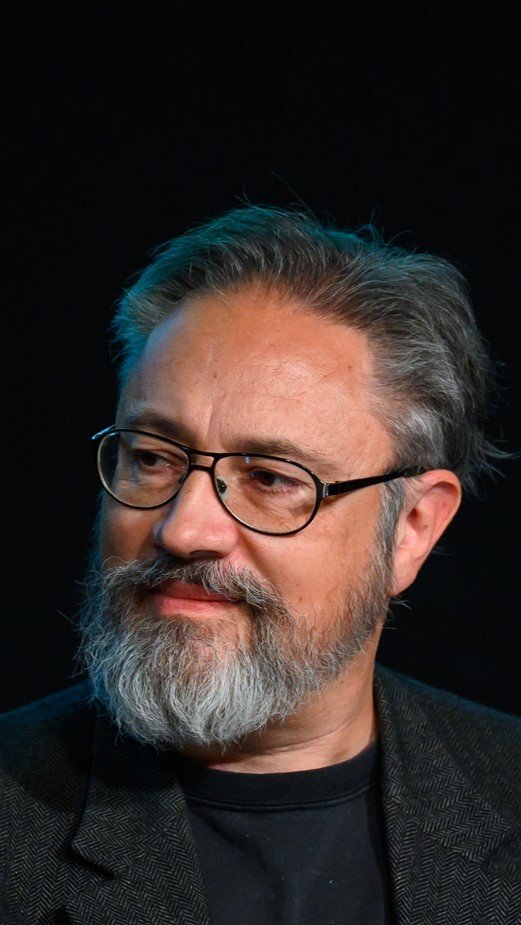 Mark Seemann, author of the analysis. Photo by Nicu Cherciu.
From Church Encoding to Visitor: A Refactoring Journey
The article meticulously demonstrates this equivalence through refactoring:
- Church-Encoded Sum Types: Starting with an F# discriminated union (
PaymentType), Seemann shows its Church-encoded C# counterpart using anIPaymentTypeinterface with aMatchmethod requiring handlers for all cases. - Parameter Object Transformation: By consolidating the
Matchmethod's function delegates into a single parameter object (PaymentTypeParameters<T>), the design shifts toward object-oriented idioms. - Interface Refactoring: The parameter object evolves into an interface (
IPaymentTypeParameters<T>), replacing delegates with explicit methods. - Visitor Emergence: Final renaming (
Accept/Visitmethods) crystallizes the Visitor pattern, now semantically identical to the original sum type.
Each step preserves isomorphism—transformations are reversible without loss of expressiveness. The complete code illustrates this bidirectional mapping.
Implications: Beyond Pattern Equivalence
This equivalence has profound implications:
- Design Rigor in OOP: Developers can enforce exhaustive case handling in OO languages, mitigating runtime errors. The Visitor pattern becomes a vehicle for algebraic constraints.
- Paradigm Fluidity: The refactoring chain demonstrates how functional concepts (sum types) manifest naturally within OO systems when guided by mathematical principles.
- Practical Trade-offs: While F# sum types achieve this in fewer lines, the Visitor offers a viable path for legacy systems. As Seemann notes: "If caught in an object-oriented code base, it's still possible to model a domain with algebraic data types."
Counter-Perspectives and Limitations
Despite theoretical equivalence, pragmatic differences surface:
- Verbosity: Visitor implementations require auxiliary classes/interfaces (e.g.,
PaymentTypeToJsonVisitor), contrasting with F#'s declarative brevity. - Cognitive Load: The Visitor's indirection obscures intent compared to explicit union cases, potentially hindering readability.
- State Representation: As commenter Oskar Gewalli notes, patterns like Entity-Component-System emerge from memory constraints—Visitor's form may reflect historical language limitations.
Conclusion: Patterns as Principled Abstractions
Seemann's analysis elevates design patterns beyond rote implementation to mathematical foundations. By revealing Visitor as sum types in disguise, he empowers developers to borrow functional rigor within OO contexts. While syntactic preferences remain, the deeper insight is universal: type-driven design transcends paradigms. Future explorations (like his follow-up on Chain of Responsibility) promise further unification of pattern theory and category theory.
Comments
Please log in or register to join the discussion