Qt Creator 19 introduces significant enhancements including a Minimap feature, improved remote development capabilities, and a built-in Model Context Protocol server for AI/LLM integration, expanding its position in the cross-platform development landscape.
Qt developers have released Qt Creator 19, marking a significant evolution in this cross-platform integrated development environment. The new version introduces several substantial features that address modern development challenges while maintaining Qt's commitment to multi-platform support and developer productivity.
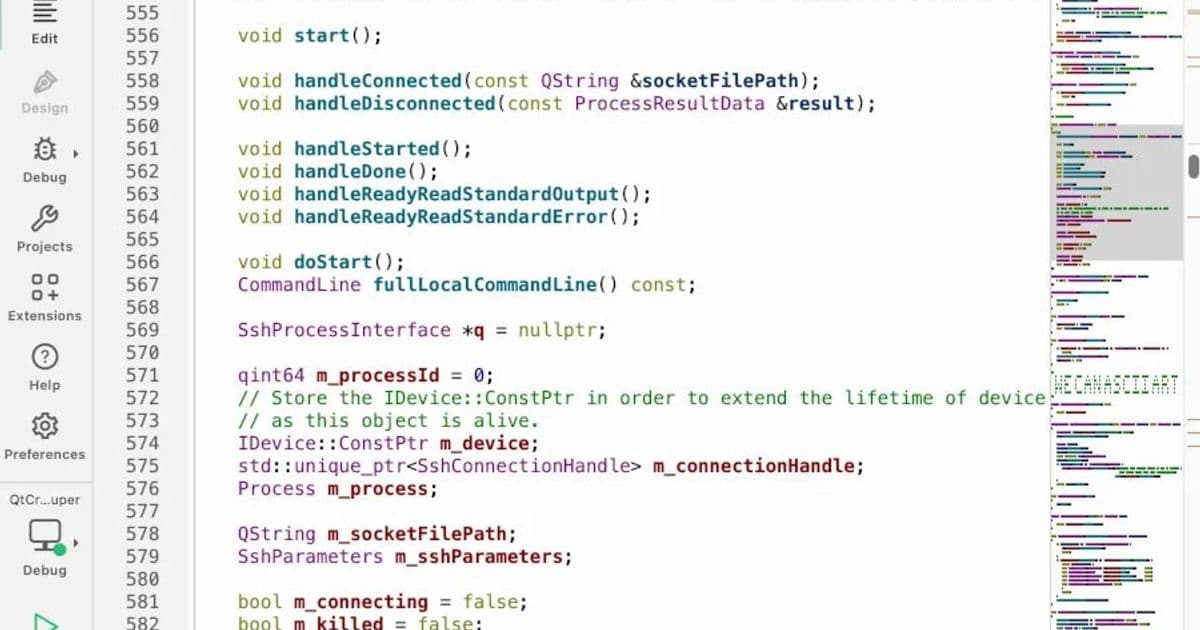
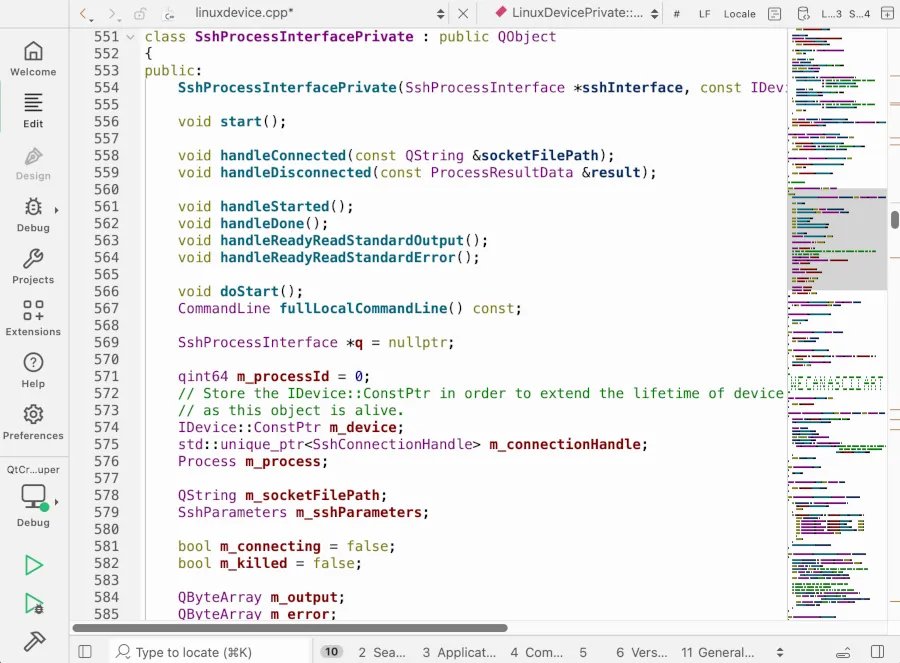
The most visually striking addition is the optional "Minimap" feature, which provides developers with a simplified overview of document contents while scrolling. This feature, increasingly common in modern IDEs, allows developers to maintain spatial awareness of their codebase, particularly in large files or complex projects. The Minimap displays a condensed representation of the entire document, with a viewport indicator showing the current visible section, enabling rapid navigation and context switching without losing track of the overall structure.
Beyond the Minimap, Qt Creator 19 delivers substantial improvements to remote build device management, addressing the growing trend of distributed development environments. Enhanced device discovery, more robust connection handling, and improved synchronization capabilities create a more seamless experience for developers working with remote build systems. These improvements are particularly valuable for embedded developers and those working with resource-constrained environments where building directly on the target device is impractical.
The most significant technical advancement in Qt Creator 19 is the integration of a basic Model Context Protocol (MCP) server, establishing a standardized interface between AI/LLM models like Claude Code and the development environment. This implementation allows AI assistants to perform core development tasks including file navigation, project building, execution, and debugging within the Qt Creator ecosystem. The MCP server serves as a bridge between human developers and AI assistance, enabling more intelligent code completion, automated refactoring suggestions, and context-aware debugging support.
"The MCP server implementation represents a strategic direction for Qt Creator, positioning it at the intersection of traditional IDE functionality and emerging AI-assisted development paradigms," notes Qt's development team. "By providing a standardized protocol for AI integration, we're enabling developers to leverage the power of large language models while maintaining the familiar workflow they expect from a professional IDE."
Qt Creator 19 also expands project support with enhanced handling for multiple build systems, including Ant, Cargo, .NET, Gradle, and Swift projects. This broadened compatibility reflects Qt's commitment to supporting diverse development workflows and its recognition that modern software development rarely occurs within a single ecosystem. The improved integration with these build systems reduces configuration overhead and provides more consistent experiences across different project types.
The technical implementation of these improvements builds upon Qt Creator's existing architecture while introducing new components specifically designed for AI integration. The MCP server operates as a separate service within the Qt Creator ecosystem, communicating through well-defined protocols that allow for secure and controlled access to development tools. This modular approach ensures that AI assistance remains optional and doesn't interfere with traditional development workflows.
From a market perspective, Qt Creator 19 positions Qt to compete more effectively in the evolving IDE landscape, particularly in the embedded systems and IoT development spaces where Qt has traditionally been strong. The integration of AI capabilities addresses a growing demand for intelligent development tools while maintaining Qt's cross-platform compatibility, which remains a key differentiator in an increasingly fragmented development environment.
The release timing coincides with broader industry trends toward AI-assisted development, with major IDE vendors increasingly incorporating AI capabilities into their products. By implementing the MCP standard, Qt Creator positions itself as compatible with the emerging ecosystem of AI development tools, potentially attracting developers who value both traditional IDE functionality and cutting-edge AI assistance.
Qt Creator 19 continues the project's long-standing commitment to supporting multiple platforms, including Windows, macOS, Linux, and various embedded systems. This cross-platform compatibility remains a critical advantage for developers working on multi-platform projects or those targeting embedded systems where Qt has historically been prevalent.
For developers interested in exploring the new features, the Qt Creator 19 release announcement provides detailed information on installation, configuration, and migration considerations. The Qt.io documentation offers comprehensive guides for leveraging the MCP server and other new capabilities, ensuring that developers can maximize the benefits of this significant update.
Looking forward, Qt's roadmap suggests continued investment in AI integration while maintaining the core functionality that has made Qt Creator a trusted tool for professional developers across multiple domains. The balance between traditional IDE features and emerging AI capabilities will likely define the evolution of Qt Creator in coming releases as the development landscape continues to evolve.
The Qt Creator 19 release demonstrates that even mature development tools can incorporate cutting-edge features while maintaining their core value proposition. By thoughtfully integrating AI capabilities through standardized protocols like MCP, Qt Creator positions itself to remain relevant in an increasingly AI-driven development environment without sacrificing the reliability and performance that developers have come to expect.
Comments
Please log in or register to join the discussion