The Wine Wayland driver just merged support for the alpha-modifier-v1 protocol, letting Windows applications hand off surface opacity to the compositor instead of faking it in software. It ships in the Wine 11.11 development release and pushes the X11-free gaming path a little closer to usable.
The Wine project keeps chipping away at one of the longer-running goals in the Linux desktop stack: running Windows games and applications directly on Wayland without bouncing through XWayland. The latest piece, merged to Git on June 11 and authored by JiangYi Chen and Rémi Bernon, adds support for the alpha-modifier-v1 protocol inside winewayland.drv. It lands in the Wine 11.11 bi-weekly development snapshot.
What alpha-modifier-v1 actually does
The alpha-modifier-v1 protocol is a small but useful Wayland extension. It lets a client attach a single opacity multiplier to a surface and then lets the compositor apply that value during composition. The application says "draw me at 60 percent opacity," and the compositor handles the blend when it builds the final frame.
That division of labor matters more than it looks. Without the protocol, an application that wants a translucent window has two bad options. It can render its content into a buffer that already contains a per-pixel alpha channel, which means allocating and managing premultiplied-alpha surfaces and redrawing whenever the opacity changes. Or it can ask the windowing system to fake it, which on the X11 path historically meant compositor-specific hacks. A flat per-surface multiplier sidesteps both. The buffer stays opaque RGB, the opacity is one float in the protocol stream, and fade animations become a sequence of cheap protocol messages rather than a sequence of full re-renders.
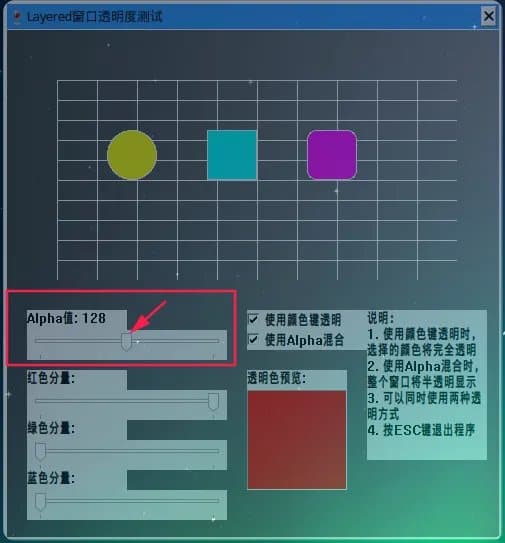
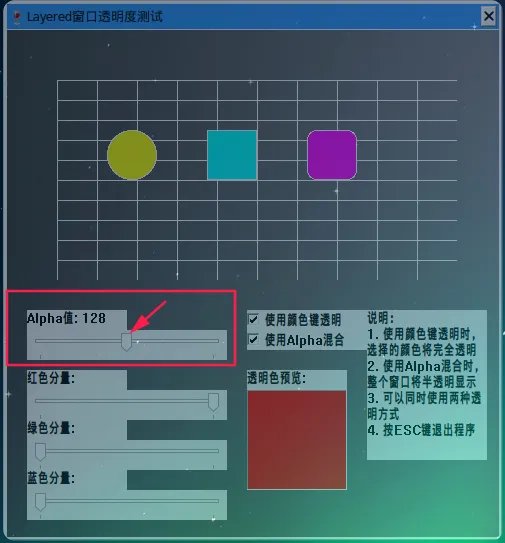
For Wine specifically, this maps cleanly onto Win32 behavior. Layered windows on Windows expose a constant alpha through SetLayeredWindowAttributes using the LWA_ALPHA flag, where an application passes a single byte from 0 to 255 to set window-wide transparency. That is exactly the shape of data alpha-modifier-v1 carries. The Wine driver can now translate a layered window's constant alpha into a compositor-side opacity value instead of compositing it itself or dropping the effect entirely.
Why the native Wayland path keeps getting attention
Most Wine and Proton users today still run through XWayland, the compatibility server that speaks the X11 protocol and hands surfaces to the Wayland compositor. It works, but it carries the overhead and the impedance mismatch of an entire legacy display protocol sitting in the middle. The native winewayland.drv backend talks Wayland directly, which removes that translation layer and lets Wine opt into modern protocols like fractional scaling, presentation timing, and now alpha modification as first-class features rather than emulating them through X11 semantics.
The build sequence here is incremental, which is the normal cadence for this driver. The merged code builds on an earlier patch series posted the previous month. Each protocol the driver picks up closes one more gap between "runs" and "runs correctly," and surface opacity is one of those details that is invisible when it works and immediately noticeable when a translucent overlay or fade-in renders as a solid block.
Where it shows up and what comes next
The code is part of the Wine 11.11 development release. Wine ships these development builds on a roughly two-week cadence, so 11.11 is a snapshot rather than a stable target. The relevant milestone for most users is the Wine 12.0 stable release expected in early 2027, by which point the Wayland driver should have accumulated enough of these protocol implementations to be a reasonable default rather than an experimental backend.
If you want to track the work directly, the development happens in the Wine source tree on GitLab, and the protocol itself is documented in the wayland-protocols staging directory. Anyone testing the native backend can select it by pointing Wine at the Wayland driver instead of the X11 one, though on most distributions XWayland remains the path of least resistance until more of these features settle.
None of this is dramatic on its own. A per-surface opacity multiplier is a modest feature in isolation. The point is the accumulation: each merged protocol is one fewer reason to keep XWayland in the loop, and the native driver only becomes viable once enough of these small gaps are filled. This is one of them.
Comments
Please log in or register to join the discussion