
Apple tapped Real Madrid's Vini Jr. for a World Cup marketing push centered on AirPods Pro 3 and its claim of doubling the active noise cancellation of the previous generation. Behind the ad copy sits a real platform story for anyone shipping audio features on iOS and Android.
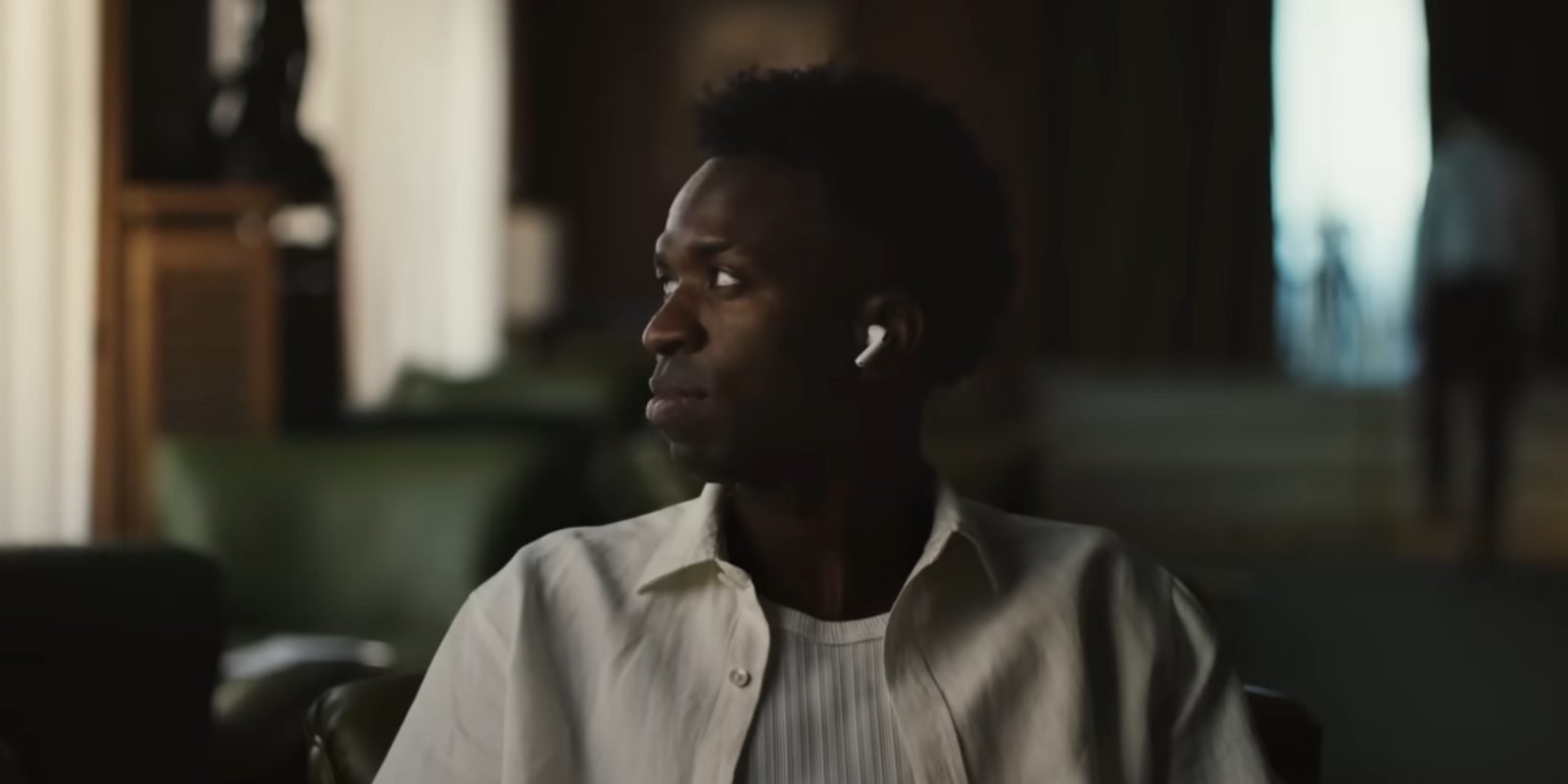
Apple released a new AirPods Pro 3 spot to coincide with the start of the World Cup, and it puts active noise cancellation front and center. The ad stars Real Madrid forward Vini Jr. moving through a city, untroubled by the world around him, while the voiceover credits the "world's best in-ear Active Noise Cancellation." If you watch any of the tournament, you will almost certainly see it on repeat.

The marketing claim worth parsing is the one about performance. Apple says AirPods Pro 3 block up to twice the noise of AirPods Pro 2, which in turn doubled the original AirPods Pro. Stack those generational jumps and Apple is describing roughly a 4x improvement over the first model. That is the kind of number that sounds tidy in an ad and gets messier the moment you think about what "noise" actually means across frequencies, but the trajectory is real: each revision has pushed the ANC ceiling higher.
Why an ad about earbuds matters to developers
If you build apps that touch audio, AirPods are not just an accessory, they are a moving target in your input and output chain. Stronger ANC and the transparency modes that come with it change how users expect your app to behave. A podcast client, a navigation app, a fitness tracker reading voice prompts, a video conferencing tool, all of them inherit the headset's behavior whether you account for it or not.
On iOS, the relevant surface is AVFoundation and specifically AVAudioSession. The session category and mode you choose determine how the system routes audio, whether it ducks other apps, and how it interacts with the headset's noise control. A .playback category behaves very differently from .playAndRecord, and picking the wrong one is a common reason an app's audio feels out of step with what the user set on their AirPods. Apple also exposes spatial audio and head tracking through CMHeadphoneMotionManager, which only returns useful data on supported AirPods models, so feature detection rather than assumption is the safe path.
The cross-platform wrinkle is that none of this maps cleanly to Android. Android's noise control story runs through the AudioManager and the newer AudioEffect APIs, and ANC toggles on most earbuds are owned by the manufacturer's companion app rather than anything the OS exposes to you. If you maintain the same product on both platforms, you cannot write "the headset is in noise cancellation mode" logic once and ship it everywhere. iOS gives you more headset-aware hooks; Android gives you fewer, and what exists varies by OEM.
The practical takeaway
For anyone shipping audio on both platforms, the lesson from this launch is less about the ad and more about the widening capability gap between what Apple's first-party hardware exposes and what a generic Bluetooth headset reports. Treat AirPods-specific features as progressive enhancement. Detect support at runtime, degrade gracefully when head tracking or fine-grained route information is missing, and never hardcode an assumption that the user's noise cancellation state is something your app can read or control.
The hardware claim of best-in-class ANC is Apple's to make, and the World Cup is a sensible stage for it. The part that outlasts the ad campaign is the platform reality underneath: iOS continues to give developers tighter integration with its own audio hardware, Android keeps that integration fragmented across vendors, and the team maintaining one app across both gets to reconcile the difference. AirPods Pro 3 are currently selling for $179 on Amazon, down from $249, if you want to test against the latest model yourself.
Comments
Please log in or register to join the discussion