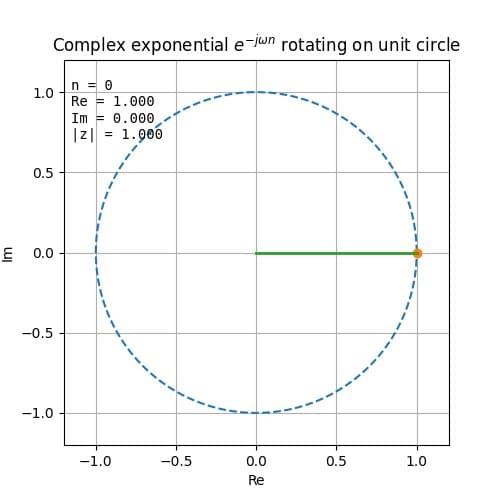
An in-depth exploration of how the Goertzel algorithm provides an elegant solution for frequency detection in resource-constrained systems, transforming raw audio into meaningful data through the lens of resonant systems.
The article from µArt.cz represents a masterful blend of theoretical understanding and practical implementation, addressing a fundamental challenge in embedded systems: how to efficiently detect specific frequencies in audio signals without the computational overhead of a full FFT. Vlastimil Slinták's exploration of the Goertzel algorithm transcends mere technical explanation, offering instead a multi-dimensional perspective that bridges mathematical formalism, physical intuition, and concrete implementation.
At its core, the article tackles a seemingly simple problem: distinguishing between two frequencies (1200 Hz and 2200 Hz) in an audio stream to decode Bell 202 AFSK modulation used in packet radio. However, the elegance lies in how the author reveals that this simple problem actually represents a profound insight into signal processing - that we can transform what appears to be a complex frequency analysis problem into an elegant resonant system.
The author's approach is particularly noteworthy for its pedagogical value. Rather than presenting the Goertzel algorithm as a mysterious formula (𝑠[𝑛] = 𝑥[𝑛] + 2cos(𝜔)𝑠[𝑛−1] − 𝑠[𝑛−2]), the article builds understanding progressively. It begins with the more familiar DFT framework, explaining how the algorithm essentially projects a signal onto rotating vectors in the complex plane. The key insight emerges when the author reveals that when the signal frequency matches the reference frequency, contributions align and the sum grows, while mismatched frequencies result in cancellation and a small sum.
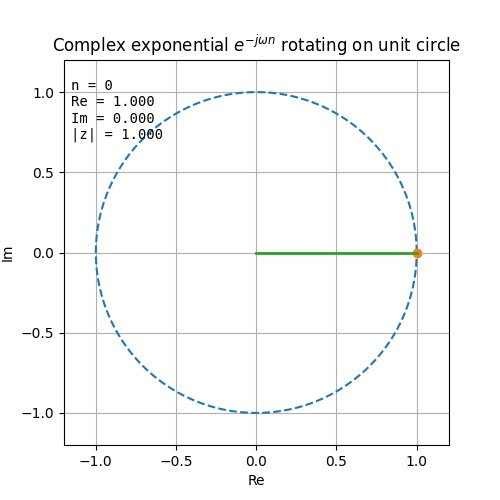
The article's most significant contribution is its reinterpretation of the same phenomenon through the lens of resonant systems. The Goertzel algorithm isn't just a mathematical trick; it's a physical manifestation of a resonator - a "digital spring" that builds up energy when driven at its resonant frequency and remains quiescent otherwise. This perspective transforms abstract signal processing into something tangible and intuitive.
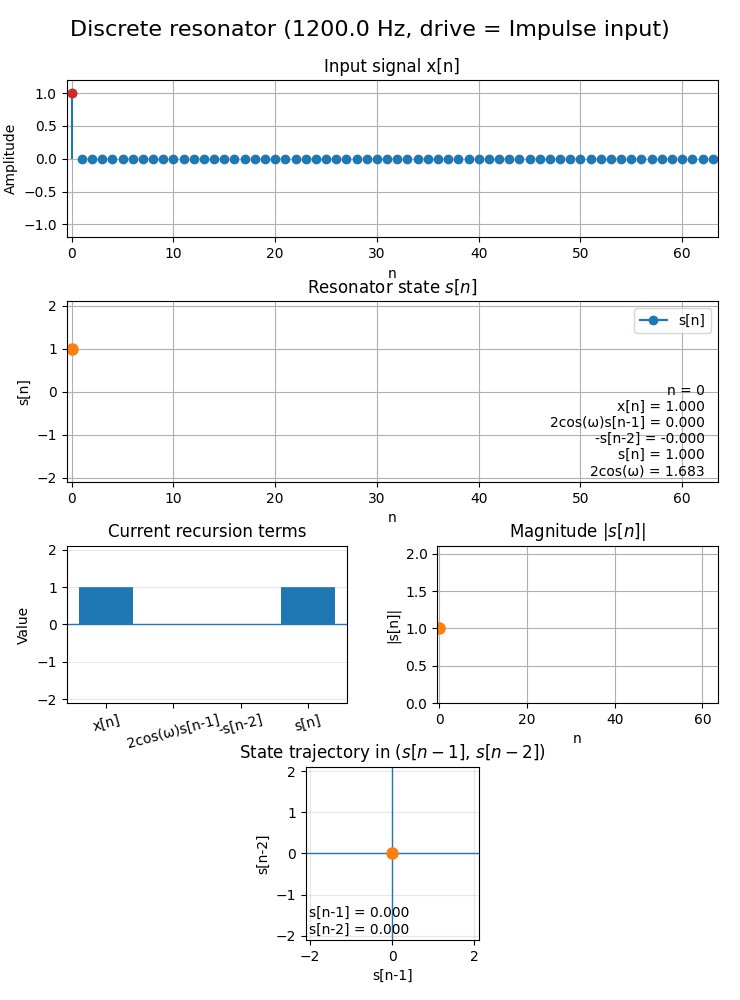
The implementation section demonstrates how this theoretical understanding translates into efficient code. The C implementation is remarkably concise, yet it captures the essence of the algorithm's operation. The author's decision to structure the code to map directly to the recurrence relation shows a deep understanding of both the algorithm and the needs of embedded developers.
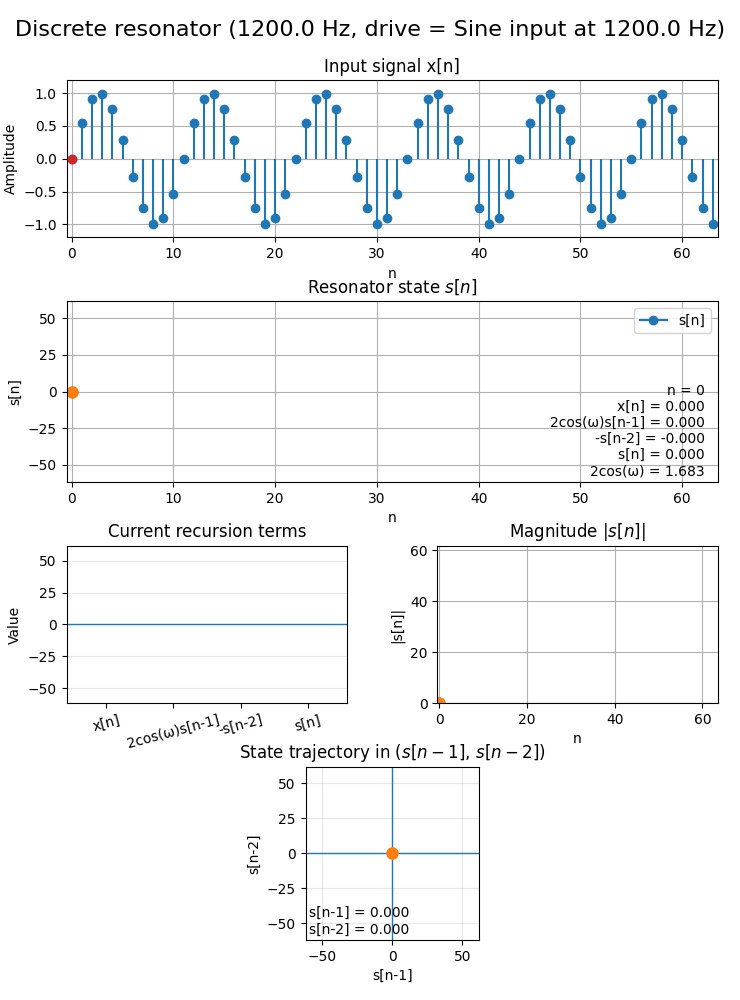
What elevates this article beyond a simple technical explanation is the complete decoding pipeline it presents. The author doesn't stop at frequency detection but shows how the Goertzel outputs flow through the entire AX.25 decoding process - from tone decisions to NRZI decoding, bit unstuffing, and final ASCII output. This comprehensive view demonstrates how the seemingly narrow focus on frequency detection actually enables a complete communication system.
The article's visualizations serve not merely as illustrations but as essential components of understanding. The comparison of multiple resonators tuned to different frequencies clearly demonstrates selectivity, while the processing of real audio data grounds the theoretical discussion in practical reality.
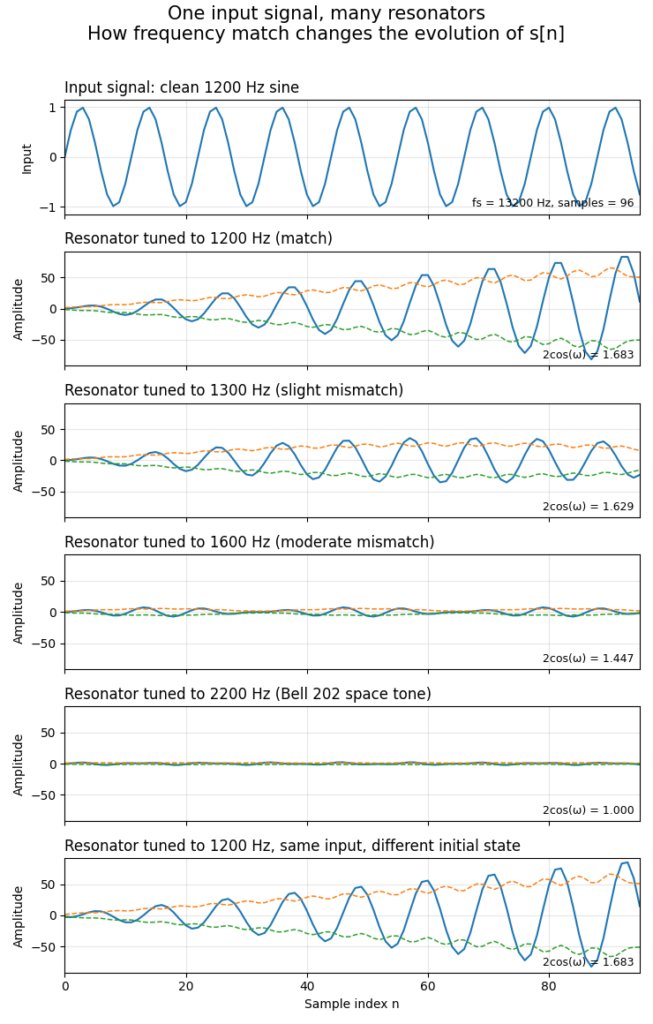
From a broader perspective, this article represents a thoughtful approach to computational efficiency - not as an end in itself, but as a means to enable functionality on resource-constrained platforms. In an era where increasingly complex algorithms are deployed on increasingly diverse hardware, such pragmatic approaches to implementation remain valuable. The Goertzel algorithm, as presented here, exemplifies how mathematical insights can be transformed into efficient implementations that respect the realities of embedded systems.
The article also implicitly addresses a deeper question: how do we understand complex systems? By presenting multiple complementary perspectives (mathematical, physical, implementation), the author demonstrates that true understanding comes from seeing the same phenomenon through different lenses. This approach has implications beyond signal processing - it suggests that technical problems are best understood through multiple, complementary viewpoints.
For readers interested in implementing similar systems, the article provides a complete foundation that could be extended to other frequency detection applications. The code example, while minimal, contains all essential elements and could serve as a starting point for more optimized implementations using fixed-point arithmetic or other embedded-specific optimizations.
In conclusion, this article stands as an excellent example of technical writing that bridges theory and practice. It not only explains how to implement an efficient frequency detection algorithm but also provides the conceptual framework necessary to understand why it works. By connecting mathematical formalism to physical intuition and practical implementation, the author creates a narrative that is both intellectually satisfying and practically useful.
Comments
Please log in or register to join the discussion