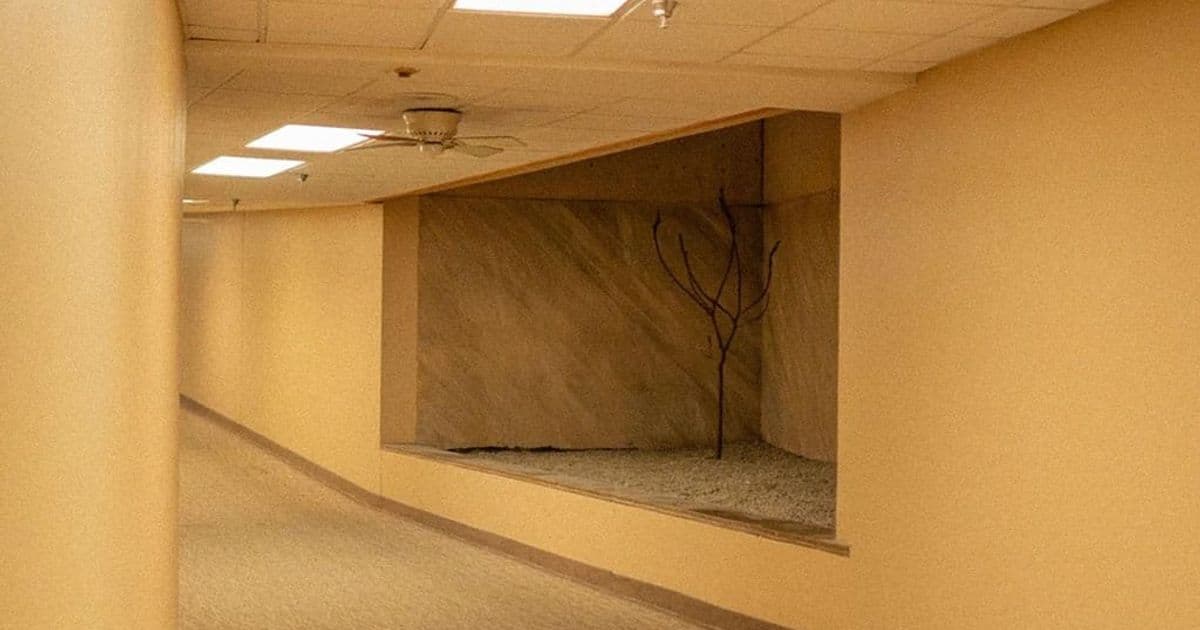
From abandoned malls to empty airport terminals, the liminal aesthetic has emerged as a powerful cultural phenomenon reflecting our collective anxiety in an increasingly digitized world.
The internet has birthed a peculiar, yet increasingly dominant aesthetic that captures the transitional spaces of our lives. What began as niche communities on platforms like Reddit and Facebook has evolved into a cultural movement that resonates deeply with our contemporary experience. Liminal spaces—those transitional, in-between areas that evoke discomfort and nostalgia simultaneously—have become the visual language of our digital age.
The phenomenon traces its recent roots to the 2019 "Backrooms" Creepypasta story that emerged on 4chan, describing an unsettling, infinite expanse of yellow-carpeted rooms with fluorescent lighting. This narrative sparked a vibrant online community that has since expanded beyond its horror origins into a broader appreciation of spaces that exist in a state of transition. Today, communities like r/LiminalSpace boast 136,000 weekly visitors, while Facebook groups "Liminal Spaces" and "Liminal Photography" have amassed 228,000 and 357,300 followers respectively.
What makes this aesthetic particularly fascinating is its deliberate exclusion of AI-generated content. Despite the prevalence of AI imagery online, liminal communities insist on authentic photographs of real spaces, creating a unique digital found art movement. This preference for the authentic in an increasingly artificial digital landscape speaks volumes about our collective psyche.
The connection to art history is undeniable. The long, terminating perspectives and sparse architecture of Giorgio de Chirico's early 20th century paintings echo in modern liminal photography. Similarly, Edward Hopper's depictions of isolated urban landscapes and empty rooms find contemporary expression in these digital communities. Hopper's "Early Sunday Morning" (1930) with its desolate rowhouses and unnatural light could easily be mistaken for a modern liminal space photograph.
From a technological perspective, the rise of liminal aesthetics coincides with several significant shifts in digital culture. The spatial disorientation these images evoke parallels the disorienting nature of our increasingly fragmented digital experiences. As we navigate endless scrolling, infinite feeds, and algorithmically-curated realities, the liminal aesthetic provides a visual metaphor for our digital existence.
The COVID-19 pandemic undoubtedly accelerated interest in this aesthetic, as empty public spaces became a common sight. However, the movement's appeal extends beyond pandemic-related isolation. It taps into a deeper cultural anxiety about placelessness and identity in an increasingly homogenized world.
Critics might dismiss liminal spaces as mere internet ephemera, but their persistence and growth suggest something more profound. These images resonate because they capture the psychological state of living in perpetual transition—spaces that are neither here nor there, neither past nor future. This mirrors our digital existence, where we constantly navigate between physical and virtual realms.
The aesthetic's popularity also reflects a growing desire for authenticity in an increasingly mediated world. By focusing on real, albeit transitional, spaces, these communities create a counterpoint to the polished perfection typically presented on social media. The appeal lies in their unvarnished reality—spaces that haven't been staged, edited, or optimized for algorithmic engagement.
As we spend more time in digital spaces, the liminal aesthetic offers a way to reconcile our physical and digital experiences. These transitional spaces, whether real or imagined, provide a vocabulary for expressing the disorientation of living in an increasingly digitized reality. They capture the uncanny feeling of being present yet disconnected, surrounded yet alone—a perfect metaphor for our contemporary condition.
The movement's democratic nature is particularly noteworthy. Unlike traditional art movements that gatekeep through galleries and museums, liminal spaces emerge organically from online communities, curated by ordinary people rather than curators or critics. This bottom-up approach reflects broader shifts in how culture is created and consumed in the digital age.
As we continue to navigate the complex relationship between physical and digital spaces, the liminal aesthetic will likely continue to evolve. Already, we see variations emerging—spaces that blend physical and digital elements, or that capture the transitional moments between online and offline experiences. These evolving expressions will provide further insight into how our relationship with space continues to transform in an increasingly digital world.
In the end, the popularity of liminal spaces reveals something fundamental about our collective psyche. In a world that feels increasingly uncertain and transitional, we find comfort in images that capture that very uncertainty. These spaces, neither here nor there, neither past nor future, become mirrors reflecting our own existential liminality.
Comments
Please log in or register to join the discussion