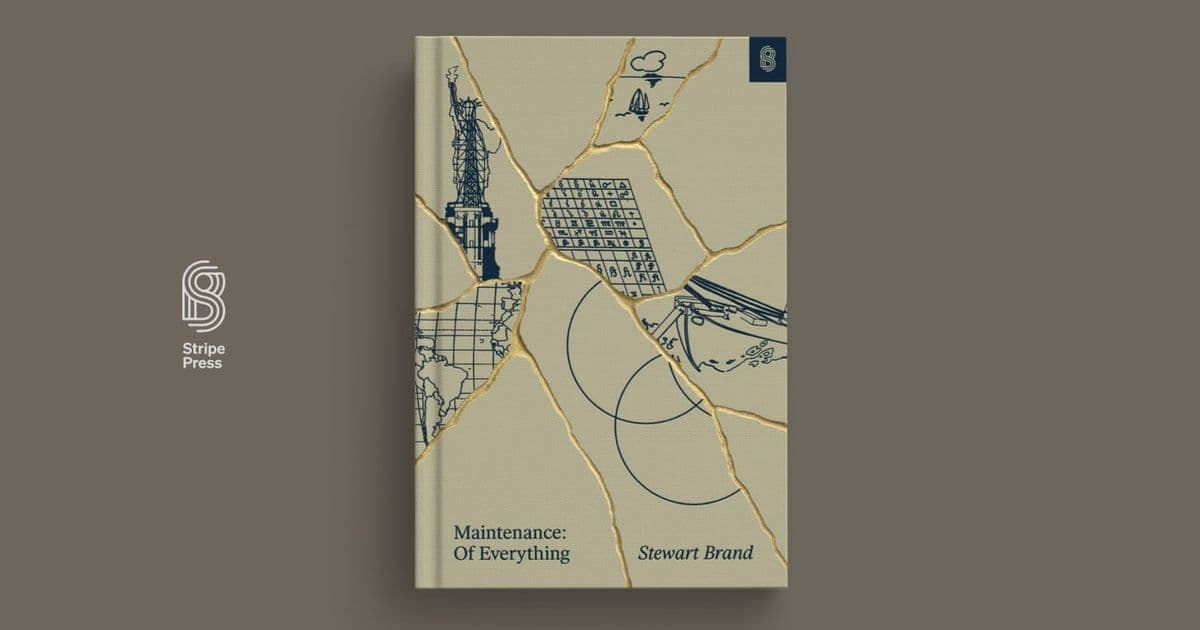
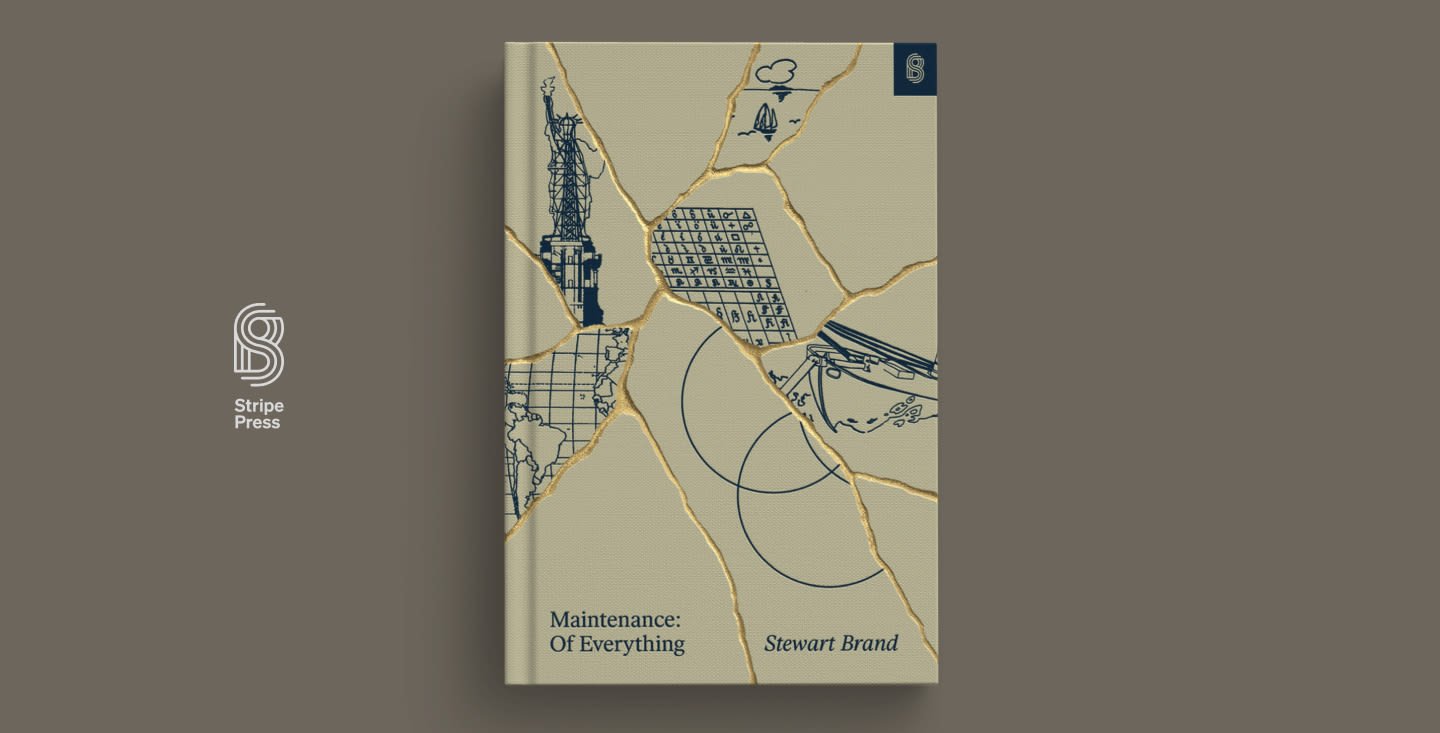
Stewart Brand's new book argues that maintenance, not innovation, is the fundamental act that sustains human progress, offering a philosophical and practical framework for understanding why caring for what we have matters more than building what's next.
Stewart Brand has spent fifty years documenting how human systems evolve, from the countercultural bible of the Whole Earth Catalog to his explorations of how buildings learn and why long-term thinking matters. His latest work, Maintenance: Of Everything, Part One, turns to the invisible labor that keeps civilization functioning—the endless, unglamorous work of repair, upkeep, and preservation that he argues is as radical as any innovation.
Brand's insight is deceptively simple: we celebrate creation but ignore preservation. The software engineer who ships a new feature gets the promotion; the one who spends months refactoring legacy code and fixing technical debt gets labeled a "maintainer" and sidelined. The architect who designs a landmark building wins awards; the facility manager who keeps the HVAC running for thirty years is invisible. This bias toward novelty, Brand suggests, isn't just aesthetic—it's structural. Our economic systems reward extraction and production while treating maintenance as a cost center rather than a value generator.
The book's strength lies in its refusal to treat maintenance as mere drudgery. Through case studies ranging from the maintenance of sailboats to the sustainment of Soviet tanks, Brand reveals maintenance as a knowledge system. The sailor who knows exactly when to replace a stay, the mechanic who can diagnose an engine by its sound, the military engineer who understands the corrosion patterns in different climates—these aren't just following procedures. They're practicing a form of situated intelligence that can't be automated away or reduced to a checklist. The manual, Brand notes, is an underrated technology: a way of encoding decades of accumulated wisdom about how things actually fail in the real world.
This perspective resonates deeply with software development, where the "maintainer" label often carries a whiff of second-class status. Yet the data tells a different story. Studies of open-source projects show that the majority of security vulnerabilities emerge not from new code but from unaddressed technical debt in old code. The Linux kernel's stability comes less from Linus Torvalds' original design than from thousands of contributors systematically refactoring, patching, and updating code written decades ago. The most valuable engineers in most organizations aren't those who build the newest microservice architecture, but those who understand the legacy system well enough to keep it running while gradually improving it.
Brand frames this as a philosophical problem: our language itself betrays our bias. We say "technical debt" as if it's a temporary loan to be paid back, but in practice, it's more like a permanent mortgage on the future. The Python community's recent struggles with the transition to Python 3—taking over a decade and still not complete—illustrate how technical debt compounds when maintainers lack institutional power. The original Python 3000 proposal in 2006 promised a clean break, but the reality was a decade of painstaking work to bring libraries along, with maintainers often forced to support both versions simultaneously.
Counter-arguments to Brand's thesis tend to come from two directions. First, the innovation purists argue that focusing on maintenance creates stagnation. If we only maintain, we never leap to the next paradigm. Why optimize the horse when you could invent the automobile? Brand's response is subtle: maintenance isn't the opposite of innovation, but its prerequisite. The steam engine wasn't invented ex nihilo—it emerged from centuries of incremental improvements to water pumps, which themselves required constant maintenance and refinement. The web browser didn't spring from nothing; it evolved from decades of maintaining and extending existing networking protocols and rendering engines.
The second critique is more pragmatic: in a world of finite resources, how do we decide what to maintain versus what to let go? Not every legacy system deserves preservation. The Y2K bug remediation cost billions because we maintained systems that should have been replaced. The COBOL mainframes still running critical infrastructure in 2024 represent a failure to migrate, not a triumph of sustainment. Brand acknowledges this tension but doesn't fully resolve it. His answer seems to be that the decision itself should be maintenance work: a deliberate, ongoing process of evaluation rather than a one-time build-versus-buy decision.
For developers wrestling with this question, the practical implications are clear. First, measure maintenance work explicitly. If your team spends 60% of its time on technical debt, that's not a failure—it's the actual work of software development. Second, build maintenance into your architecture. The microservices pattern, for all its hype, succeeds partly because it makes maintenance boundaries explicit: each service can be maintained, updated, or replaced independently. Third, invest in the knowledge systems that Brand identifies as crucial. Documentation, runbooks, and the informal knowledge shared in code reviews are as valuable as the code itself.
The book's timing is propitious. As the tech industry confronts the environmental cost of its growth—data centers consuming ever more power, e-waste piling up, the carbon footprint of constant upgrades—Brand's argument that maintenance is sustainability becomes harder to ignore. The most climate-friendly line of code is the one you don't have to rewrite. The greenest server is the one you keep running for another five years instead of replacing it.
Brand's larger point is that maintenance is a moral stance. To maintain something is to declare that it has value worth preserving, that the work of care matters. In a tech culture obsessed with disruption, this is genuinely radical. It suggests that the senior engineer who spends a year carefully decommissioning a legacy system, documenting its quirks, and ensuring a smooth transition is doing work as important as any product launch. It reframes the maintainer not as a passive caretaker but as an active participant in the ongoing project of civilization.
The book ends with a call to expand what we mean by "progress." Not just new features, new frameworks, new paradigms—but the steady, invisible work of keeping what we have running, improving it incrementally, and passing that knowledge forward. For the tech community, this isn't just a philosophical exercise. It's a practical roadmap for building systems that last, careers that matter, and a culture that values the work of care as much as the work of creation.
Comments
Please log in or register to join the discussion