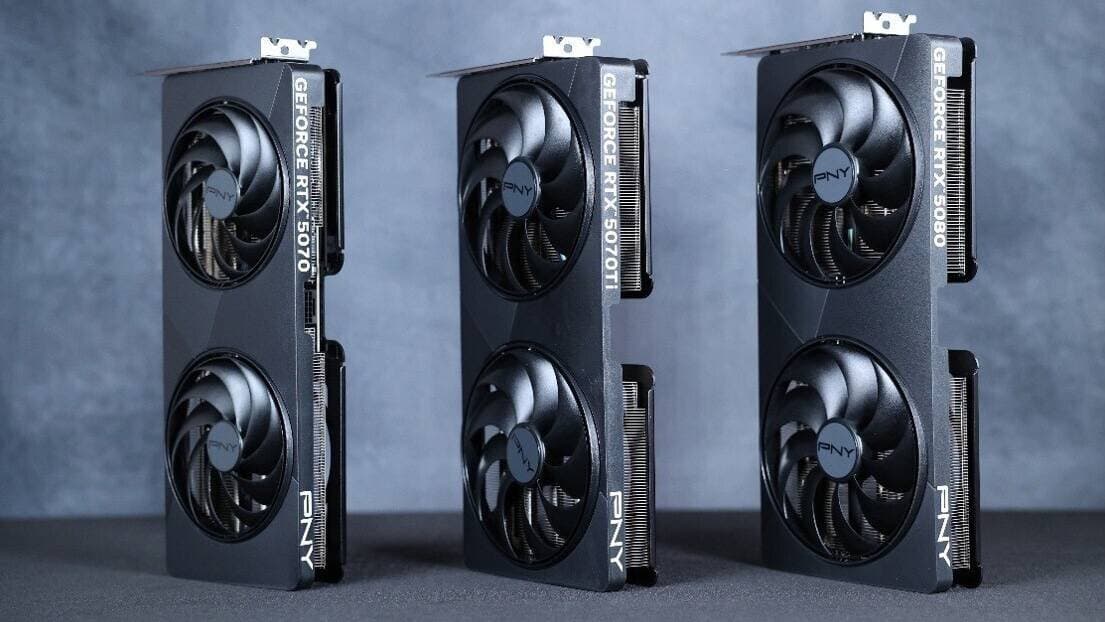
New dual-slot Nvidia RTX graphics cards revive compact GPU designs, offering developers efficient solutions for small-form-factor development rigs and cross-platform testing setups.
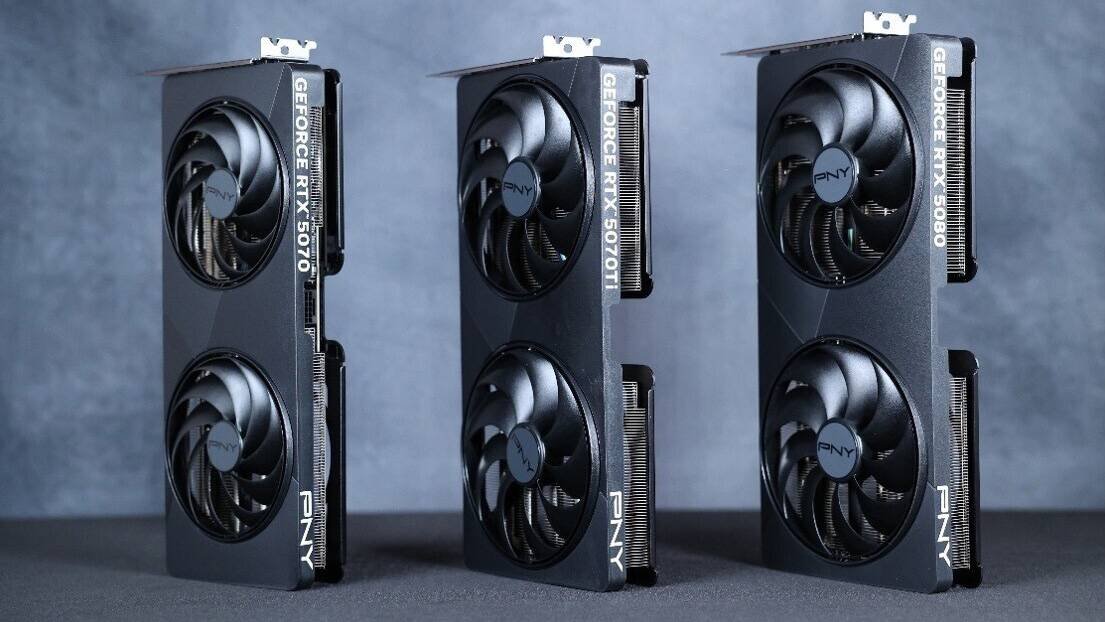
The GPU market has recently seen a resurgence of dual-slot Nvidia RTX graphics cards, evoking nostalgia for the era when high-performance components prioritized space efficiency. Manufacturers like PNY and ASUS are releasing models such as the RTX 4070 and RTX 4060 Ti in dual-slot configurations, a stark contrast to today's dominant triple and quad-slot behemoths. These compact designs feature significantly reduced PCB footprints while maintaining full compatibility with Nvidia's latest architectures and software ecosystems.
For mobile and cross-platform developers, this shift brings tangible workflow benefits. Compact GPUs enable more flexible development environment configurations, particularly for engineers working with constrained hardware setups. Developers testing applications across Windows, Linux, and Android environments can now build smaller secondary rigs for platform-specific validation without sacrificing GPU acceleration for rendering or machine learning tasks. The Nvidia CUDA toolkit remains fully supported, ensuring consistent API behavior across these smaller form factors.
Thermal management presents both challenges and innovations. Dual-slot designs operate within tighter thermal envelopes, requiring manufacturers to implement advanced cooling solutions like vapor chambers and optimized fan curves. While thermal headroom is reduced compared to larger counterparts, real-world testing shows these cards maintain boost clocks effectively in well-ventilated cases. Developers should note potential thermal throttling in densely packed test benches during sustained workloads like UE5 compilation or TensorFlow training. Monitoring tools like Nvidia SMI become essential for performance optimization.
Platform support considerations extend beyond physical dimensions. These GPUs fully support modern display outputs including HDMI 2.1 and DisplayPort 2.1, critical for testing multi-monitor developer setups. However, developers targeting Vulkan or DirectX 12 Ultimate features should verify specific card capabilities since some entry-level models may lack certain ray-tracing or DLSS 3.5 enhancements. The reduced power draw (typically 160-200W versus 300W+ in larger cards) also simplifies power supply requirements for portable test rigs.
For cross-platform teams, these GPUs integrate smoothly with containerized development environments. Docker and Kubernetes configurations benefit from the consistent driver behavior across platforms, while cloud development workflows can mirror local GPU specs more accurately. As Nvidia prepares its next-generation architectures, this compact trend suggests a growing market segment prioritizing efficiency over extreme scalability—a practical evolution for developers balancing performance with physical constraints.
Comments
Please log in or register to join the discussion