KDE Plasma continues its evolution with significant features including per-screen virtual desktops, Wayland session management support, and numerous UI improvements.
The latest installment of 'This Week in Plasma' brings substantial enhancements to the KDE desktop environment, reflecting the ongoing maturation of one of Linux's most sophisticated desktop experiences. Following the annual mega-sprint in Graz where over 20 KDE contributors converged, the past two weeks have witnessed significant feature implementations and refinements that demonstrate Plasma's commitment to both innovation and user-centric design.
Among the most notable developments is the introduction of per-screen virtual desktops, a feature that fundamentally changes how users interact with virtual workspaces across multiple displays. This enhancement, implemented by Hynek Schlindenbuch (KDE Bugzilla #107302), allows each screen to independently switch between any of the system's virtual desktops. This represents a significant departure from traditional desktop behavior, where virtual desktops typically span all displays simultaneously. The implementation provides users with unprecedented flexibility in managing their workflow across multi-monitor setups, potentially revolutionizing how power users organize their digital workspace.
Equally significant is the advancement in Wayland support with the implementation of session management protocol in KWin, as noted by Vlad Zahorodnii (KDE Bugzilla #436318). This technical achievement marks an important step toward applications being able to remember their sizes and positions after system restarts, addressing a long-standing challenge in Wayland environments. While full realization of this capability depends on subsequent implementation by toolkits, libraries, and applications, this foundation represents critical progress in making Wayland a more practical and user-friendly alternative to X11.
The user interface has received considerable attention, with several meaningful enhancements that improve both functionality and aesthetics. The introduction of a standard "Badge" component in Kirigami, implemented by Nate Graham across multiple repositories (kirigami MR #1847, plasma-desktop MR #3089, plasma-workspace MR #6488, systemsettings MR #399, discover MR #1290, and kinfocenter MR #262), brings consistency to notification indicators throughout the system. The visual comparison between the before and after states demonstrates how this component provides clearer, more modern visual feedback without cluttering the interface.
Application management has seen substantial improvements, with the ability to mark app-specific actions as favorites (Kai Uwe Broulik, plasma-workspace MR #6224) and drag-and-drop functionality for adding applications to the "Favorites" sections of various launcher widgets (Christoph Wolk, KDE Bugzilla #383302 and plasma-desktop MR #3652). These enhancements streamline application access and personalize the user experience in meaningful ways.
Integration with system services has been strengthened through the addition of default calendar app selection in System Settings' Default Applications page (Denys Madureira, plasma-workspace MR #6468) and the ability to middle-click on the Digital Clock widget to open the configured calendar app (Denys Madureira, plasma-workspace MR #6462). These features demonstrate Plasma's commitment to creating a cohesive ecosystem where different components work together seamlessly.
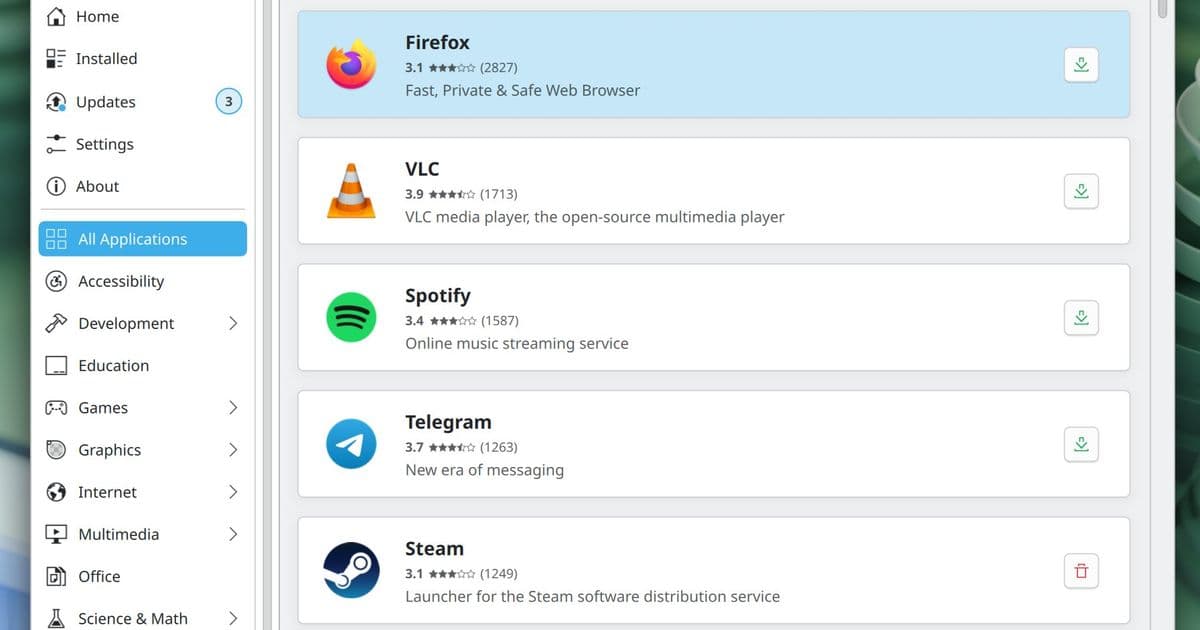
The Discover package manager has received several improvements, including the option to quit after installing updates (Taras Oleksyn, KDE Bugzilla #508743) and enhanced grid and list item designs that increase information density (Nate Graham, discover MR #1292). These changes make software management more efficient and visually appealing.
System monitoring capabilities have been enhanced through improved GPU differentiation by name rather than arbitrary numbers (Bernhard Friedreich, libksysguard MR #464 and ksystemstats MR #129) and the addition of top-level actions for direct access to specific monitoring pages (Bernhard Friedreich, plasma-systemmonitor MR #427). These improvements make system information more accessible and meaningful to users.
Numerous bug fixes address critical reliability issues, including fixes for potential crashes in Plasma Keyboard after Alt+Tabbing from certain windows (Devin Lin, KDE Bugzilla #517087), screen locker malfunctions (Akseli Lahtinen, KDE Bugzilla #515299), and color picker functionality returning random colors on specific hardware (Xaver Hugl, KDE Bugzilla #518770). These fixes, though less visible to end users, contribute significantly to the overall stability and trustworthiness of the Plasma desktop.
The article also highlights performance improvements, including reduced file sizes for animated GIFs produced by applications using KDE's KPipeWire library (Bernhard Friedrich, kpipewire MR #247). This optimization demonstrates the ongoing attention to resource efficiency that characterizes Plasma's development philosophy.
As KDE continues to grow in importance and adoption, the community emphasizes that contributions of time and expertise are more impactful than financial donations. The development process remains open and collaborative, with contributors encouraged to participate in various capacities beyond programming.
The developments outlined in this TWiP issue reflect Plasma's continued evolution as a sophisticated, user-friendly desktop environment that balances technical innovation with practical usability. The combination of major feature implementations, thoughtful UI refinements, and critical bug fixes demonstrates why Plasma remains one of the most compelling desktop experiences in the free software ecosystem.
Comments
Please log in or register to join the discussion