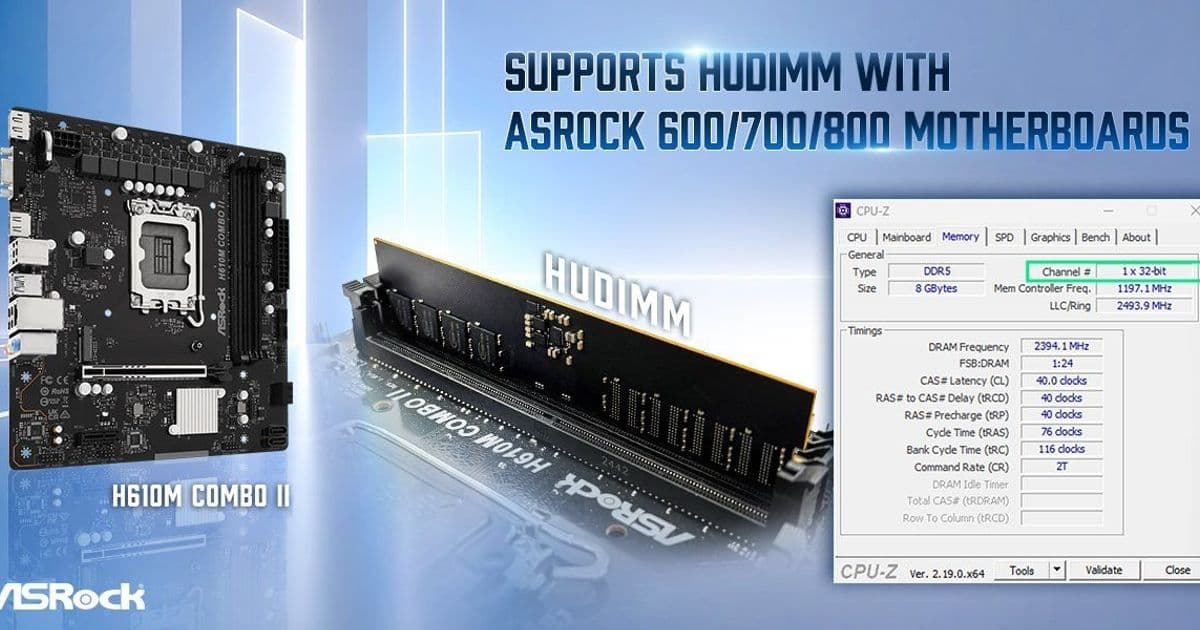
ASRock, Intel, and TeamGroup unveil Half Unbuffered DIMM specification that uses single 32-bit subchannel to create cheaper DDR5 modules with reduced bandwidth and capacity.
The AI boom has triggered a severe component shortage, sending memory prices soaring and forcing manufacturers to develop creative solutions. ASRock has partnered with Intel and TeamGroup to introduce HUDIMM (Half Unbuffered DIMM), a new DDR5 memory specification designed to deliver more affordable RAM options for entry-level users.
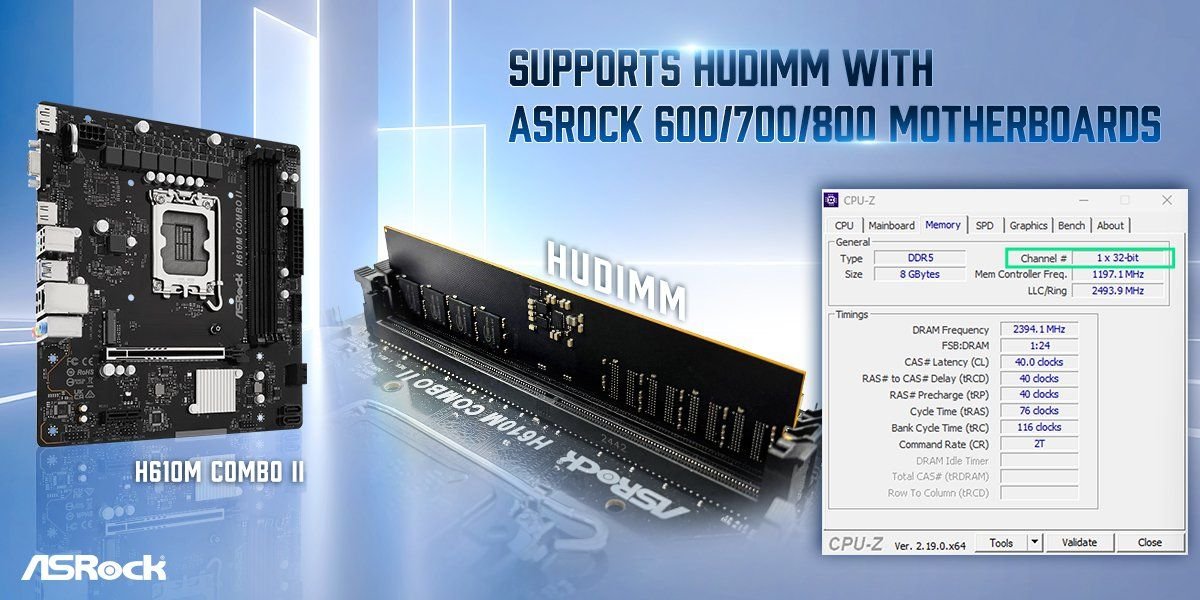
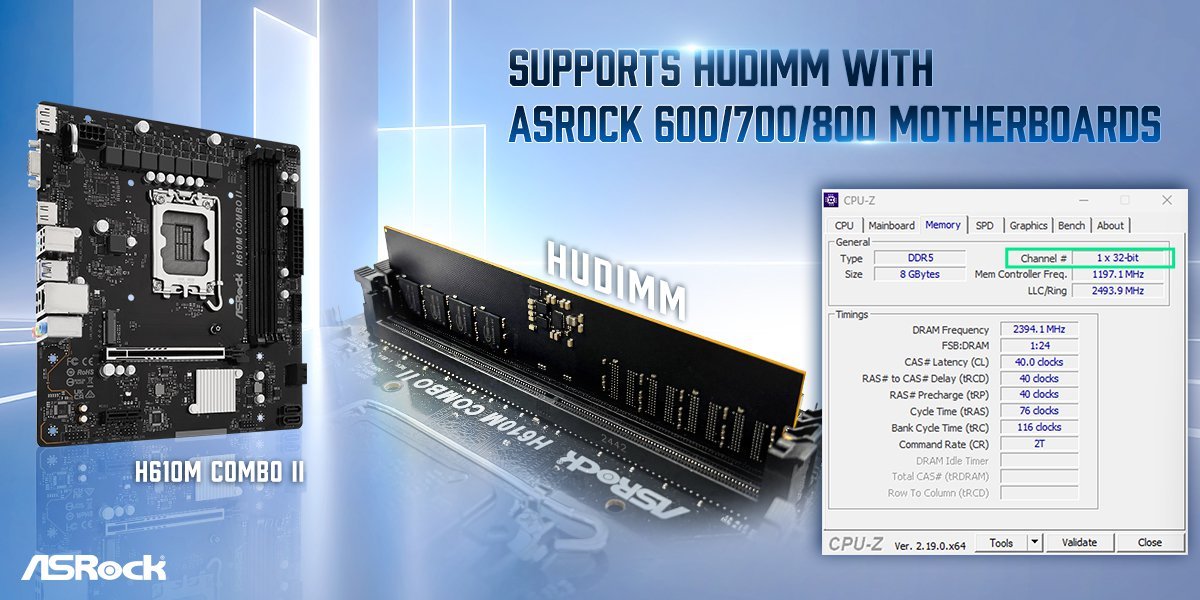
Unlike standard DDR5 UDIMM modules that utilize two 32-bit subchannels per stick, HUDIMM employs a single 32-bit subchannel architecture. This effectively halves both the bandwidth and capacity of each module while reducing manufacturing costs through fewer memory chips.
Technical Architecture
Standard DDR5 UDIMM requires enough memory chips to populate a full 64-bit wide bus, constituting a single rank. HUDIMM's single 32-bit subchannel design creates what amounts to a "half-rank" module. This architectural change allows for cheaper production while maintaining compatibility with existing DDR5 infrastructure.
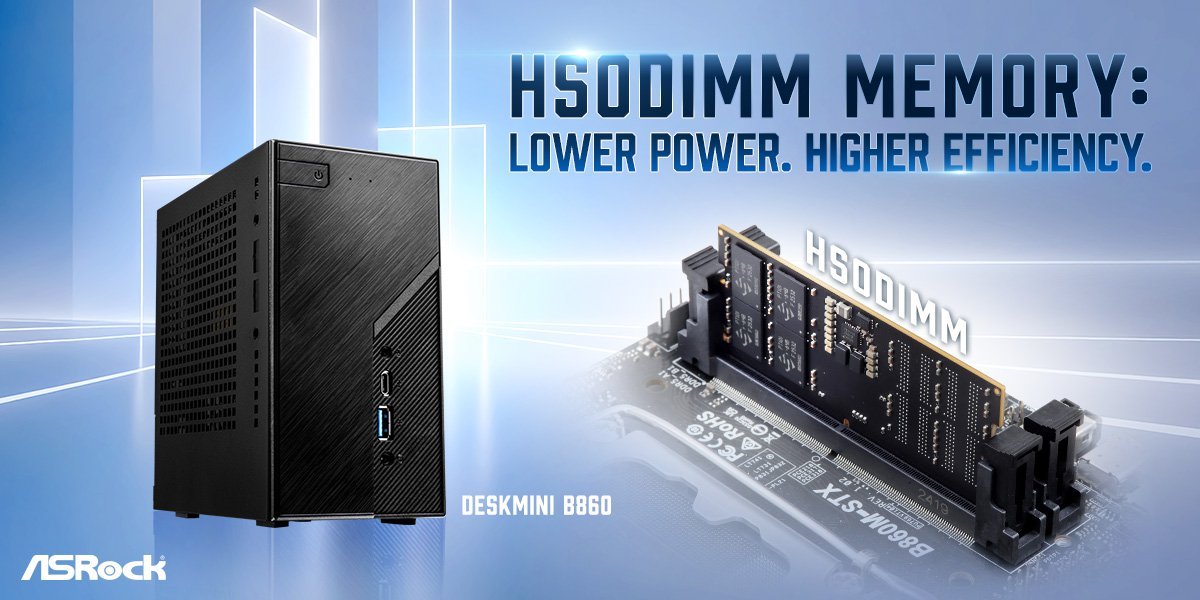
ASRock has confirmed that HUDIMM modules are already functional on Intel 600, 700, and 800-series motherboards. The company is also developing HSODIMM, which applies the same half-channel concept to laptop and mobile SO-DIMM form factors.
Market Positioning
According to ASRock, "two sub-channel (2*32-bit) architecture is beneficial for high-capacity single DIMM module, however, it is not so practical for current PC market." The company targets entry-level users who don't require maximum performance or capacity, positioning HUDIMM as a cost-effective alternative during the ongoing component shortage.
Asymmetric Dual-Channel Support
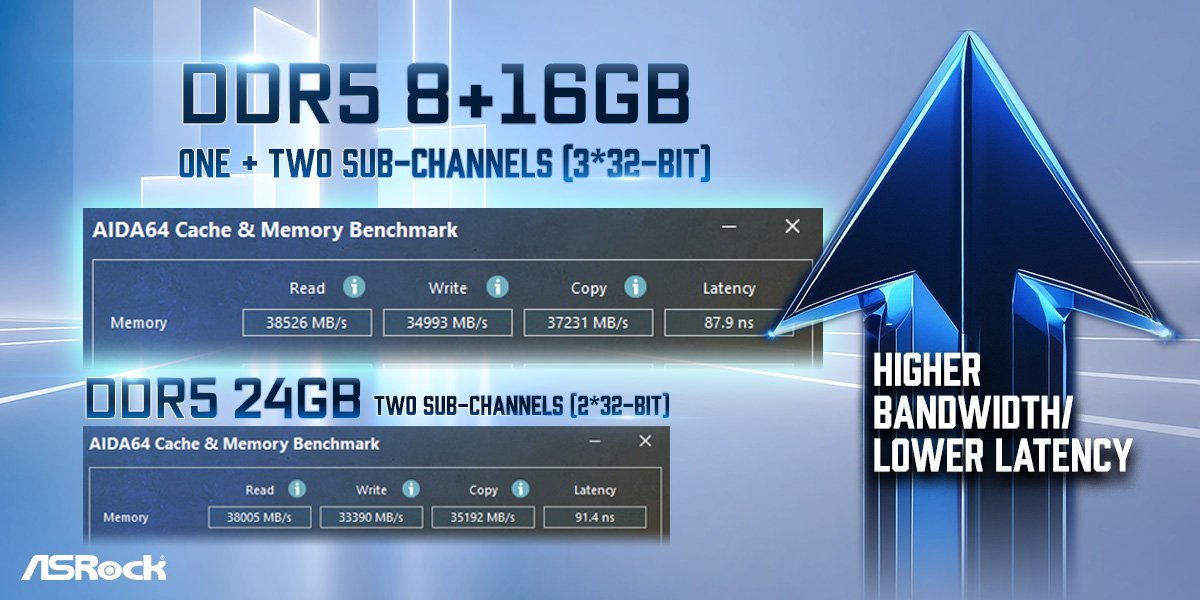
A key feature of HUDIMM is its BIOS-level asymmetric dual-channel support. This allows users to mix HUDIMM and standard UDIMM modules to circumvent single subchannel limitations. For example:
- Pairing an 8 GB HUDIMM stick with a 16 GB UDIMM stick
- Result: 24 GB total capacity with at least 3x 32-bit subchannels active
- Performance: Better bandwidth than a single 24 GB 2x 32-bit stick
- Cost advantage: Less expensive to manufacture than full-rank alternatives
Performance Considerations
ASRock's press materials indicate a 90 ns latency for HUDIMM modules, which would be considered high by modern standards. This latency figure suggests that while HUDIMM offers cost savings, it may not satisfy users requiring maximum memory performance.
Industry Response
Following ASRock's announcement, Asus demonstrated HUDIMM compatibility on a ROG Maximum Z890 Apex motherboard. An Asus R&D engineer showcased a method to convert standard UDIMM modules into HUDIMM by taping half of the contact points, effectively disabling half of the integrated circuits. This DIY approach revealed that taped modules would show only half their original capacity in the BIOS.
While Asus hasn't confirmed official HUDIMM support or partnerships with TeamGroup, the demonstration suggests the company is exploring the standard. Industry-wide adoption could accelerate if major players like Asus join the initiative, potentially leading to more affordable DDR5 options in the near future.
Market Impact
The HUDIMM specification represents a strategic response to the current RAM shortage crisis. By offering a lower-cost alternative that maintains basic DDR5 compatibility, manufacturers can provide entry-level systems with adequate memory performance while reducing component costs.
However, several questions remain unanswered:
- Availability timeline: No official release dates have been announced
- Pricing structure: Cost comparisons to standard DDR5 modules are unclear
- Market adoption: Success depends on broader industry support beyond ASRock and TeamGroup
- Performance trade-offs: The 90 ns latency may limit appeal for performance-focused users

The HUDIMM standard could significantly impact the DDR5 market if adopted widely. During a period of component shortages and inflated prices, this half-channel approach offers a pragmatic solution for budget-conscious consumers and system builders. As the industry continues to grapple with supply chain challenges, innovations like HUDIMM may become increasingly important for maintaining market accessibility while component production catches up to demand.
Comments
Please log in or register to join the discussion