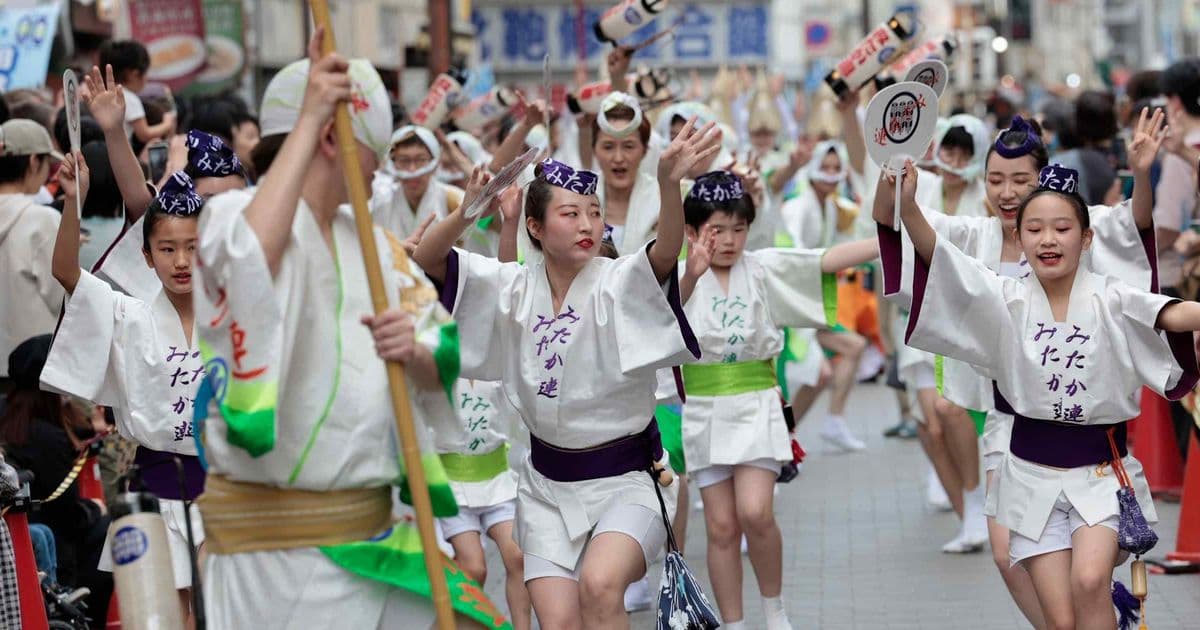
Central Tokyo's Kanda district will host its first full-scale Awa Odori folk dance festival on April 18, 2026, featuring 400+ performers and spectator seating along Kanda Heisei Street near Kanda Station.
Tokyo's Kanda district is preparing to host its first full-scale Awa Odori folk dance festival on April 18, 2026, marking a significant cultural addition to central Tokyo's event calendar. The festival will take place along Kanda Heisei Street near the east exit of Kanda Station, with organizers expecting 4,000 to 5,000 spectators for the day-long celebration of this traditional Japanese folk dance.
Festival Origins and Local Initiative
The event represents a collaborative effort by five local groups comprising neighborhood associations and shopping street organizations in Kanda. This initiative comes as a complement to the district's famous Kanda Festival at Kanda Myojin Shrine, which is traditionally held every other year and is considered one of Japan's three major festivals. With the full-scale Kanda Festival not scheduled for 2026, local organizers saw an opportunity to maintain community spirit through the Awa Odori event.
Awa Odori originated in Tokushima Prefecture on Japan's Shikoku island and has since spawned numerous festivals across the Kanto region surrounding Tokyo. Similar events are held in Koshigaya, Saitama Prefecture; Suginami Ward in Tokyo; and Yamato in Kanagawa Prefecture, demonstrating the dance form's widespread appeal throughout the metropolitan area.
Venue and Logistics
This year's festival will utilize Kanda Heisei Street, a four-lane thoroughfare that provides significantly more space than the 2024 trial event. The previous iteration took place along a narrow stretch beneath the JR train line, which limited crowd capacity and raised safety concerns. The expanded venue near Kanda Station's east exit will accommodate both performers and spectators more comfortably.
More than 400 performers will participate in the festivities, led by Mitaka Ginza Ren, a dance club based in Mitaka, western Tokyo. The program includes dedicated time for spectators to join in the dancing, creating an interactive experience that organizers hope will foster community engagement.
Community Support and Sustainability
To ensure the festival's long-term viability, organizers are implementing a sustainable funding model through Chiyoda Ward's hometown tax program. This approach allows financial supporters to receive vouchers redeemable at local restaurants, while the festival organizers offer donors premium seating with prime views of the dancing.
Shinichiro Kobayashi, head of the Kanda Awa Odori organizing committee and owner of Azumaen, a Chinese restaurant located in front of Kanda Station, emphasized the community-building aspects of the event. "After watching Awa Odori, we want people to enjoy food along the shopping streets," Kobayashi stated, highlighting the festival's role in supporting local businesses.
Future Plans
Organizers aim to establish the Awa Odori festival as a biennial event, potentially alternating with the Kanda Festival to provide year-round cultural programming for the district. This scheduling approach would ensure that Kanda maintains its reputation as a vibrant cultural destination while giving local businesses and residents regular opportunities to showcase their community spirit.
The April 18, 2026, event represents a significant investment in Kanda's cultural infrastructure and community engagement. By combining traditional Japanese folk dance with modern event management and sustainable funding models, the festival organizers are creating a template for how historic districts can remain relevant and vibrant in contemporary Tokyo.
For visitors planning to attend, the festival's central location near Kanda Station makes it easily accessible via public transportation. The expanded venue along Kanda Heisei Street should provide ample space for both seated viewing and active participation, while the surrounding shopping streets offer opportunities to extend the cultural experience through local dining and shopping.
Comments
Please log in or register to join the discussion