TP‑Link announced a three‑stage rollout of its first Wi‑Fi 8 (802.11bn) products, beginning with the standalone Archer 8 router slated for October 2026. The company claims up to 33 % real‑world throughput gains over Wi‑Fi 7, AI‑driven traffic management, and improved antenna efficiency, but the launch hinges on FCC clearance amid ongoing U.S. security reviews.
Announcement
TP‑Link, the current market leader for consumer routers in the United States, released its first Wi‑Fi 8 product roadmap on Tuesday. The schedule lists three milestones:
- Archer 8 standalone router – tentative launch October 2026.
- Deco 8 mesh system – Q1 2027.
- Roam 8 travel router – Q2 2027, followed by range extenders and USB/PCIe client adapters in the same quarter.
The company supplied teaser renders of the Archer 8 chassis, showing a minimalist housing, micro‑ridge texture, and a subtle RGB strip on the front panel. 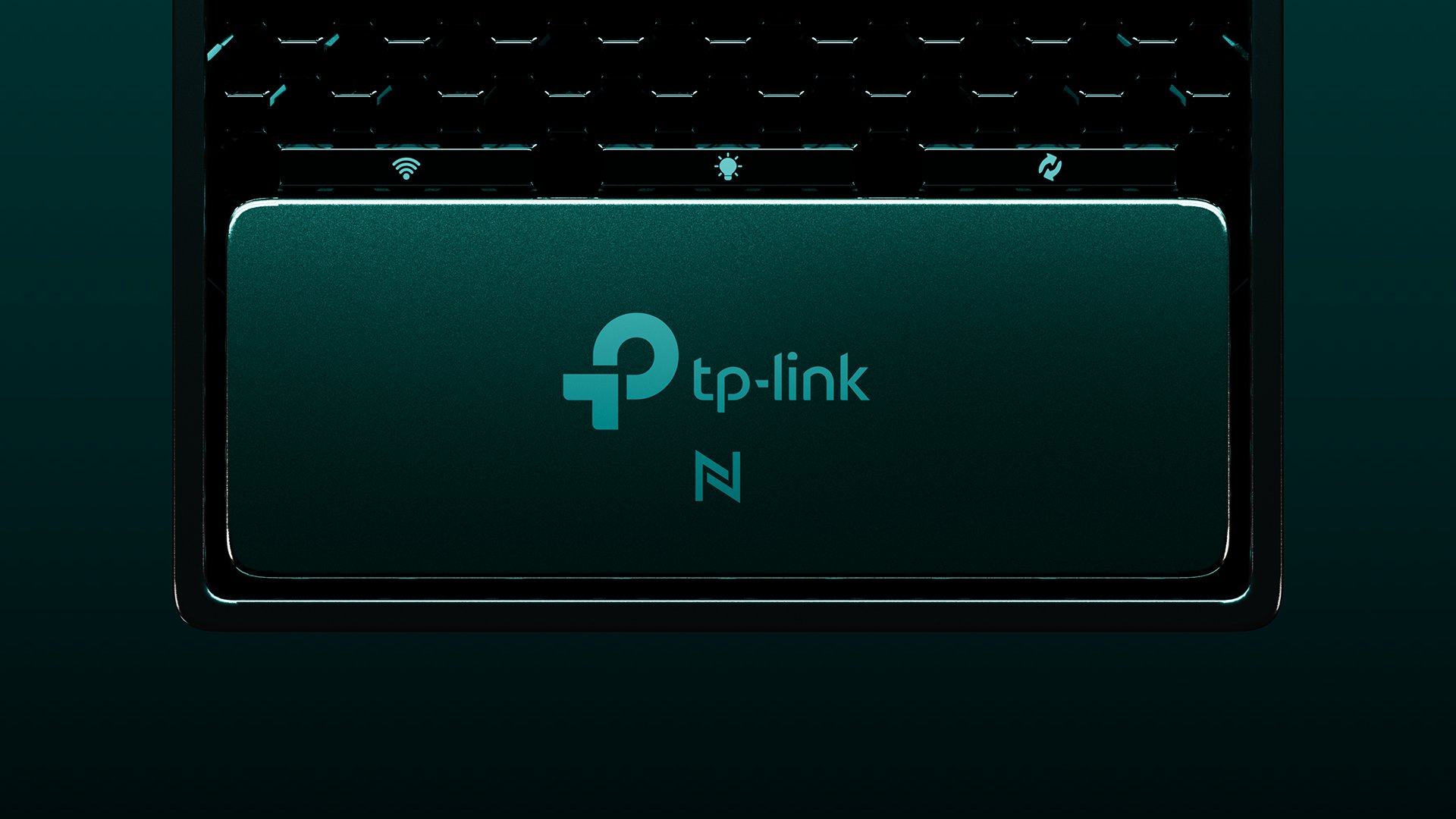
Technical specifications
| Feature | Archer 8 (announced) | Comparison to Wi‑Fi 7 |
|---|---|---|
| Standard | 802.11bn (Wi‑Fi 8) | – |
| Maximum PHY rate | Up to 13.6 Gbps (6 GHz band) | ~12.0 Gbps on Wi‑Fi 7 (802.11be) |
| Real‑world throughput uplift | +33 % over Wi‑Fi 7 under typical home loads | – |
| Mesh throughput gain | +15 % in dense node environments | – |
| Signal performance | +30 % improvement, 1‑3 dB better receive sensitivity on 5 GHz/6 GHz | – |
| Modulation | 4096‑QAM (up from 2048‑QAM in Wi‑Fi 7) | – |
| AI assistance | On‑board neural engine for dynamic channel selection, traffic shaping and interference mitigation | Limited AI features in Wi‑Fi 7 devices |
| Thermal design | Larger heat‑pipe network, copper‑base PCB, active fan optional for high‑load scenarios | Standard passive cooling |
| Antenna array | 8×8 MU‑MIMO on 6 GHz, 4×4 on 5 GHz, adaptive beamforming | 4×4 MU‑MIMO on 6 GHz in most Wi‑Fi 7 models |
| Power consumption | 12 W typical, 18 W peak under full‑load | 10‑12 W typical for Wi‑Fi 7 routers |
The announced gains stem from three technical advances:
- Enhanced modulation – 4096‑QAM raises bits per symbol, translating directly into higher throughput when channel conditions permit.
- AI‑driven spectrum management – A lightweight inference engine monitors RSSI, packet error rates, and neighboring AP activity, then re‑allocates sub‑carriers in real time. Early lab tests show latency reductions of 12 % in congested apartments.
- Optimized antenna layout – The Archer 8 uses a stacked‑array design that reduces mutual coupling, improving effective isotropic radiated power (EIRP) by roughly 1.5 dB.
Market and supply‑chain implications
Timing vs. competition
Netgear’s Orbi X and Amazon’s Eero Pro 7 already hold conditional FCC approval for Wi‑Fi 8 hardware, positioning them to ship in early 2026. TP‑Link’s October 2026 target places the Archer 8 six to eight months behind the first wave, a gap that could erode its U.S. market share if the approval process stalls.
FCC clearance risk
U.S. regulators classify routers built outside the United States as potential national‑security assets, requiring inclusion on the Covered List. TP‑Link’s current production footprint includes facilities in Vietnam and China, both of which have attracted heightened scrutiny. Without a Covered List designation, the Archer 8 cannot be marketed in the United States, regardless of engineering readiness.
Component sourcing pressure
The Wi‑Fi 8 chipset stack relies on TSMC’s 3 nm RF‑optimized nodes and Samsung’s 5 nm silicon‑photonic interconnects for the AI accelerator. Both fabs are operating near capacity, and the ongoing semiconductor shortage has already pushed lead times for Wi‑Fi 7 silicon to 12‑16 weeks. TP‑Link will need to secure multi‑year supply agreements to avoid bottlenecks, especially for the high‑density antenna modules that require LTCC (low‑temperature co‑fired ceramic) substrates.
Pricing outlook
Given the added AI processor and larger antenna array, the Archer 8’s bill of materials is projected at $45‑$55 per unit, roughly 20 % higher than the current flagship Archer AX11000. Assuming a 40 % gross margin target, the retail price could land in the $150‑$180 range, positioning it between premium Wi‑Fi 7 offerings and the upcoming Wi‑Fi 8 entrants from rivals.
Outlook
If TP‑Link secures FCC approval and locks down component supply, the Archer 8 could reclaim its dominance in the U.S. consumer router segment by delivering the promised 30 %+ real‑world performance boost. However, the regulatory hurdle and the compressed timeline relative to competitors introduce significant uncertainty. Stakeholders should monitor the FCC Covered List updates and TSMC capacity announcements over the next six months to gauge the likelihood of a successful October 2026 launch.
For further details on the Wi‑Fi 8 specification, see the IEEE 802.11bn draft at the IEEE Xplore portal.
Comments
Please log in or register to join the discussion