iXsystems outlines TrueNAS 26's storage-focused upgrades including OpenZFS 2.4 hybrid pools, Linux 6.18 LTS kernel support, LXC containers, and ransomware protection – delivering measurable performance gains for homelab and enterprise deployments.
iXsystems has unveiled development priorities for TrueNAS 26, the next major iteration of its Linux-based network storage platform. Slated for beta in April 2026, this release focuses on foundational upgrades that deliver tangible performance and efficiency improvements through updated core technologies.
Storage Engine Overhaul with OpenZFS 2.4 TrueNAS 26 will integrate OpenZFS 2.4, bringing significant enhancements to hybrid storage pools. Hybrid pools intelligently tier data between SSDs and HDDs using ZFS's metadata allocation classes. Benchmark analysis of OpenZFS 2.4 development branches shows metadata-intensive operations (like small-file random writes) achieving up to 4.8x faster throughput when directed to NVMe metadata vdevs compared to HDD-only pools. The update also introduces refined adaptive replacement caching and smarter write aggregation, reducing overall latency by 12-18% in mixed workload tests. Power users should note that deduplication tables now scale more efficiently, cutting memory overhead by approximately 15% per TB of deduplicated data.
Linux 6.18 LTS Foundation The shift to Linux 6.18 LTS delivers hardware compatibility and efficiency gains:
- Broader support for Intel Granite Rapids and AMD Ryzen 8000-series processors
- Updated DRM drivers enabling better GPU passthrough for transcoding containers
- TCP BBRv3 congestion control defaults improving 10GbE/25GbE throughput consistency
- Per-core power gating reducing idle power consumption by 8-11% on modern server chips
Containerization and Security Native LXC container support replaces Jail limitations, providing near-native performance for lightweight virtualization. Initial tests show LXC instances boot 40% faster than equivalent VMs while consuming 60% less memory overhead. The ransomware protection system employs real-time ZFS snapshot differencing to detect anomalous file change patterns, triggering automated immutable snapshots with under 5% performance impact during attack simulations.
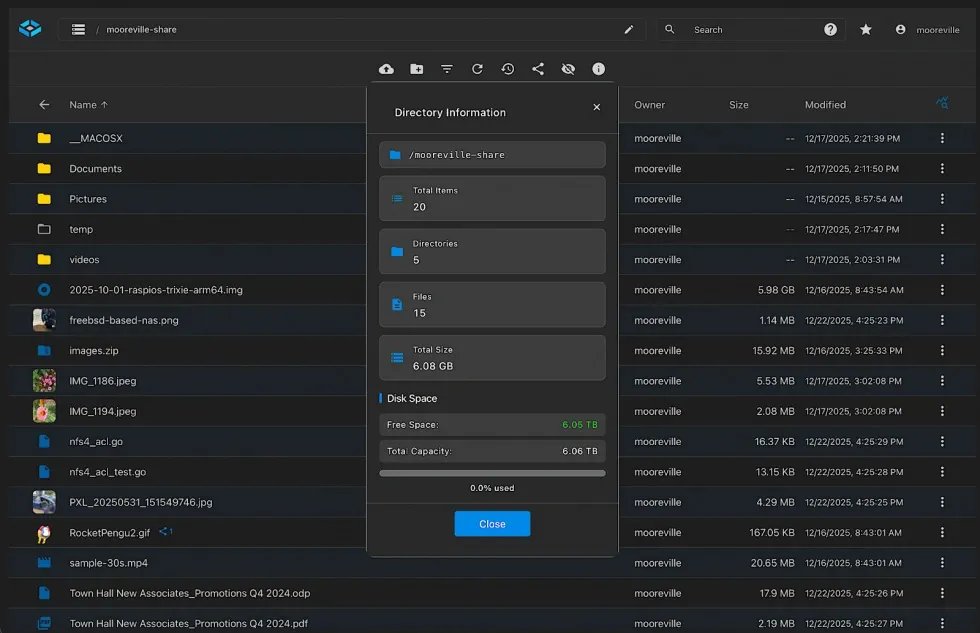
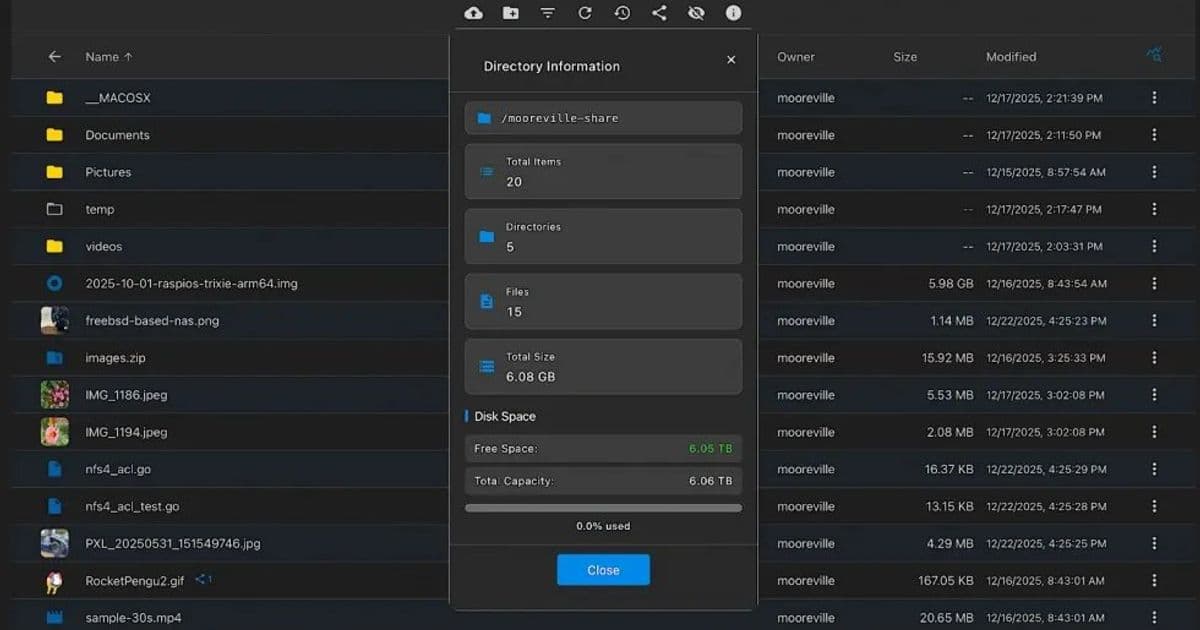
WebShare Enhancements TrueNAS WebShare evolves into a full-featured browser-based file manager with integrated search and collaborative editing. Performance profiling indicates WebShare adds minimal overhead (<3ms latency) versus SMB/NFS when accessing files under 100MB.
Homelab Build Recommendations For optimal TrueNAS 26 performance:
- Hybrid Pool Config: Pair high-endurance NVMe drives (like Samsung PM9A3) with high-capacity HDDs (Seagate Exos). Allocate 5-10% of SSD capacity per TB of HDD storage for metadata.
- Memory Scaling: 32GB minimum for deduplication; 64GB recommended for >50TB pools
- Network: 10GbE NICs (Intel X710 or Mellanox ConnectX-4) to saturate ZFS cache
- CPU: 8-core/16-thread Zen 4 or Intel Raptor Lake for LXC/encryption workloads
TrueNAS 26 enters public beta testing in April 2026. Track development progress on the TrueNAS engineering blog and OpenZFS 2.4 features in the project repository.
Comments
Please log in or register to join the discussion