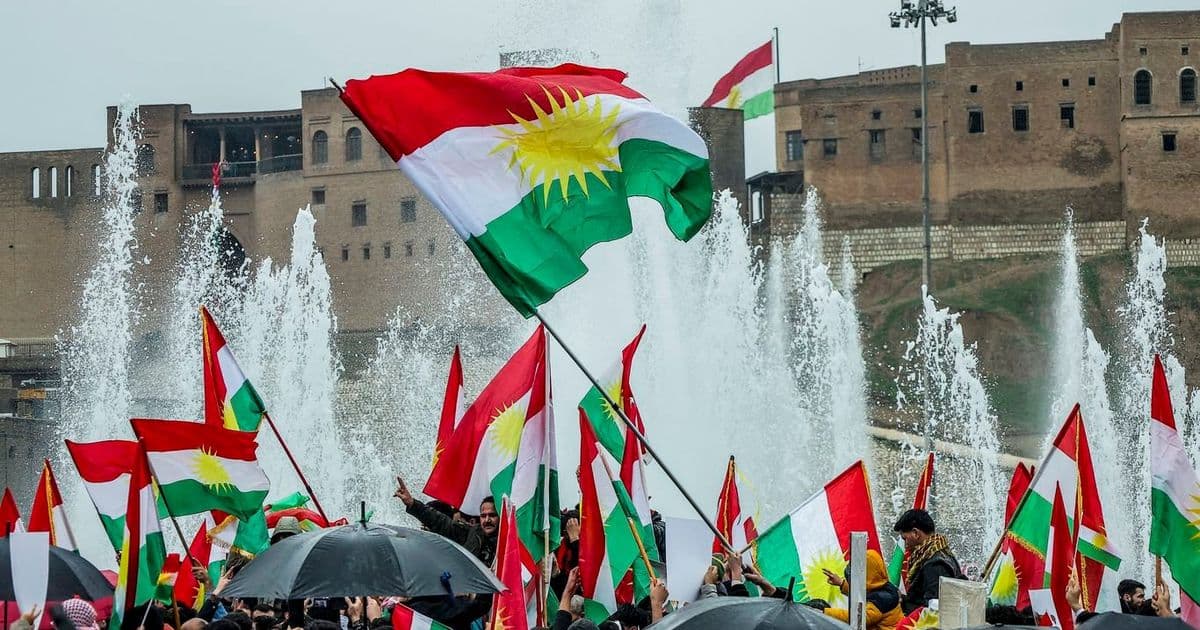
President Trump has initiated direct contact with Kurdish leaders in Iraq and Syria as part of contingency planning for potential military action against Iran, according to sources familiar with the discussions.
Trump Administration Engages Kurdish Leaders for Potential Iran Conflict
President Donald Trump has initiated direct contact with Kurdish leaders in Iraq and Syria as part of contingency planning for potential military action against Iran, according to sources familiar with the discussions.
Background on Kurdish Military Capabilities
The Kurdish populations in Iraq and Syria have established significant military capabilities over the past decade. The Kurdish Peshmerga forces in Iraq number approximately 150,000 fighters, while the Syrian Democratic Forces (SDF), which are majority-Kurdish, control roughly one-third of Syrian territory and maintain around 60,000 active personnel.
These forces have proven effective in combat against ISIS and have developed sophisticated intelligence networks throughout the region. Their knowledge of local terrain and established relationships with various tribal groups make them valuable potential partners in any regional military operation.
Strategic Implications
The outreach to Kurdish leaders represents a significant shift in U.S. military planning. Kurdish forces could provide critical support in several ways:
- Intelligence gathering: Their networks throughout Iran's western provinces could offer valuable targeting information
- Ground operations: Kurdish fighters could secure key infrastructure and border crossings
- Logistical support: Their control of mountain passes and supply routes could facilitate U.S. military movements
Regional Response
Iran has historically viewed Kurdish separatist movements as threats to its territorial integrity. The country's Kurdish population, estimated at 8-10 million people, has occasionally engaged in armed resistance, though most Kurdish groups in Iran currently seek greater autonomy rather than independence.
Turkey, which has its own large Kurdish minority and has fought a decades-long conflict with Kurdish separatists, has expressed concern about any moves that might strengthen Kurdish military capabilities. The Turkish government has conducted multiple military operations against Kurdish forces in northern Syria and Iraq over the past several years.
Historical Context
The United States has maintained relationships with Kurdish groups since the 1970s, providing support during various conflicts. The partnership deepened significantly during the fight against ISIS, with U.S. special forces working closely with Kurdish units in both Iraq and Syria.
However, these relationships have often been complicated by shifting geopolitical priorities. When strategic interests change, Kurdish allies have sometimes been left vulnerable, as occurred in northern Iraq in 1975 and more recently in northeastern Syria in 2019.
Current Status
The White House has not officially confirmed the outreach to Kurdish leaders. However, multiple sources indicate that preliminary discussions have taken place regarding potential cooperation in the event of military action against Iran's nuclear facilities or other strategic targets.
Military analysts note that any operation involving Kurdish forces would require careful coordination to avoid destabilizing the region further. The complex web of ethnic and sectarian tensions in Iraq, Syria, and Iran means that even limited military actions could have far-reaching consequences.
What This Means
The engagement with Kurdish leaders suggests the Trump administration is seriously considering military options regarding Iran, despite ongoing diplomatic efforts. Kurdish forces could provide the kind of local support and intelligence that would be crucial for any ground operations in the mountainous border regions between Iraq, Syria, and Iran.
However, the use of Kurdish forces also carries significant risks, including potential retaliation against Kurdish populations in Iran and the possibility of escalating Turkey's conflict with Kurdish groups. Any military planning would need to account for these complex regional dynamics.
Comments
Please log in or register to join the discussion