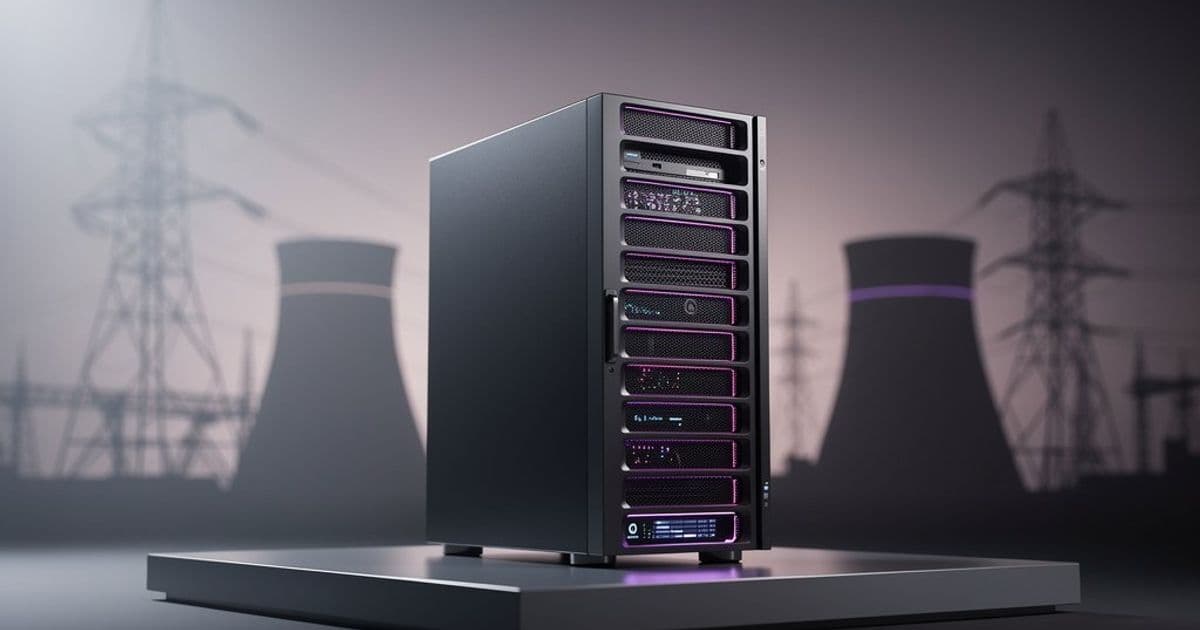
The Trump administration is pressuring PJM Interconnection, the largest US grid operator, to hold an emergency $15 billion auction to secure new baseload power generation. The plan would have major tech companies like OpenAI and Meta sign 15-year contracts to fund power plants, shielding residential customers from rate hikes caused by AI datacenter expansion.
The Trump administration is taking direct action to address the growing power consumption of AI datacenters by pressuring PJM Interconnection, the largest grid operator in the United States, to hold an emergency auction for new power generation capacity. The proposed $15 billion initiative would require major technology companies to fund new baseload power plants through long-term contracts, effectively making big tech pay for the infrastructure needed to support their expanding AI operations.
The PJM Interconnection Challenge
PJM Interconnection manages the electric grid for 13 states and the District of Columbia, serving approximately 65 million people. This region contains the highest concentration of datacenters in the United States, with new facilities regularly exceeding 100 megawatts of power capacity. Companies like OpenAI and Meta are reportedly planning multi-gigawatt campuses that would consume power equivalent to small cities.
The administration's concern stems from a fundamental grid capacity problem. Between 2020 and 2025, PJM took 17 gigawatts of capacity offline, much of it from coal-fired generators that Trump has consistently supported. This capacity reduction occurred during a period of rapidly increasing demand from datacenter expansion, creating a supply-demand imbalance that threatens grid stability and residential electricity rates.
The Administration's Plan
On Friday, US Energy Secretary Chris Wright and Interior Secretary Doug Burgum met with mid-Atlantic governors to push PJM to conduct an emergency auction. The proposal would secure 15-year power purchase agreements where tech companies would fund new baseload generation. The administration argues this approach prevents residential customers from "picking up the tab" for datacenter expansion.
The Energy Department's fact sheet explicitly states: "The United States cannot afford to continue down the unstable and dangerous path of energy subtraction previous leaders pursued, forcing the closure of baseload power sources like coal and natural gas." This represents a clear policy shift toward maintaining and expanding fossil fuel generation capacity.
PJM's Response
PJM's board of managers responded to the administration's pressure by directing staff to "develop a proposal to both accelerate and execute" a backstop procurement to supplement the grid operator's last capacity auction. While not committing to the specific $15 billion emergency auction, PJM acknowledged the need for additional capacity planning.
Tech Industry's Parallel Efforts
The administration's initiative aligns with ongoing efforts by major tech companies to secure their own power supplies. Microsoft recently formalized commitments to "pay its way" to ensure local utility customers don't foot the bill for datacenter expansion. The company has pursued multiple strategies:
- Nuclear partnerships: Microsoft signed long-term deals with nuclear power startups including Oklo and X-Energy
- Reactor restart: Microsoft's agreement to restart Three Mile Island Unit 1 (the reactor that didn't experience the 1979 partial meltdown) is on track for operations resuming in late 2025
- Gas generation: Many operators are commissioning new gas-fired plants and deploying portable generators as stopgap measures
Meta has formed "Meta Compute" to plan for "hundreds of gigawatts" of AI datacenter capacity, while OpenAI has similarly pursued direct power generation investments.
Supply Chain Bottlenecks
Despite these initiatives, significant supply chain challenges persist. Gas turbine equipment faces waitlists extending to 2030, limiting the speed at which new gas plants can be deployed. Even optimistic forecasts suggest the first commercial small modular reactors won't come online until the end of the decade.
This creates a critical timing problem: datacenter expansion is happening now, but new baseload generation capacity won't be available for years. The emergency auction proposal attempts to address this gap by accelerating procurement, but the physical constraints of equipment manufacturing and plant construction remain substantial barriers.
Political Context
The issue has bipartisan concern. Last month, three Democratic senators launched a probe into why residential electricity rates continue rising despite datacenter operators' claims that their facilities don't impact local grids. President Trump has used Truth Social to declare "I never want Americans to pay higher electricity bills because of datacenters."
The political pressure on PJM reflects a broader tension between rapid AI development and grid capacity constraints. While tech companies argue they're bringing substantial economic investment, local communities and politicians are increasingly concerned about the tangible impacts on energy costs and grid reliability.
Technical Implications for Homelab Builders
For those building home labs and small-scale computing infrastructure, this situation highlights the growing strain on electrical grids. The massive power requirements of AI datacenters (often 100+ MW per facility) dwarf typical residential service (typically 10-20 kW). However, the infrastructure investments needed to support these facilities will affect transmission and distribution networks that serve all users.
The push for more baseload generation, particularly coal and gas plants, represents a significant policy shift from renewable energy mandates. For homelab enthusiasts, this may mean:
- Grid stability concerns: More baseload generation could improve grid reliability during peak demand periods
- Rate structures: Time-of-use pricing and demand charges may become more prevalent as utilities manage grid constraints
- Local generation: Interest in residential solar, battery storage, and microgrids may increase as consumers seek energy independence
Looking Ahead
The emergency auction proposal represents a market-based approach to a capacity crisis. If implemented, it would create a precedent for direct infrastructure funding by tech companies. However, the physical constraints of equipment manufacturing and plant construction mean that even successful auctions won't immediately solve the capacity shortage.
The situation underscores a fundamental challenge in the AI era: computational demand is growing exponentially, but energy infrastructure scales linearly at best. The race to build AI capabilities is now directly competing with the race to build the power plants needed to run them, with significant implications for costs, timelines, and environmental policy.
For the broader technology ecosystem, this development signals that energy costs and availability will become increasingly critical factors in datacenter location decisions and AI development strategies. The era of cheap, abundant power for computing is ending, and the industry is scrambling to adapt.
Related: Microsoft's nuclear power ambitions, PJM Interconnection capacity planning, Department of Energy AI datacenter initiatives
Comments
Please log in or register to join the discussion