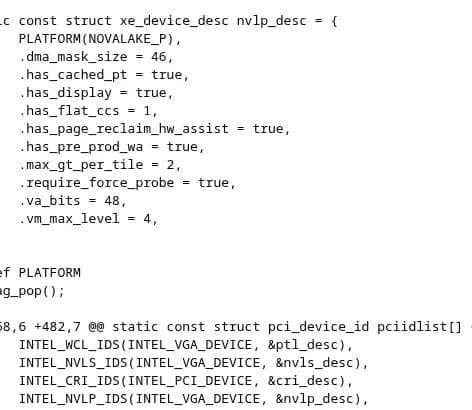
Intel has submitted their first batch of Xe3 graphics driver improvements for the Linux 7.1 kernel, including extensive support for Crescent Island and Nova Lake hardware.
Intel is laying the groundwork for next-generation graphics support in Linux with their first batch of Xe3 driver improvements submitted for the upcoming Linux 7.1 kernel. The company yesterday sent out their initial "drm-xe-next" pull request to DRM-Next, marking the beginning of their contributions for the mid-April merge window.
This first round of patches represents significant progress on Intel's Xe3 architecture, which powers their latest Crescent Island and Nova Lake integrated graphics. The improvements span multiple areas of the driver stack, with Intel noting "lots of work" specifically dedicated to Xe3(P) graphics support.
Among the key enhancements are hardware workarounds and SR-IOV (Single Root I/O Virtualization) changes that will improve compatibility and performance in virtualized environments. The driver now includes context-based TLB (Translation Lookaside Buffer) invalidations, which should provide more efficient memory management for graphics workloads.
Intel has also focused heavily on discrete GPU memory optimizations, addressing one of the critical bottlenecks in modern graphics performance. The windower hardware filtering setting has been applied for both Xe3 and Xe3P configurations, potentially improving image quality and rendering efficiency.
For the Xe3P variant specifically, the patches introduce prefetch page-fault support, which should reduce latency when accessing graphics memory. Multi-queue support for Xe3P_XPC has been added, enabling better parallelization of graphics workloads. Various enabling changes for Xe3P_LPG and Nova Lake P have also been included.
The driver now recognizes additional Panther Lake and Wildcat Lake PCI graphics device IDs, expanding support for Intel's evolving product lineup. These additions ensure that newer hardware will be properly identified and configured when running Linux 7.1.
This initial submission is just the beginning, with Intel promising more i915 and Xe driver improvements in the coming weeks. The comprehensive nature of these patches suggests Intel is taking a methodical approach to ensuring their latest graphics architecture is fully supported in the mainline kernel.
For Linux users and developers, this work represents Intel's continued commitment to open-source graphics drivers. By upstreaming these improvements early in the development cycle, Intel gives the broader community time to test and validate the changes before the stable release.
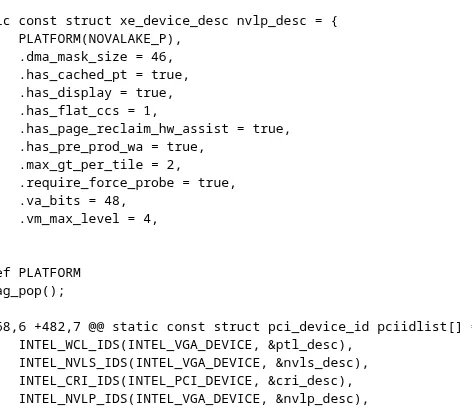
The full list of patches submitted via drm-xe-next is available in the pull request, providing transparency into Intel's development process and allowing interested parties to examine the specific changes being made to the graphics driver stack.

Comments
Please log in or register to join the discussion