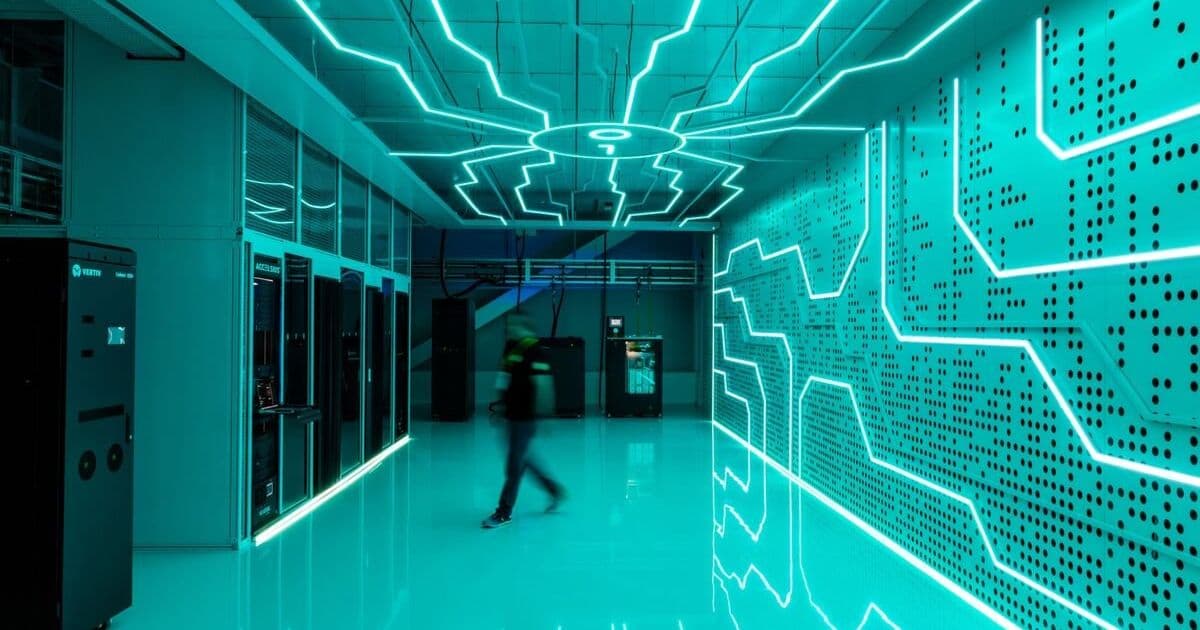
A collaborative UK trial involving the National Grid and Nvidia demonstrates that AI data centers can dynamically adjust their power consumption, potentially easing grid strain during peak periods.
A groundbreaking UK trial has demonstrated that AI data centers can operate flexibly, adjusting their power consumption during peak demand periods without compromising their core functions. The trial, conducted by the National Grid in collaboration with Nvidia and other partners, marks a significant step toward integrating energy-intensive AI infrastructure with existing power grids.
The trial tested whether AI data centers could temporarily reduce their power draw when requested by grid operators, effectively acting as a "virtual power plant" that can help balance electricity supply and demand. This capability is particularly crucial as the proliferation of AI data centers threatens to strain power grids already grappling with the challenges of renewable energy integration and electrification of transportation.
How the Trial Worked
The experiment involved sophisticated power management systems that allowed AI workloads to be temporarily scaled back or shifted to different times of day. Rather than running at maximum capacity 24/7, the data centers demonstrated they could maintain essential operations while reducing non-critical processing during peak hours.
This approach differs fundamentally from traditional data center operations, which typically run at constant capacity to ensure consistent service levels. The trial showed that many AI workloads, particularly those involving training and inference tasks, can tolerate temporary reductions in compute power without significant impact on end users.
Why This Matters
AI data centers are among the most power-hungry facilities being built today. A single large AI training cluster can consume as much electricity as a small city. As companies race to build more powerful AI systems, the energy demands are growing exponentially, creating potential conflicts with grid stability and climate goals.
The ability to flex power consumption addresses several critical challenges:
- Grid Stability: AI data centers can absorb excess renewable energy when available and reduce consumption during peak demand, helping balance the grid
- Cost Reduction: Data center operators can take advantage of lower electricity rates during off-peak hours
- Environmental Impact: Better integration with renewable energy sources reduces the need for fossil fuel peaker plants
- Infrastructure Planning: Reduces the need for expensive grid upgrades to accommodate new data center loads
Technical Implementation
The trial leveraged several technologies to achieve this flexibility:
Workload Orchestration: AI training jobs and inference requests were dynamically scheduled based on grid conditions and electricity prices. Non-time-sensitive tasks could be delayed or distributed across multiple facilities.
Power Management Hardware: Advanced power distribution units and UPS systems allowed for granular control over electricity consumption at the server level.
AI-Powered Forecasting: Machine learning models predicted both grid demand and the computational requirements of AI workloads, enabling proactive adjustments.
Communication Protocols: Standardized interfaces allowed grid operators to send real-time signals to data centers about current grid conditions and request power adjustments.
Industry Implications
The success of this trial could reshape how AI infrastructure is deployed and operated. Several major tech companies are already exploring similar approaches:
- Google has been experimenting with "carbon-intelligent computing" that schedules workloads based on renewable energy availability
- Microsoft is testing underwater data centers that can be co-located with offshore wind farms
- Amazon has announced plans for data centers that can operate on 100% renewable energy with flexible consumption patterns
Challenges and Limitations
While the trial demonstrated technical feasibility, several challenges remain before this approach can be widely deployed:
Economic Incentives: Data center operators need clear financial benefits to justify the complexity of implementing flexible power systems. Current electricity pricing structures often don't reward demand response.
Service Level Agreements: Many AI services require guaranteed response times, making it difficult to reduce power during peak demand without affecting users.
Technical Complexity: Implementing the necessary infrastructure requires significant investment in both hardware and software.
Regulatory Framework: Clear regulations and standards are needed to govern how data centers interact with grid operators.
Future Outlook
The UK trial represents just the beginning of what could become a fundamental shift in how we think about data center operations. As AI continues to grow in importance and energy consumption, the ability to integrate these facilities seamlessly with power grids will become increasingly critical.
Several trends suggest this approach will become more common:
- Increasing Grid Pressure: As more sectors electrify and renewable energy penetration grows, grid flexibility will become more valuable
- AI Efficiency Improvements: As AI models become more efficient, the relative impact of power management will increase
- Policy Support: Governments are beginning to recognize the importance of demand response in achieving climate goals
- Market Development: New electricity markets and pricing structures are emerging that reward flexible consumption
The collaboration between the National Grid, Nvidia, and other partners demonstrates that the technical challenges of flexible AI data centers can be overcome. The next frontier will be scaling these solutions and creating the economic and regulatory frameworks that make them viable at commercial scale.
This trial suggests that the AI revolution need not come at the expense of grid stability or climate goals. By embracing flexibility and intelligent power management, the industry can continue to advance AI capabilities while contributing to a more sustainable and resilient energy future.
Comments
Please log in or register to join the discussion