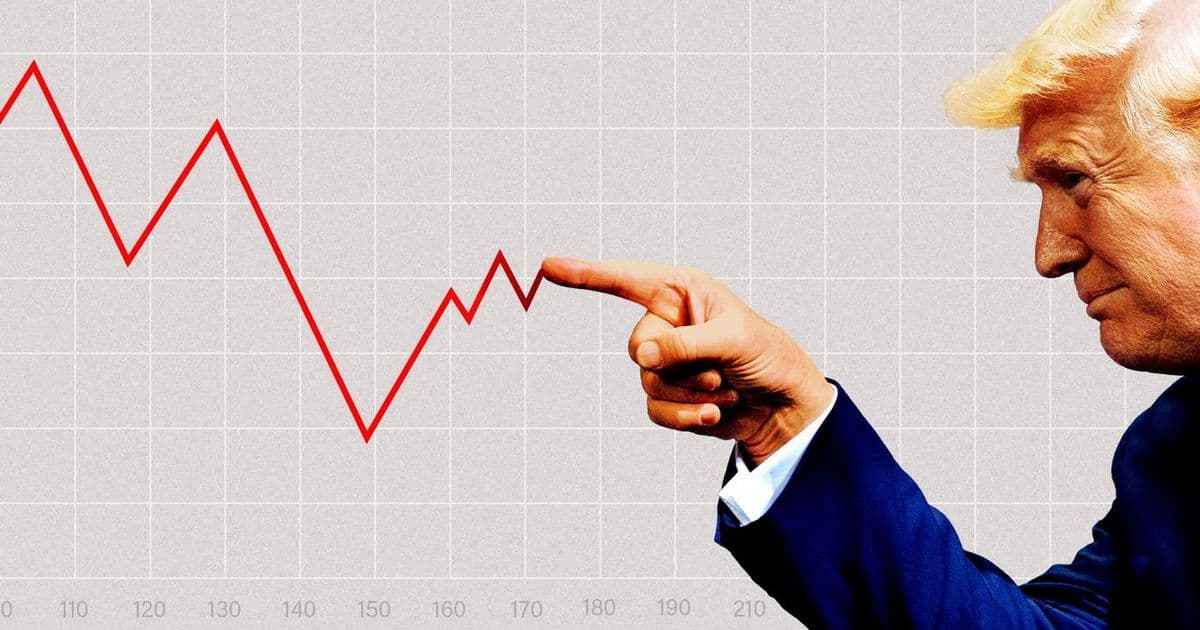
Former President Trump's public push for lower mortgage and credit card rates highlights growing political pressure on the Federal Reserve as borrowing costs remain elevated.
The political spotlight on interest rates intensified this week as former President Trump called for immediate reductions in mortgage and credit card rates, positioning consumer borrowing costs as a central campaign issue.
The statement arrives as the Federal Reserve holds its benchmark rate at a 23-year high of 5.25%-5.50%, where it has remained since July 2023. Mortgage rates have responded accordingly, with the 30-year fixed average hovering near 7% throughout much of 2024, compared to sub-3% levels during the pandemic era. Credit card APRs have climbed even more dramatically, now averaging 21.5% according to Federal Reserve data, up from 16.3% in early 2022.
This represents a fundamental shift in household financial pressure. The average American household carrying credit card debt now pays approximately $1,600 more annually in interest than they did two years ago. For a $300,000 mortgage, the difference between 2021's 2.8% average and today's 7% rate translates to roughly $700 in additional monthly payments.
Trump's intervention marks a departure from traditional presidential deference to Fed independence. While presidents occasionally comment on monetary policy, direct calls for specific rate actions are rare and typically avoided by administrations seeking to maintain central bank credibility. The Fed's dual mandate of price stability and maximum employment gives it statutory independence from political pressure, though its actions inevitably become campaign fodder during election cycles.
The timing reflects broader economic anxieties. Consumer spending, which accounts for roughly 70% of U.S. economic activity, has shown signs of strain as pandemic-era savings deplete and debt service costs consume larger portions of household budgets. Delinquency rates on credit cards have risen to 8.5% from 7.5% in 2022, while auto loan delinquencies have reached their highest levels since 2008.
Fed Chair Jerome Powell has consistently signaled that the central bank needs more evidence that inflation is sustainably returning to its 2% target before cutting rates. The Personal Consumption Expenditures price index, the Fed's preferred inflation gauge, registered 2.5% year-over-year in June, down from peaks above 7% in 2022 but still above target.
The political calculus is straightforward: lower rates would provide immediate relief to voters feeling financial pressure, potentially boosting consumer confidence and spending ahead of the election. However, premature rate cuts risk reigniting inflation, potentially causing more economic damage long-term.
Market expectations suggest the Fed will likely begin cutting in September or later, with futures markets pricing in two to three quarter-point reductions by year-end. Any move before the November election would be viewed through a political lens, regardless of the Fed's stated independence.
For tech companies and startups, the rate environment remains critical. Higher rates have already cooled venture capital deployment and made growth-stage fundraising more challenging. While lower rates would likely stimulate investment activity, the path to that outcome—whether through Fed action or economic slowdown—will significantly impact how tech companies plan their capital strategies in 2025.
Comments
Please log in or register to join the discussion