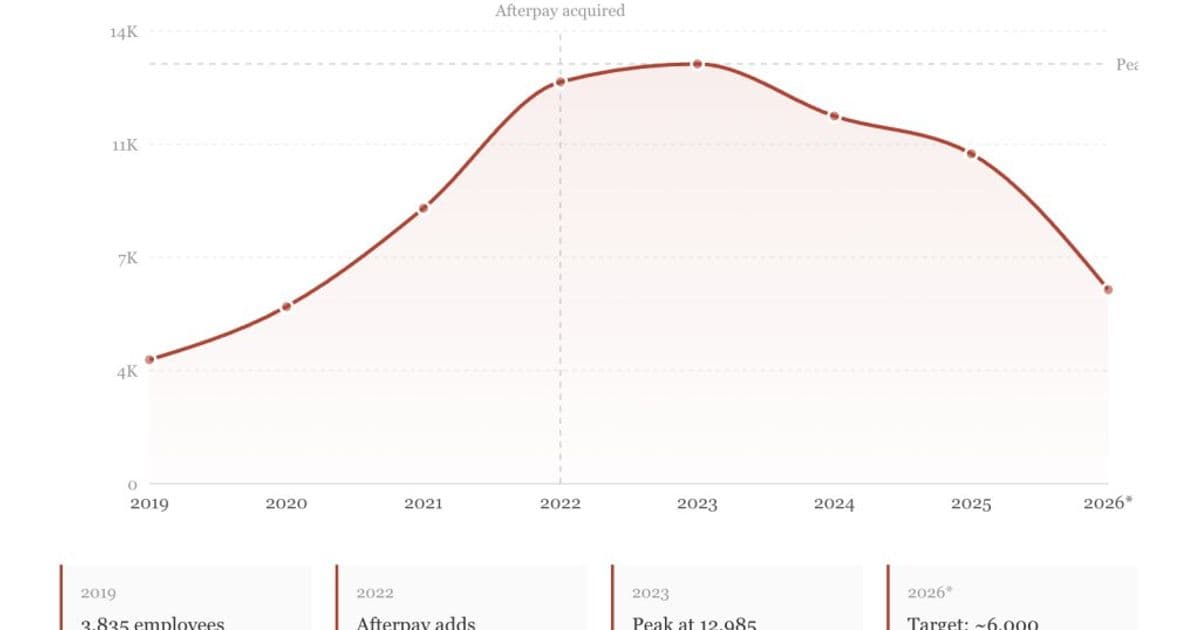
Jack Dorsey's Block exemplifies the operational chaos plaguing mid-tier tech companies that thrived during the cloud, mobile, and ZIRP eras, as highlighted in a critical analysis of the company's recent performance.
The tech industry is facing a reckoning with operational discipline, and Block (formerly Square) under Jack Dorsey's leadership has become the poster child for what happens when mid-tier public tech companies lose their way. The company's recent struggles exemplify a broader pattern affecting businesses that flourished during the cloud, mobile, and zero-interest-rate policy (ZIRP) era but now find themselves unable to adapt to more challenging economic conditions.
Block's problems run deeper than typical market fluctuations. The company, which once symbolized the democratization of financial services through its payment processing platform, has become emblematic of the lack of operational discipline that plagues many mid-tier public tech companies. This isn't just about missing quarterly targets or stock price volatility—it's about fundamental issues in how these companies are managed and structured.
The ZIRP era created a perfect storm for companies like Block. With cheap capital readily available, businesses could grow rapidly without the same level of financial scrutiny they face today. Cloud computing reduced infrastructure costs, mobile technology expanded market reach, and low interest rates made it easy to fund ambitious expansion plans. However, this environment also allowed operational inefficiencies and strategic drift to go unchecked.
What makes Block particularly illustrative is how it mirrors the trajectory of other mid-tier tech companies that have struggled to find their footing as market conditions changed. These companies often share common characteristics: they grew quickly during favorable economic conditions, expanded into multiple product lines without clear strategic focus, and relied heavily on external capital rather than building sustainable business models.
The operational discipline crisis extends beyond just financial management. Many of these companies suffer from organizational bloat, unclear product strategies, and leadership that hasn't evolved to meet new market realities. Jack Dorsey's dual role as CEO of both Block and X (formerly Twitter) has raised questions about whether he can provide the focused leadership these complex businesses require.
This pattern isn't unique to Block. Across the tech sector, companies that once seemed invincible are now grappling with basic questions about their purpose, profitability, and long-term viability. The shift from growth-at-all-costs to profitability-focused strategies has exposed weaknesses that were masked during the ZIRP era.
For investors and industry observers, Block serves as a cautionary tale about the importance of operational discipline in tech companies. The company's struggles highlight how quickly market sentiment can shift when fundamental business issues aren't addressed, regardless of how innovative or well-positioned a company might have been in the past.
The broader implications for the tech industry are significant. As companies face increased pressure to demonstrate profitability and operational efficiency, those that haven't built strong foundations during the growth years may find themselves particularly vulnerable. This could lead to consolidation in the mid-tier tech space, with stronger players acquiring or absorbing those that can't adapt to the new reality.
What's particularly concerning is that many of these companies still haven't fully acknowledged the depth of the operational challenges they face. There's often a tendency to blame external factors—market conditions, competition, or regulatory changes—rather than confronting internal issues around management, strategy, and execution.
The tech industry's next phase will likely favor companies that can demonstrate not just innovation but also operational excellence. Block's current struggles suggest that the era of easy growth and abundant capital may be over, and companies will need to earn their success through disciplined execution rather than relying on favorable market conditions.
As the industry evolves, the companies that survive and thrive will likely be those that can balance innovation with operational rigor, maintain clear strategic focus, and build sustainable business models that don't depend on external factors like cheap capital or favorable market cycles. Block's journey from fintech darling to cautionary tale offers valuable lessons for the entire tech sector about the importance of maintaining operational discipline even during the best of times.
The question now is whether Block and similar companies can course-correct before it's too late, or if they'll become examples of how the tech industry's golden era of easy growth has given way to a more challenging environment where only the operationally disciplined can succeed.
Comments
Please log in or register to join the discussion