
Former President Donald Trump declared that tech giants must 'pay their own way' for data center energy consumption, warning against passing costs to consumers. This stance emerges as AI infrastructure’s massive electricity demands strain power grids globally.
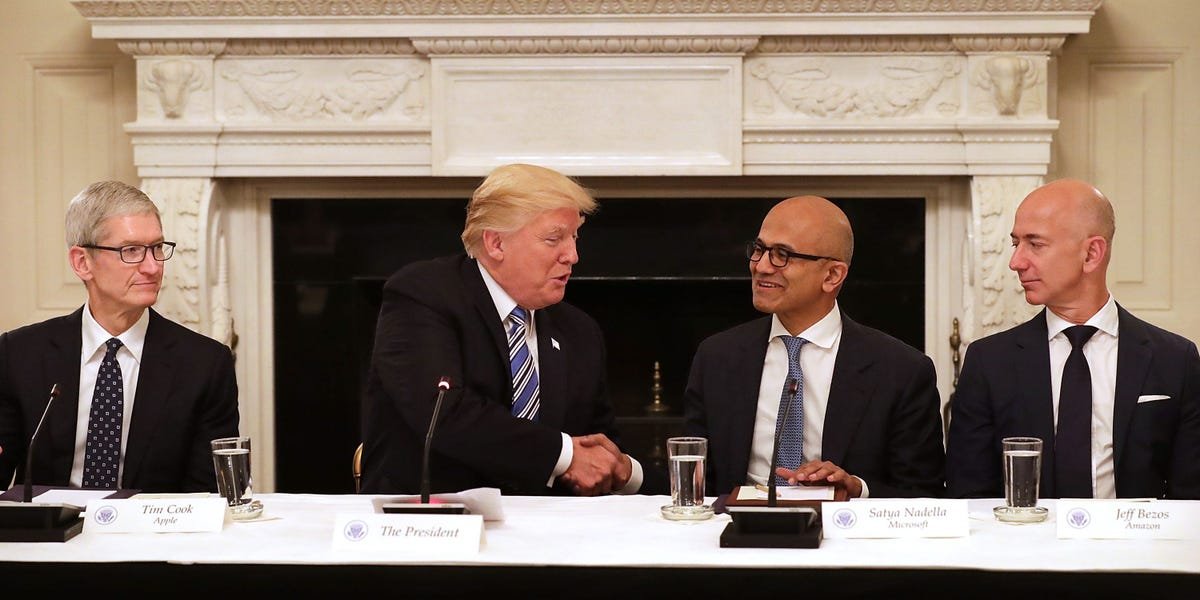
Former President Donald Trump's recent assertion that Microsoft will 'ensure' Americans avoid higher utility bills from data center power consumption signals mounting political pressure on tech companies to shoulder infrastructure costs. His Truth Social statement emphasized that Big Tech must 'pay their own way' for their energy-intensive operations—a direct challenge as AI computing demands escalate nationwide.
Data centers currently consume 2–3% of U.S. electricity, a figure projected to triple by 2030 due largely to AI workloads. Microsoft, Google, and Meta collectively operate hundreds of facilities drawing power equivalent to mid-sized cities. For context, a single ChatGPT query requires ten times more energy than a Google search. Trump’s comments align with regional backlash; Virginia residents already face 15% rate hikes partly attributed to data center expansion in the state.
Industry pushback emerged swiftly. TechNet, a lobbying group, countered that data centers generate 'billions in tax revenue and high-wage jobs,' noting companies invest heavily in renewable energy projects. Microsoft’s recent $10 billion renewable procurement initiative exemplifies this trend. However, environmental analysts highlight that only 35% of industry energy comes from carbon-free sources, leaving grids reliant on fossil fuels during peak demand.
Critics argue Trump’s stance overlooks complexities. 'Forcing companies to 'pay their own way' could mean relocating servers overseas with laxer regulations,' warned energy economist Dr. Lena Kopp at Stanford. Others note hypocritical undertones: Trump’s 2017 tax cuts benefited tech giants now under scrutiny. Meanwhile, the Edison Electric Institute cautioned that abrupt cost-shifting might slow critical grid modernization efforts already co-funded by tech firms.
Globally, policymakers are experimenting with solutions. Ireland taxes data center carbon emissions, while Singapore mandates on-site power generation. The EU’s incoming AI Act includes efficiency standards for model training. These approaches contrast with U.S. federal inaction, though the Federal Energy Regulatory Commission recently opened hearings on tech’s grid impact.
The debate coincides with Meta’s announcement of 'Meta Compute'—a new division building 'tens of gigawatts' of AI infrastructure—and Anthropic’s launch of energy-intensive tools like Claude Cowork. As AI permeates industries from healthcare to finance, the collision between technological ambition and physical infrastructure constraints grows unavoidable. Trump’s intervention, whether campaign rhetoric or policy precursor, underscores that data centers’ societal costs can no longer remain invisible.
Comments
Please log in or register to join the discussion