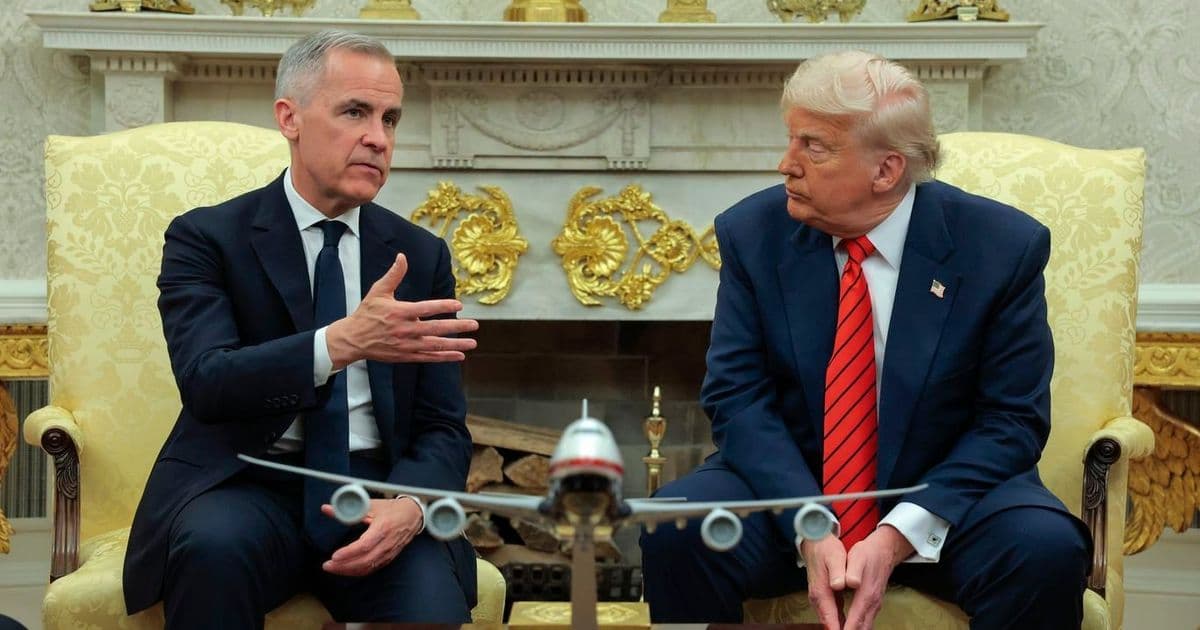
President Trump's renewed public criticism of Canadian Prime Minister Mark Carney follows a contentious exchange at the World Economic Forum in Davos, signaling a potential shift in US-Canada trade relations that could impact cross-border technology and financial services.
President Donald Trump escalated his public feud with Canadian Prime Minister Mark Carney on Thursday, issuing a series of statements criticizing Carney's economic policies and suggesting potential trade repercussions. The move comes just weeks after the two leaders engaged in a heated exchange at the World Economic Forum in Davos, Switzerland, where Carney challenged Trump's approach to international monetary policy.
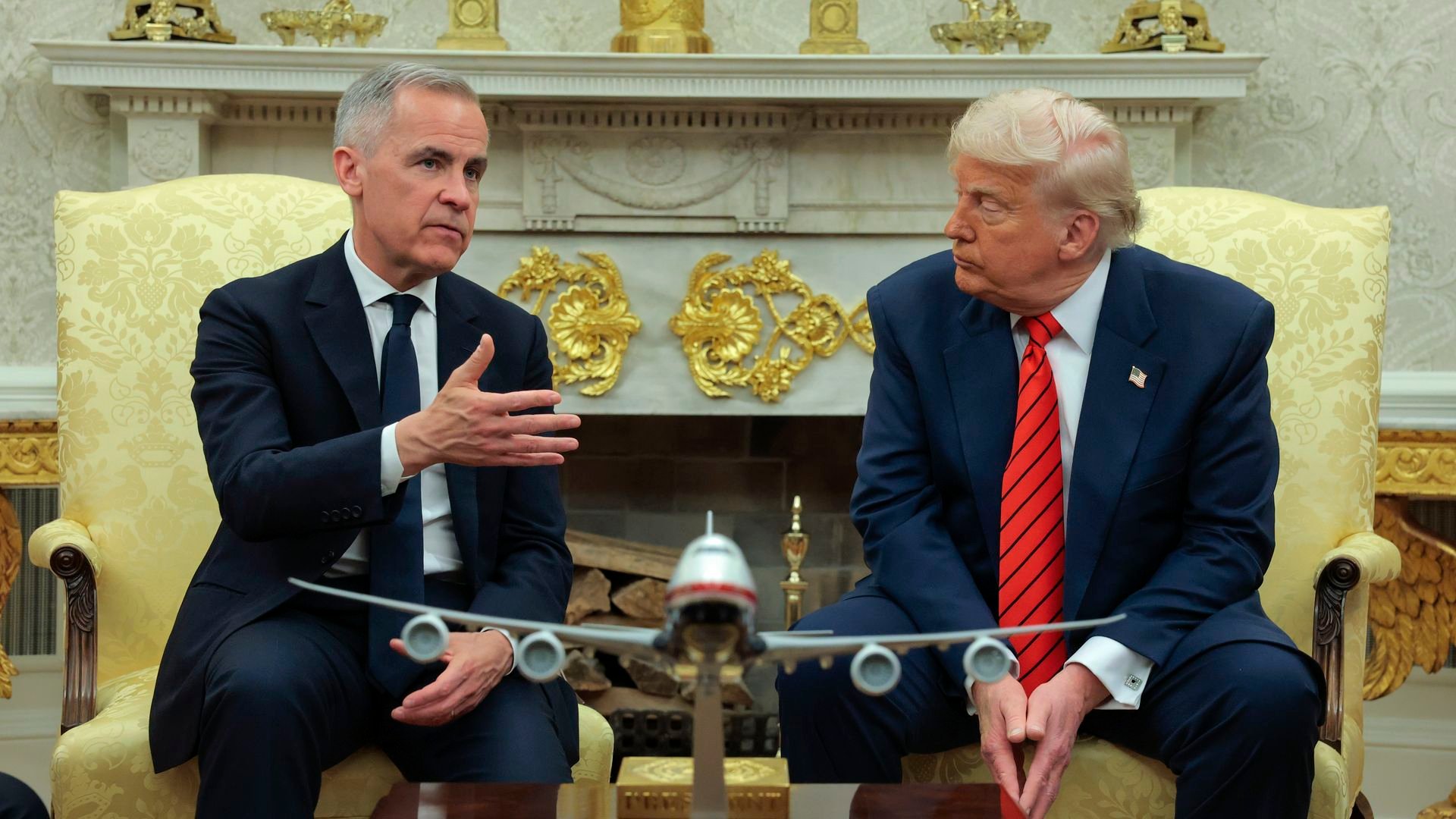
The confrontation at Davos centered on Carney's defense of multilateral trade agreements and his criticism of unilateral tariff measures. Trump, speaking to reporters after the meeting, described Carney's positions as "outdated" and "damaging to American interests." Carney, a former Bank of England governor with deep experience in global finance, countered that Trump's trade policies risked destabilizing the integrated North American supply chains that support millions of jobs in both countries.
This diplomatic friction carries significant implications for the technology sector, particularly for companies operating across the US-Canada border. The integrated North American technology market includes major semiconductor design firms in California with manufacturing facilities in Ontario, cloud computing providers with data centers in both countries, and a thriving fintech ecosystem that depends on seamless cross-border data flows. Any escalation in trade tensions could disrupt these operations, potentially affecting everything from chip production timelines to the cost of cloud services for Canadian businesses.
Financial markets have already responded cautiously to the renewed tensions. The Canadian dollar dipped slightly against the US dollar following Trump's statements, while shares of major Canadian technology firms with significant US exposure saw modest declines. Analysts note that prolonged uncertainty could affect investment decisions, particularly for venture capital firms that typically fund startups across both markets. The Toronto Stock Exchange's technology index has shown increased volatility since the Davos meeting, reflecting investor concerns about potential regulatory changes.
The strategic implications extend beyond immediate financial impacts. The US and Canada currently operate under the United States-Mexico-Canada Agreement (USMCA), which includes provisions for digital trade and data flows. Any renegotiation or reinterpretation of these terms could affect how tech companies handle customer data, intellectual property, and cross-border services. For example, cloud providers like Amazon Web Services and Microsoft Azure, which maintain significant infrastructure in both countries, might face new compliance requirements or operational restrictions.
Carney's position as a former central banker gives his criticism particular weight in financial circles. His warning at Davos about the risks of "fragmenting the global financial system" resonated with many technology CFOs who rely on stable currency exchange rates and predictable regulatory environments for their international operations. The tech industry's dependence on global talent pipelines also makes immigration policy a critical concern—any tightening of cross-border work arrangements could affect the ability of Canadian tech firms to attract US talent and vice versa.
Industry groups have begun to respond to the escalating tensions. The Information Technology Industry Council (ITI), which represents major tech companies, issued a statement emphasizing the importance of stable trade relations for innovation. Similarly, the Canadian Council of Technology Executives has called for dialogue to prevent disruption to the sector. These organizations point to data showing that cross-border tech trade between the US and Canada exceeded $150 billion in 2024, supporting over 2 million jobs in both countries.
Looking ahead, the situation presents a complex challenge for both leaders. Trump's administration has shown willingness to use trade policy as leverage in diplomatic disputes, while Carney's government has emphasized its commitment to multilateral solutions. For the technology sector, the key question is whether this diplomatic friction will remain rhetorical or evolve into concrete policy changes that affect business operations. Companies are already reviewing their supply chain strategies and regulatory compliance plans, with many preparing for multiple scenarios ranging from status quo to significant trade restrictions.
The Davos confrontation and subsequent escalation highlight how geopolitical tensions can directly impact the technology industry's operational environment. As both leaders navigate their relationship, the tech sector's experience will serve as a bellwether for broader economic cooperation between the two nations. The coming months will likely determine whether this represents a temporary diplomatic spat or the beginning of a more fundamental shift in US-Canada trade relations affecting the technology landscape.
Comments
Please log in or register to join the discussion