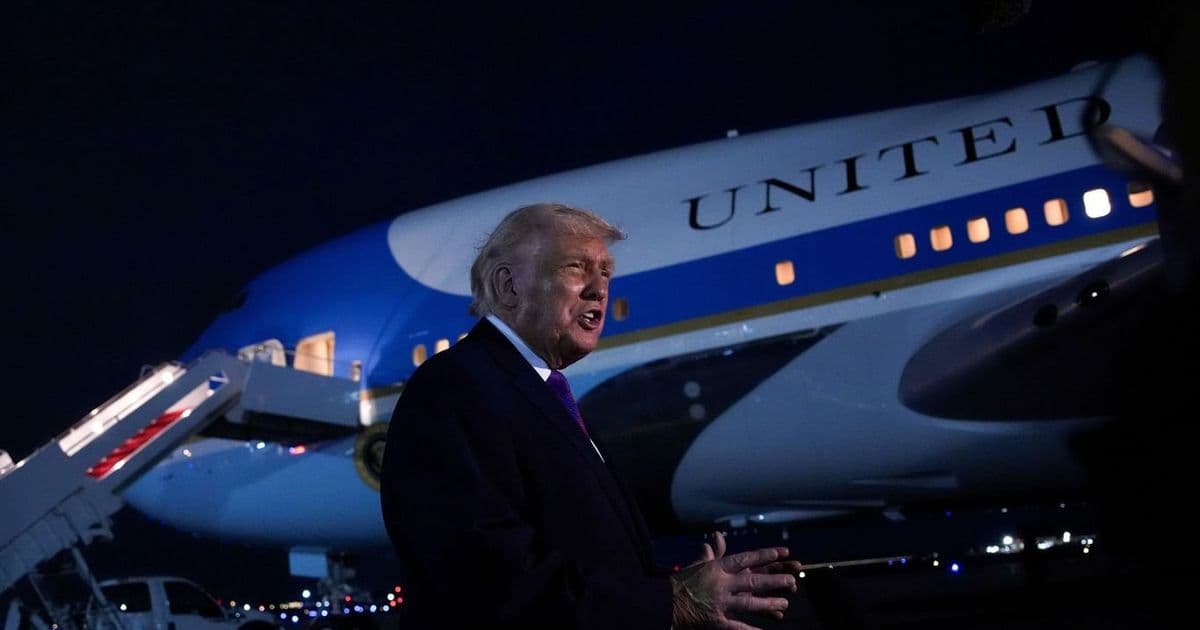
President Trump's inconsistent approach to Iran policy has created uncertainty about America's strategic objectives and long-term goals in the region.
President Trump's erratic approach to Iran policy has created a fog of confusion around America's endgame in the Middle East, leaving allies uncertain and adversaries emboldened.
A Pattern of Contradictions
Over the past several months, the administration has sent mixed signals about its Iran strategy. One week officials threaten military action, the next they signal openness to diplomacy. This whiplash has made it nearly impossible to discern what the United States actually wants to achieve.
National security advisor John Bolton has pushed for regime change while Secretary of State Mike Pompeo has outlined 12 demands for Iran that critics say amount to capitulation. Meanwhile, Trump himself has vacillated between maximum pressure and expressing willingness to meet with Iranian leaders without preconditions.
Strategic Confusion
The lack of coherent strategy has several consequences:
- Allies are hedging: European partners have moved forward with the INSTEX trade mechanism to circumvent U.S. sanctions, frustrated by American unpredictability
- Adversaries are emboldened: Iran has escalated its nuclear program and regional activities, calculating that Trump's threats may not be credible
- Domestic politics are muddled: The administration struggles to articulate clear objectives to Congress and the American public
The Endgame Problem
What exactly constitutes victory in this confrontation? The administration has never clearly defined its endgame:
- Is it regime change in Tehran?
- Complete Iranian capitulation on nuclear and regional activities?
- A new nuclear deal with stricter terms?
- Simply containing Iran's influence?
Without answering these questions, the U.S. risks drifting into a conflict without clear objectives or an exit strategy.
Regional Implications
The confusion extends beyond U.S.-Iran relations. Gulf states are increasingly nervous about American staying power, while Israel worries about being dragged into unwanted conflicts. Meanwhile, Russia and China are positioning themselves as more reliable partners to regional governments.
Looking Forward
As the 2020 election approaches, the administration faces pressure to show progress on Iran. But without a coherent strategy, any "victory" may prove Pyrrhic. The real question isn't whether Trump can pressure Iran, but whether the U.S. can achieve sustainable objectives in a region where American influence is waning.
The whiplash in Iran policy reflects a broader challenge: in an era of great power competition, America's Middle East strategy remains stuck in the past, unable to adapt to new realities or articulate a compelling vision for the future.
Comments
Please log in or register to join the discussion