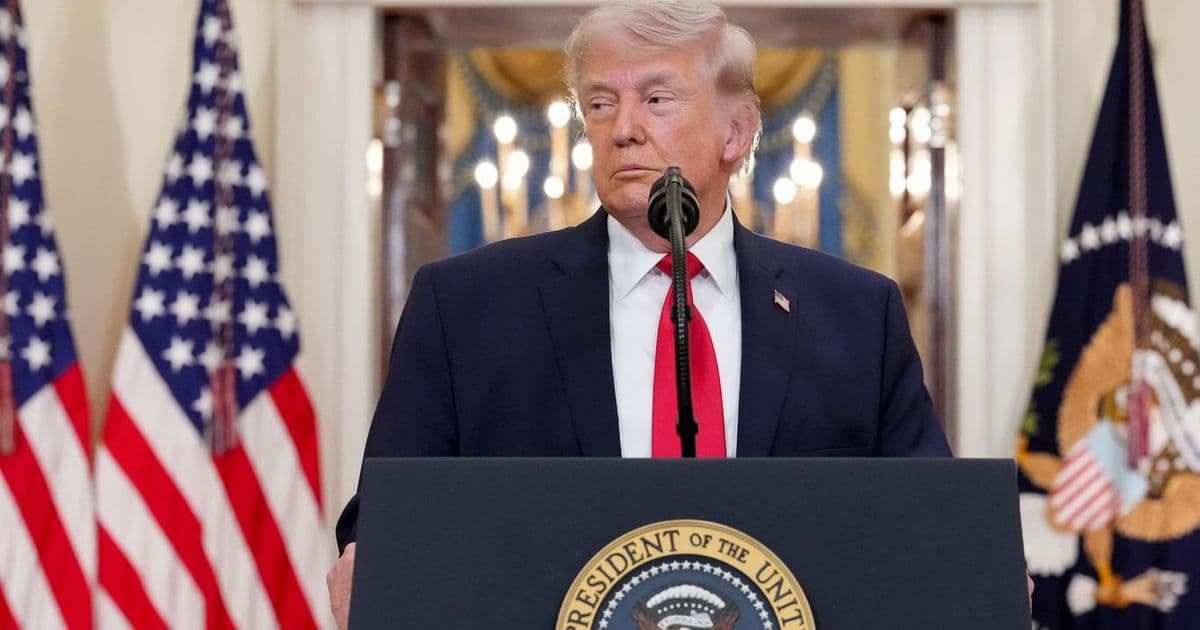
President Trump delivers prime-time address warning Iran to reopen Strait of Hormuz or face military strikes on critical infrastructure, escalating tensions in already volatile region.
President Trump delivered a prime-time address from the White House Tuesday evening, warning Iran that the United States would bomb Iranian power plants and bridges if the Strait of Hormuz remains closed, escalating tensions in the already volatile Middle East.
In his televised speech, Trump declared that the conflict with Iran is "very close" to completion, though he did not specify what that meant in terms of military objectives or diplomatic resolution. The president's comments come amid heightened concerns about Iran's control over the strategic waterway through which approximately 20% of the world's oil supply passes.
Strait of Hormuz: A Critical Chokepoint The Strait of Hormuz represents one of the most strategically important maritime passages in the world. Located between Iran and Oman, the narrow waterway connects the Persian Gulf with the Gulf of Oman and the Arabian Sea. Any disruption to shipping through this channel could have immediate and severe impacts on global oil markets and energy prices.
Iran has periodically threatened to close the strait in response to international pressure, particularly sanctions targeting its oil exports. The country's military has conducted exercises in the area and developed capabilities to potentially disrupt shipping, including naval mines, small boat swarms, and anti-ship missiles.
Infrastructure Targets and International Law Trump's threat to target power plants and bridges represents a significant escalation in rhetoric. Such infrastructure typically falls under civilian protection in international humanitarian law, raising questions about the legality and proportionality of such strikes under the laws of armed conflict.
Power plants serve dual purposes in Iran - they provide essential services to civilian populations while also potentially supporting military operations. Bridges similarly serve both civilian transportation needs and could have military applications. The distinction between legitimate military targets and protected civilian infrastructure often becomes blurred in conflict scenarios.
Regional and Global Implications
The threat of military action against Iran's critical infrastructure comes at a time when global oil markets are already experiencing volatility due to various factors, including OPEC production decisions, global demand fluctuations, and ongoing conflicts in other regions.
A closure of the Strait of Hormuz, even temporarily, could send oil prices soaring and create economic shockwaves worldwide. The United States and its allies have maintained a military presence in the region specifically to ensure freedom of navigation through these vital waterways.
Diplomatic Context
Trump's ultimatum appears to be part of a broader strategy of maximum pressure on Iran, which has included economic sanctions, diplomatic isolation, and military deterrence. The effectiveness of such an approach remains debated among foreign policy experts, with some arguing it increases the likelihood of conflict while others believe it forces Iran to negotiate.
The timing of the address suggests the administration may be responding to recent Iranian actions or statements regarding the Strait of Hormuz, though specific triggers were not detailed in the speech.
Military Capabilities and Response Options The United States military maintains significant capabilities in the region, including aircraft carrier strike groups, air bases, and naval forces that could potentially carry out strikes on Iranian targets. However, any military action would likely face complex operational challenges and could trigger Iranian retaliation through proxy forces across the Middle East.
Iran's military doctrine emphasizes asymmetric warfare and the use of proxy forces, making any direct military confrontation potentially unpredictable in its scope and duration.
Economic Stakes
Beyond the immediate security concerns, the situation carries substantial economic implications. The global economy remains sensitive to energy price shocks, and any disruption to oil flows through the Strait of Hormuz could impact everything from transportation costs to manufacturing expenses worldwide.
Major oil importers such as China, Japan, India, and European nations have significant interests in maintaining open shipping lanes through the Persian Gulf. The United States, despite being a major oil producer, still imports crude oil and petroleum products, making it vulnerable to price spikes as well.
Next Steps The coming days will likely reveal whether Iran responds to Trump's ultimatum with concessions or further escalation. The international community, including allies and adversaries alike, will be watching closely to see how this latest chapter in U.S.-Iran tensions unfolds.
The threat of military action against critical infrastructure marks a potentially dangerous new phase in the confrontation, one that could have lasting consequences for regional stability and global energy security.
Comments
Please log in or register to join the discussion