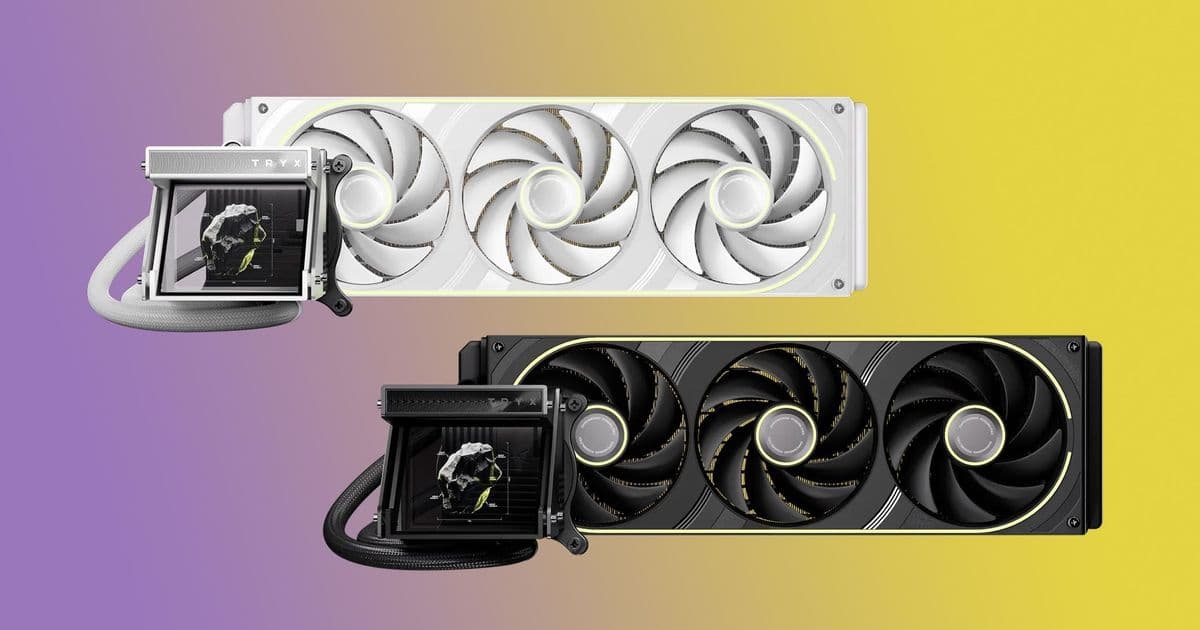
Chinese maker Tryx unveils the Holo 360mm AIO cooler, which embeds a beam‑splitter holographic display in the pump. The unit pairs Asetek’s 280 W pump, SLF‑bearing fans and broad CPU socket support with a 640×480 virtual image, raising questions about production complexity, component sourcing and market positioning.
Tryx Holo AIO Cooler Brings Beam‑Splitter Holography to the Pump Block
Announcement
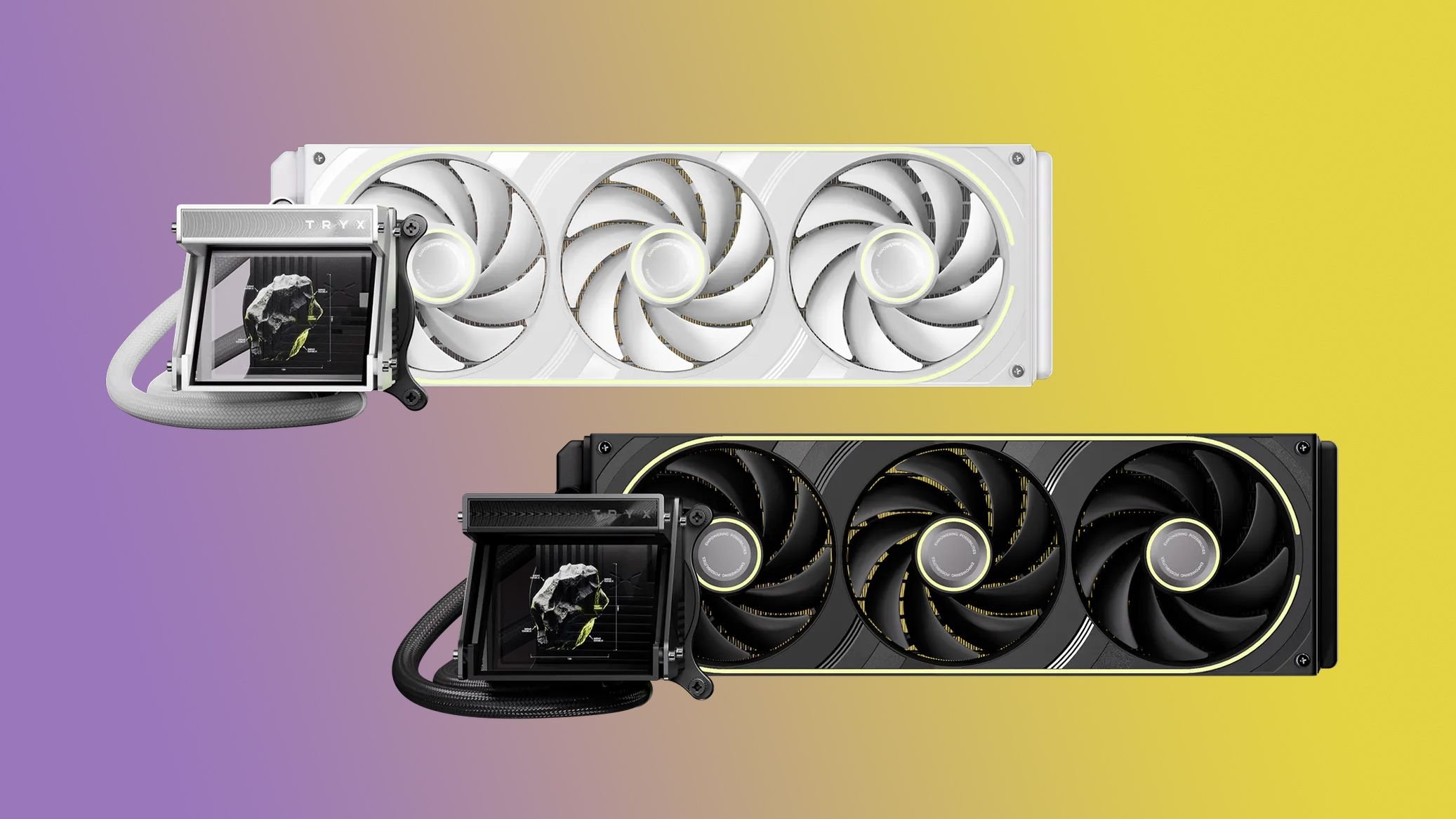
Chinese PC‑cooling specialist Tryx confirmed that its next‑generation all‑in‑one (AIO) liquid cooler, the Tryx Holo, will ship with a built‑in holographic‑style display. The company posted the specifications on its Mandarin‑language product page ahead of a planned reveal at Computex 2026. The Holo follows the 2024 panoramic‑OLED Tryx model, but replaces the flat OLED panel with a beam‑splitter projection system that creates a floating image inside the pump housing.
Technical specifications
| Category | Specification |
|---|---|
| Pump | Asetek‑derived unit, 280 W thermal design power, 800‑2800 RPM range |
| Radiator | 360 mm (three 120 mm fans); 240 mm and 280 mm versions slated for later |
| Fans | 120 mm FOBR fans, ARGB, SLF (Silent‑Lubricating‑Fluid) bearings, MTBF ≈ 50 000 h |
| Holographic system | Professional‑grade beam splitters, 640 × 480 pixel virtual image, 60° hinge adjustment |
| Control software | Kanali suite (Windows), supports JPG, MP4, GIF; OTA audio sync planned |
| CPU socket support | Intel LGA 115X, 1200, 1700, 1851; AMD AM4, AM5 |
| Power draw | Pump ≈ 12 W (max), fans ≈ 2 W each |
| Dimensions | Pump block ≈ 45 mm × 55 mm × 30 mm (including optics) |
How the holographic effect works
Unlike conventional LCD or OLED panels that stack a backlight, colour filter and driver electronics, the Holo uses beam splitters to direct light from a tiny high‑brightness LED through a series of partially reflective glass plates. The light is modulated by a micro‑DMD (digital micromirror device) chip that toggles mirrors at kilohertz rates, creating a raster image that appears to float above the pump surface. Because the image is formed by reflected light rather than emitted pixels, the system can achieve higher contrast in bright ambient conditions and avoids the “screen‑door” effect typical of low‑resolution LCDs.
The trade‑off is a fixed 640 × 480 resolution and a limited depth cue—essentially a 2‑D projection with perceived depth. The optics add roughly 5 mm to the pump’s overall height, a factor that may affect clearance in compact cases.
Component sourcing and supply‑chain considerations
- Beam‑splitter optics are sourced from specialist manufacturers in Germany and Japan, where lead times can exceed 12 weeks for custom‑coated glass. Any disruption in those supply chains (e.g., semiconductor fab outages affecting DMD chips) could delay volume production.
- Asetek pump modules are already in high demand for premium AIOs from brands like Corsair and NZXT. Tryx’s reliance on the same OEM means it will compete for the same allocation pool, potentially limiting early‑run quantities.
- SLF fan bearings are produced by a single Taiwanese supplier that also serves the enterprise server market. Recent shortages of high‑precision ceramics have pushed bearing costs up 15 % year‑over‑year.
- Kanali software is built on the Qt framework and integrates with Giphy’s API for GIFs. The OTA update pipeline will require a cloud‑hosting contract, adding operational expense.
Market implications
- Differentiation vs. cost – The holographic display is a visual differentiator that could justify a premium price point, but the added optics and software development raise the bill of materials (BOM) by an estimated $12‑$15 per unit compared with a standard OLED panel. If Tryx targets the enthusiast segment, the price may land in the $150‑$180 range, positioning it above the typical 360 mm AIO market median of $120.
- Production risk – The multi‑vendor supply chain (optics, DMD chips, Asetek pumps) introduces more points of failure than a conventional cooler. Early adopters may face longer lead times, and inventory shortages could push retailers to favor established brands with simpler designs.
- Software ecosystem – By bundling Kanali with Giphy integration, Tryx taps into the growing trend of “personalized PC skins.” However, the limited 640 × 480 resolution may deter users who expect crisp telemetry overlays. Success will depend on how well the OTA updates expand functionality (e.g., real‑time temperature graphs, Discord status sync).
- Compatibility breadth – Supporting both legacy Intel sockets (LGA 115X) and the newest LGA 1851 gives Tryx a wider install base, but it also means the mounting brackets must be machined to tighter tolerances. Early production runs may see a higher defect rate (target <0.5 %) as the brackets are calibrated.
- Competitive response – Major AIO players have begun experimenting with secondary displays (e.g., RGB LCD strips). The Holo’s holographic approach could force rivals to either adopt similar optics or double down on performance‑only narratives (higher pump flow, lower noise).
Outlook
If Tryx can secure a stable supply of beam‑splitter components and keep the pump allocation steady, the Holo could carve out a niche among custom‑build enthusiasts who value visual flair as much as thermal performance. The real test will be first‑run reliability; any early failures in the optics or fan bearings will quickly erode consumer confidence in a market that already tolerates a narrow margin for error.
Stay tuned for the official Computex unveiling, where Tryx is expected to reveal pricing, availability and a live demo of the holographic projection in action.
Sources: Tryx official product page (Chinese), Asetek pump datasheet, Kanali software documentation, Giphy API terms.
Comments
Please log in or register to join the discussion