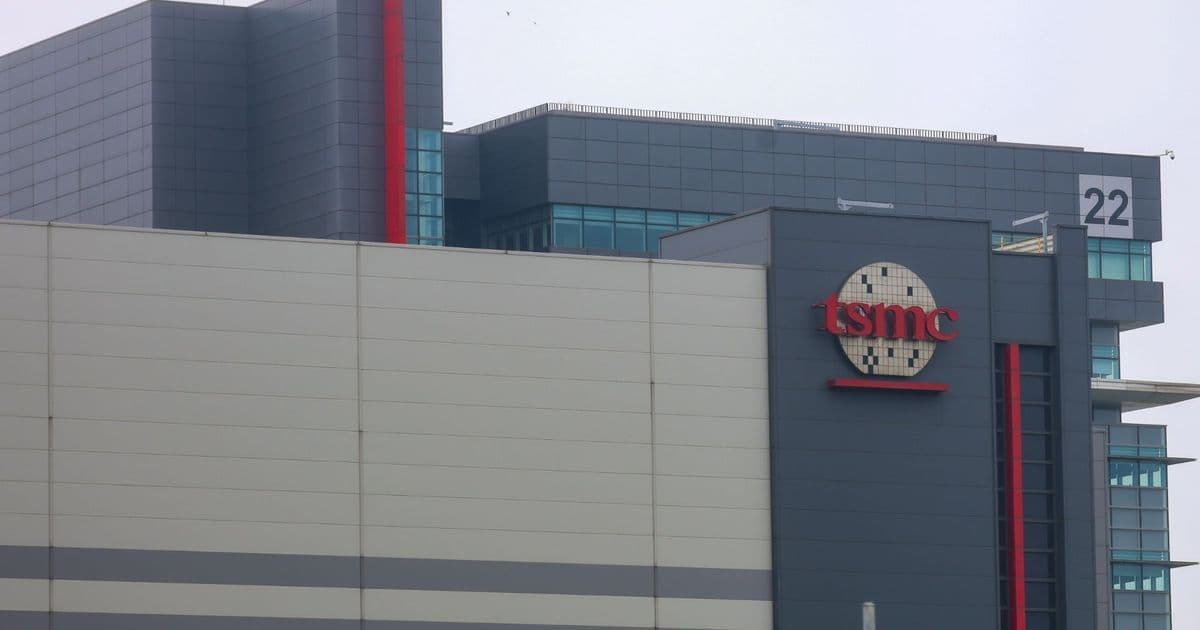
Taiwan Semiconductor Industry Association calls for strategic helium and LNG stockpiles as Middle East conflict disrupts critical supplies, threatening chip production across the island's fabs.
The Taiwan Semiconductor Industry Association (TSIA) has issued an urgent call for the government to establish strategic reserves of helium and liquefied natural gas (LNG), warning that the island's semiconductor industry faces severe supply chain disruptions following the recent Middle East conflict. The plea comes as the United States and Iran announced a two-week conditional ceasefire, temporarily easing tensions but failing to resolve the underlying vulnerabilities in Taiwan's critical material supply chains.
(Image credit: Getty / Anadolu)
Taiwan's semiconductor industry, which produces over 90% of the world's most advanced chips, relies heavily on imports for both energy and specialized materials. The island currently maintains only 11 days of strategic LNG supplies, with more than 40% of its power plants dependent on this fuel. More critically, Taiwan has no helium stockpiles whatsoever, despite the gas being essential for multiple stages of chip manufacturing.
The Helium Crisis: No Substitute for Critical Manufacturing Process
Helium plays an irreplaceable role in semiconductor fabrication. The inert gas is used for cooling superconducting magnets in lithography equipment, as a carrier gas in chemical vapor deposition processes, and for purging and cleaning chambers during chip production. Unlike other materials that might have alternative sources or substitutes, helium has no viable replacement in these critical manufacturing steps.
Cliff Hou, TSIA chairperson and senior vice president at Taiwan Semiconductor Manufacturing Company (TSMC), emphasized the gravity of the situation: "We also propose to the government that we need to keep diversifying sources of energy and critical materials supplies to prepare for the uncertainties." The industry's vulnerability became painfully apparent when Iran blockaded the Strait of Hormuz in March, disrupting the flow of aluminum, helium, and LNG—materials fundamental to global semiconductor supply chains.
Energy Independence and Nuclear Power Debate
The supply chain crisis has reignited debates about Taiwan's energy policy. The island shut down its last nuclear power plant in May 2025, leaving it dependent on imports for over 95% of its energy needs. This decision has proven particularly problematic given that nearly a third of Taiwan's LNG requirements come from Qatar, making the island extremely vulnerable to Middle Eastern geopolitical tensions.
TSIA has thrown its support behind the government's consideration of reopening nuclear power plants, provided that legal requirements are met and safety can be guaranteed. "Stable and sufficient energy is extremely vital for semiconductor industry development," Hou stated, highlighting the industry's massive power requirements for operating cleanrooms and advanced manufacturing equipment.
Global Context: Following Japan and U.S. Lead
The TSIA's call for strategic reserves follows similar moves by other major economies. Both Japan and the United States have established strategic helium stockpiles to protect their semiconductor industries from supply disruptions. The U.S. maintains the Federal Helium Reserve, while Japan has invested in long-term helium supply contracts and storage facilities.
These strategic reserves serve as buffers against the kind of supply chain shocks that Taiwan experienced during the recent conflict. When the Strait of Hormuz was blocked, TSIA members initially relied on short-term inventory to maintain operations, but began facing shortages by the third week of the war. This timeline demonstrates how quickly the industry can be brought to its knees without adequate strategic reserves.
Temporary Ceasefire, Persistent Vulnerabilities
The recent U.S.-Iran ceasefire agreement, while welcome, provides only a temporary reprieve. The two-week deal hinges on the reopening of the Strait of Hormuz, which would allow ships carrying critical materials to resume their journeys to Taiwan. However, the semiconductor industry's underlying vulnerabilities remain unaddressed.
QatarEnergy's Ras Laffan Industrial City, a major source of Taiwan's LNG, suffered extensive damage from direct strikes during the conflict. This damage will likely affect output for months, even if the ceasefire holds. Furthermore, the temporary nature of the agreement means that the threat of renewed conflict and subsequent supply chain disruptions remains very real.
The situation underscores the semiconductor industry's Achilles' heel: its dependence on a handful of critical materials sourced from geopolitically sensitive regions. As chip manufacturing becomes increasingly complex and specialized, the industry's vulnerability to supply chain disruptions grows proportionally. Taiwan's TSIA has made it clear that building strategic reserves of helium and LNG is no longer optional—it's an urgent necessity for maintaining the island's position as the world's semiconductor manufacturing hub.
Comments
Please log in or register to join the discussion