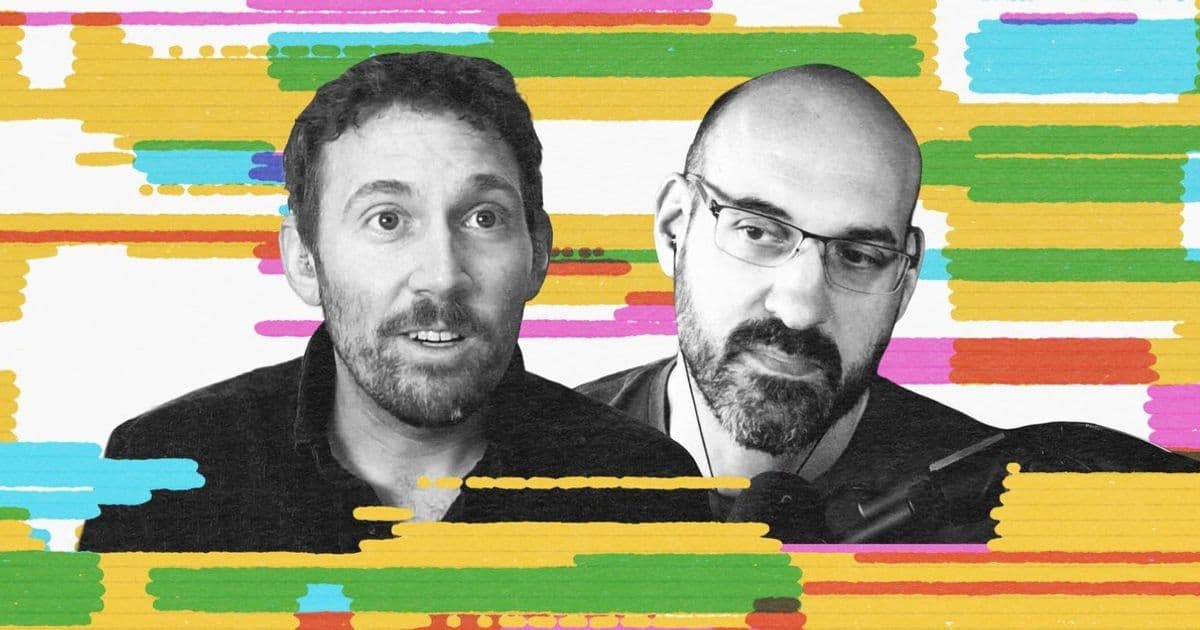
Jason Goldman, an early Twitter executive, reflects on the platform's free-speech-maximalist decisions and underinvestment in trust and safety that shaped today's social media landscape.
Charlie Warzel's interview with Jason Goldman, one of Twitter's earliest executives, offers a rare moment of reckoning from someone who helped build the social media giant we know today. The piece, published in The Atlantic, isn't just another tech nostalgia trip—it's a candid examination of how Twitter's foundational choices, made in the platform's scrappy early days, contributed to the information ecosystem we're still grappling with.
Goldman, who joined Twitter in 2006 as its first community manager and later became vice president of product, walks through the platform's early philosophy with the benefit of hindsight. The team operated on what he describes as "free-speech-maximalist" principles, believing that more speech was inherently better and that the platform should serve as a neutral conduit rather than an arbiter of content.
This approach wasn't born from malice but from a combination of idealism and practical constraints. Twitter was a tiny startup with limited resources, and the team genuinely believed they were building something that would democratize information and give everyone a voice. The problem, as Goldman now acknowledges, is that this hands-off approach created space for harassment, misinformation, and coordinated manipulation campaigns that the platform was ill-equipped to handle.
What's particularly striking about Goldman's reflection is his admission that Twitter systematically underinvested in trust and safety. The company viewed these functions as secondary to growth and engagement metrics, a decision that would have profound consequences as the platform scaled. By the time Twitter recognized the severity of these issues, the cultural and technical infrastructure for addressing them was already deeply embedded.
Warzel, who has written extensively about the intersection of technology and democracy, doesn't let Goldman off the hook easily. The interview probes uncomfortable questions about Twitter's role in political polarization, the spread of conspiracy theories, and the platform's handling of high-profile accounts that repeatedly violated its policies. Goldman's responses are measured but reveal someone still processing the unintended consequences of his work.
The timing of this reflection feels significant. We're in an era where social media platforms are facing unprecedented scrutiny, and many of the problems Twitter pioneered—algorithmic amplification of divisive content, the weaponization of verification systems, the challenge of moderating at scale—are now industry-wide concerns. Goldman's perspective offers valuable context for understanding how we got here.
What emerges from the conversation is a portrait of technologists who were brilliant at building products but naive about the societal impact of those products. The early Twitter team operated in a bubble, focused on technical challenges and user growth without fully considering how their creation might be used for harm. This isn't unique to Twitter—it's a pattern that has repeated across the tech industry.
The interview also touches on the personal toll of this reckoning. Goldman describes the difficulty of watching Twitter evolve into something that, in many ways, contradicted the values he and his colleagues initially held. There's a sense of responsibility without the power to effect change, a common experience for early employees of companies that grow beyond their control.
Perhaps most importantly, Goldman's reflection points toward lessons for the current generation of AI companies and social platforms. The mistakes of Twitter's early years—prioritizing growth over safety, assuming good intentions would prevail, underestimating the sophistication of bad actors—are being repeated in new contexts. Understanding this history might help prevent similar outcomes.
Warzel's interview doesn't offer neat resolutions or redemption arcs. Instead, it presents a nuanced look at how well-intentioned decisions can have far-reaching consequences, and how those who helped create powerful technologies must grapple with their legacy. In an industry that often moves fast and breaks things, Goldman's willingness to slow down and examine what was broken—and who it hurt—feels like an essential contribution to the ongoing conversation about technology's role in society.
As social media continues to evolve and new platforms emerge, the question isn't just what we build, but how we build it, who we build it for, and what we're willing to sacrifice in pursuit of growth. Goldman's reflection suggests that the answers to these questions matter more than we once thought, and that the cost of getting them wrong extends far beyond any single company's balance sheet.
The full interview is available on The Atlantic's website, offering readers a chance to engage with this important perspective on one of the defining technologies of our time.
Comments
Please log in or register to join the discussion