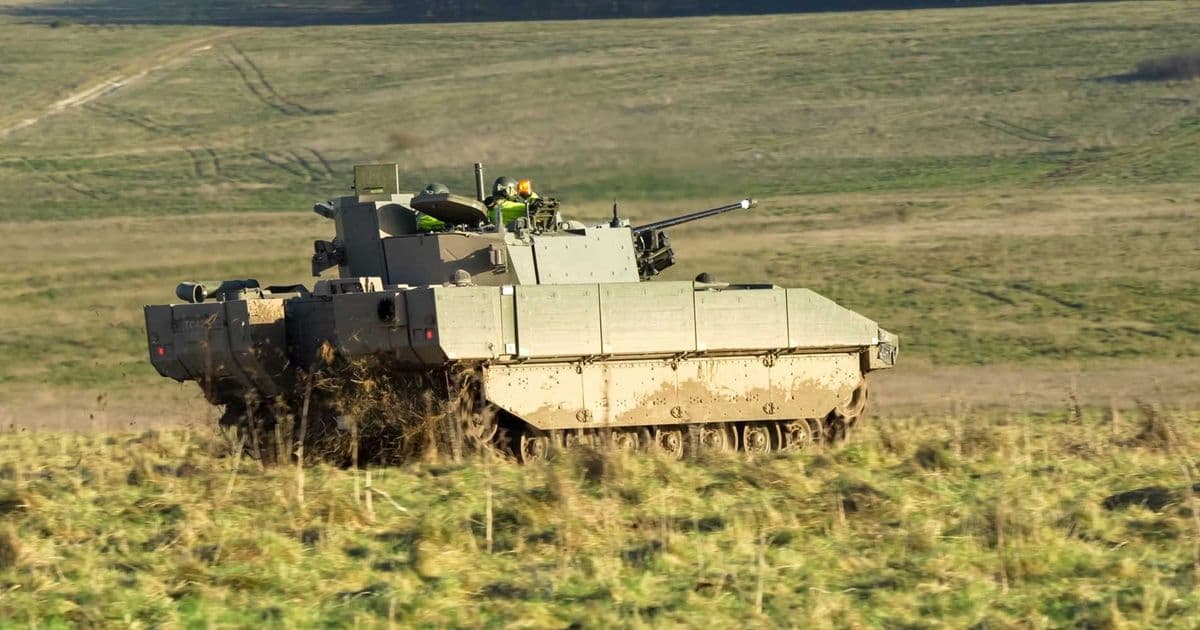
The UK's Ajax armored vehicle program faces an indefinite halt after personnel reported injuries from noise and vibration, while the government commits £650 million to upgrade Typhoon jets amid questions about the F-35's reliability and the UK's future combat air strategy.
The British Army's Ajax reconnaissance vehicle program has been thrown into fresh uncertainty after the Minister for Defence Readiness and Industry, Luke Pollard MP, ordered an indefinite pause on its use following reports of injuries to personnel. The decision comes despite initial operating capability being declared just two months ago, and raises serious questions about the future of the multibillion-pound program.
What Happened
In a statement to Parliament, Pollard revealed that 35 service personnel reported symptoms consistent with noise and vibration effects during a training exercise. This followed written assurances he had received from senior Ministry of Defence (MoD) personnel that Ajax was "demonstrably safe." The minister has now ordered a safety investigation and suspended all Ajax training activities indefinitely.
A ministerial review concluded that while issues with the Ajax program had been raised, they were not being "elevated to an appropriate level." In response, the Senior Responsible Owner of the Ajax program has been removed from their position, and oversight has been transferred to the National Armaments Director, Rupert Pearce, a civil servant appointed last year to reform defense procurement.
The Legal and Regulatory Context
While this is a military procurement issue rather than a data protection case, the situation highlights fundamental failures in duty of care and risk management. The MoD has a legal and moral obligation to ensure equipment is safe for personnel under the Health and Safety at Work etc. Act 1974 and the Armed Forces Act. The fact that concerns were not properly escalated suggests systemic failures in the MoD's reporting and governance structures.
The Ajax program has been plagued by problems since its inception. Originally contracted in 2010 with General Dynamics Land Systems UK, the vehicle was supposed to enter service by 2017. Instead, it has faced repeated delays, cost overruns, and now significant safety concerns. The program's budget has ballooned from an initial £3.5 billion to over £5.5 billion, with the MoD having already spent the majority of this allocation.
Impact on Personnel and Operations
The immediate impact is on the soldiers who have been using the vehicle. Noise and vibration injuries can cause long-term health problems, including hearing loss, musculoskeletal disorders, and neurological issues. The fact that 35 personnel reported symptoms during a single training exercise suggests the problem may be widespread.
Operationally, the pause creates a capability gap. The Ajax was designed to replace the aging Scimitar reconnaissance vehicle, which has been in service since the 1970s. Without Ajax, the British Army lacks a modern, protected reconnaissance platform. This is particularly concerning given the current geopolitical climate and the need for credible deterrence.
The Broader Defense Procurement Crisis
The Ajax troubles are symptomatic of wider problems in UK defense procurement. The MoD is facing a £28 billion funding shortfall over the next four years, making any cancellation or redesign of Ajax particularly problematic. The program has already consumed significant resources, and walking away would leave the UK with nothing to show for the investment.
Some have suggested switching to the Swedish CV90, which is already in service with several European armies including Norway, Finland, and Switzerland. However, this would require starting a new procurement process from scratch, likely taking several more years and adding further costs.
The Typhoon Upgrade and F-35 Questions
Meanwhile, the government has committed £650 million to upgrade the RAF's Typhoon fighter jets. This includes £453 million for the European Common Radar System (ECRS) Mk2, which can simultaneously detect, identify, and track multiple targets in the air and on the ground, while providing high-powered jamming capability. An additional £205 million is going to QinetiQ for specialist engineering support to upgrade the Typhoon's weapon systems.
This investment comes as questions grow about the UK's reliance on the American-made F-35. Last year, the UK decided to buy 12 F-35A fighters capable of carrying nuclear weapons, despite these aircraft not being able to be refueled by the RAF's own tankers and the nuclear weapons they would carry being owned by the United States.
Critics point to several concerns:
Reliability of US partnership: Recent events have led many to question whether the US can be considered a reliable partner for defense procurement.
Weapons integration delays: Lockheed Martin has dragged its heels on supporting UK weapons such as the Spear and Meteor missiles, with this capability not expected until 2031—five years behind schedule.
European alternatives: Spain recently cancelled plans to buy the F-35, opting for the Typhoon instead. Both Turkey and Germany have placed orders for 20 new-build Typhoons each.
The Strategic Dilemma
The UK faces a complex strategic decision. The RAF has retired many of its oldest Tranche 1 Typhoons, leaving it with about 107 in service. However, the UK is already committed to developing the Typhoon's replacement through the Global Combat Air Programme (GCAP) project with Italy and Japan. This sixth-generation fighter, codenamed Tempest, is expected to be in service by 2035.
This creates a dilemma: should the UK invest in new Typhoons that will serve for perhaps 15 years before being replaced by Tempest, or should it focus all resources on the next-generation program?
What Changes
For the Ajax program, the immediate change is the indefinite pause on training and the removal of the Senior Responsible Owner. The National Armaments Director will now oversee the safety investigation with General Dynamics. The minister has stated that a decision on the platform's future will need to be made "shortly," suggesting the government is preparing for the possibility of cancellation.
For the Typhoon, the upgrade program will proceed, enhancing the aircraft's capabilities for the next decade. However, the question of whether to procure additional Typhoons remains unresolved, with pressure likely to grow given the F-35's ongoing issues and the changing geopolitical landscape.
Broader Implications
These developments highlight systemic issues in UK defense procurement: lack of proper escalation channels, inadequate safety oversight, and strategic indecision. The Ajax case shows how technical problems can be downplayed until they become crises, while the Typhoon/F-35 debate reveals the challenges of balancing immediate capability needs with long-term strategic planning.
The UK's defense industrial strategy is at a crossroads. With the Ajax program potentially facing cancellation and the F-35 partnership showing strains, there is renewed focus on European alternatives and domestic development. The GCAP program represents a significant commitment to maintaining sovereign combat air capabilities, but its success depends on getting the immediate capability gaps right.
For service personnel, the immediate concern is safety and equipment reliability. For taxpayers, the concern is value for money from a defense budget already under severe strain. For policymakers, the challenge is making strategic decisions that will shape UK defense capabilities for decades to come.
The next few months will be critical. The safety investigation into Ajax will determine whether the vehicle can be made safe for personnel, while the strategic review of the Typhoon fleet will shape the RAF's composition for the next decade. Both decisions will have lasting implications for the UK's defense posture and its industrial base.
The UK defense establishment is grappling with these challenges at a time of heightened geopolitical tension and budgetary pressure. The decisions made in the coming weeks will not only affect the immediate capabilities of the armed forces but will also signal the direction of UK defense strategy for the foreseeable future.
Comments
Please log in or register to join the discussion