Britain prepares to announce restrictions wider than Australia's, with age limits, chatbot bans, and daily use caps for teenagers.

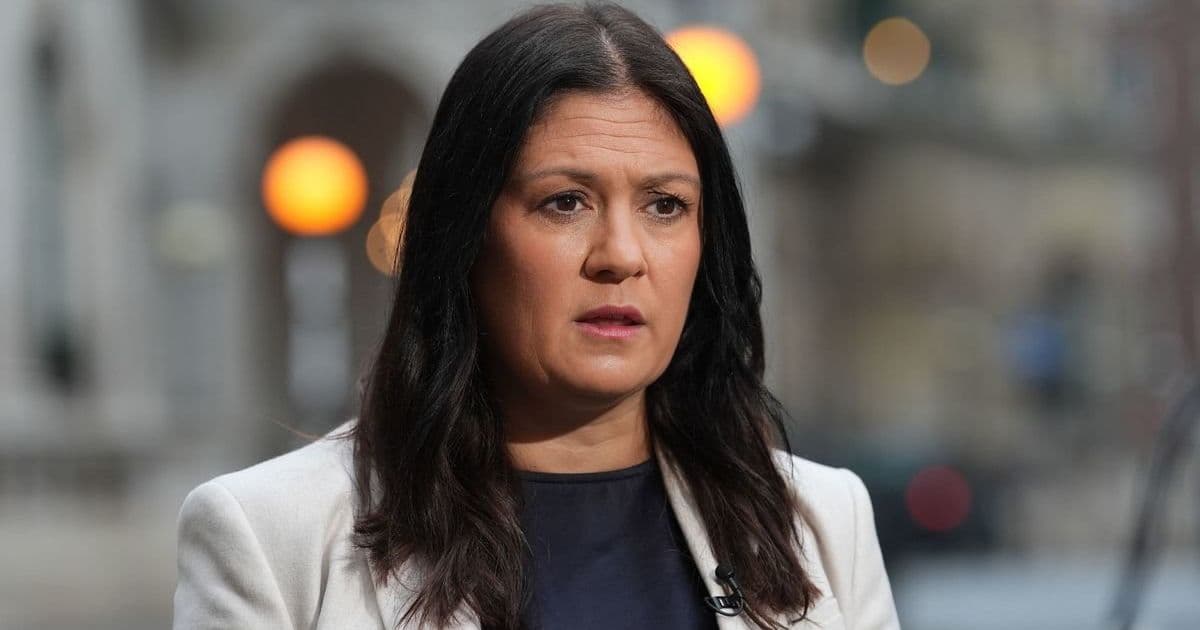
The UK government is expected to announce Monday that children under 16 will be banned from major social media platforms, including TikTok, Instagram, Facebook, X, YouTube, Snapchat, Reddit, and Threads. The announcement, confirmed by Culture Secretary Lisa Nandy, would make Britain the second major market to impose such restrictions, following Australia's lead. But the UK's approach goes further, adding restrictions on AI chatbots and daily usage limits for older teenagers.
Prime Minister Keir Starmer is expected to detail the plan after a public consultation that drew roughly 116,000 responses, the second-largest in UK history after the 2012 equal marriage consultation. That volume signals real public appetite for action on children's digital safety, even as the specific mechanisms remain contentious.
What the Ban Would Cover
The proposed restrictions extend beyond what Australia implemented in December 2025. Under the UK plan, romantic or sexual AI chatbots would be restricted, addressing a category of concern that many regulators have struggled to pin down. The ban would also impose daily usage caps for under-18s, targeting late-night scrolling habits that sleep researchers have linked to developmental problems.
Nandy, appearing on the BBC's Sunday With Laura Kuenssberg, framed the measures as part of a "basket of measures" rather than a standalone fix. That framing matters. It suggests the government recognizes that a ban without enforcement infrastructure is performative, a lesson Australia learned the hard way.
Australia's Cautionary Tale
Australia banned social media for under-16s in December 2025. By April 2026, polling showed three in five Australian children aged 12 to 15 still had access to accounts that should have been restricted. The gaps: weak age verification, widespread VPN use, and fake birth dates during account creation.
Nandy explicitly cited Australia's enforcement challenges as a reason for the UK's focus on tougher age verification. "The experience in Australia showed part of the reason why it has been difficult for them to enforce it is because there weren't very tough age verification measures," she said.
This is the central tension in age-gated social media policy. The technical barriers to circumvention are low. A motivated teenager with internet access can bypass almost any date-of-birth check in minutes. The real question is whether verification will move to more robust methods, potentially including biometric checks or government ID integration, and what that means for privacy across the board.
The Enforcement Question
Age verification technology remains immature for this scale of deployment. Several vendors offer facial age estimation or ID document scanning, but none have been tested at the volume a UK-wide social media ban would demand. The accuracy trade-offs are significant: systems that catch more minors also generate more false positives, flagging adults as underage and creating friction for legitimate users.
Platform compliance is another variable. Meta, Google, Snap, Reddit, and X would need to implement and enforce verification systems across hundreds of millions of accounts. None of these companies have publicly committed to specific technical approaches. The cost of building and maintaining robust age verification at scale could run into billions annually, expenses that would likely be passed to advertisers or absorbed as margin compression.
The AI chatbot provision is particularly notable. Companies like Character.AI, Replika, and various OpenAI-powered services would face restrictions on providing romantic or sexual content to minors. This raises questions about where the line sits between companion AI and therapy-adjacent tools, and whether providers can reliably distinguish between use cases.
Public Opinion: Split, Not Decisive
An Institute for Public Policy Research survey conducted by YouGov found 44% of adults support banning under-16s from social media, while 39% prefer tighter regulation instead. Only about one in ten opposed both approaches. The numbers suggest a public broadly supportive of doing something, but divided on what that something should be.
More striking: just 15% of respondents trust government ministers to decide which platforms are appropriate for children. Parents (51%) and independent regulators (49%) scored far higher. This is a trust problem for implementation. If the public doesn't believe the government can make good decisions about platform safety, compliance and enforcement may face political resistance.
Organizations like the Molly Rose Foundation, established after 14-year-old Molly Russell took her own life in 2017 following exposure to harmful online content, have questioned whether an Australia-style ban offers real protection or merely "the perception of security." The foundation and others, including the NSPCC and Girlguiding through the Children's Coalition for Online Safety, argue that platform business models and product design, not just access, need structural changes.
What It Means for Tech
For the major platforms, this represents both compliance burden and potential competitive shift. If UK enforcement requires genuine age verification, the infrastructure investment could create a template other markets adopt. The EU, Canada, and several US states have considered similar measures. A working UK system, even imperfect, could accelerate those efforts.
The AI chatbot restriction is the more novel regulatory move. It signals that governments are beginning to treat AI companions as a distinct category requiring specific rules, not just a feature of existing platforms. For startups building conversational AI, particularly those targeting younger demographics, this creates regulatory risk that didn't exist two years ago.
For edtech and child safety startups, the ban creates opportunity. Companies building age verification, content moderation, and digital wellbeing tools could see significant demand. The UK government's emphasis on verification suggests it's prepared to invest in the infrastructure layer, not just mandate outcomes.
The Skeptical View
Bans like these work by shifting social norms, not by technically preventing access. If the goal is to make it socially unacceptable for eight-year-olds to have TikTok accounts, the ban may succeed. If the goal is to keep teenagers off Instagram entirely, the technical barriers are insufficient.
The daily usage caps for under-18s add another enforcement layer that platforms would need to implement. Self-imposed time limits already exist on most platforms, but voluntary limits and enforced limits are different things. How the government defines and measures "daily use" across multiple platforms and devices remains unclear.
What's clear is that the UK is betting on regulation as a partial solution to a problem that has proven resistant to technical fixes. The 116,000 consultation responses reflect genuine public concern. Whether the policy response matches the scale and nature of the problem will depend on details that Monday's announcement may or may not provide.
The underlying question is whether age-gated social media, even well-implemented, addresses the actual harms children face. Algorithms, content recommendation, and the social dynamics of online interaction persist regardless of account age. A ban changes who has access. It doesn't change how platforms work once access is granted.
Timeline and Next Steps
The announcement is expected Monday. If it follows Australia's pattern, implementation will likely be phased, with platforms given months to comply. Age verification systems would need to be built, tested, and deployed at scale before enforcement becomes meaningful. The consultation responses suggest the public wants action quickly, but the technical reality points to a longer timeline.
For the tech industry, the message is clear: the regulatory environment for children's digital safety is tightening, and the solutions will need to be technical, not just policy-driven. The companies that build effective age verification and content moderation tools may find themselves with a significant market advantage as other countries consider similar measures.
For parents and educators, the ban offers a framework but not a solution. The tools to circumvent restrictions will remain available, and the social pressure driving children toward these platforms won't disappear with a change in the law. The real work, as the Molly Rose Foundation and others have argued, lies in changing how platforms are designed, not just who can use them.
Comments
Please log in or register to join the discussion