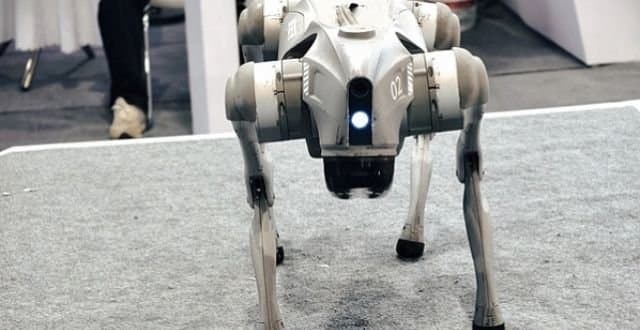
Unitree Robotics, known for its low‑cost quadruped Go2 and a growing humanoid line, will appear before the Shanghai STAR Market listing committee on June 1. The hearing marks the final regulatory step toward what could become China’s first publicly traded humanoid robot company, a move that may set a valuation reference for the country’s nascent robotics sector.
Unitree Robotics, the Shenzhen‑based maker of the budget‑friendly quadruped Go2 and a fledgling humanoid platform, has secured a hearing date with the Shanghai Stock Exchange’s STAR Market listing committee for June 1. The filing, posted on May 25, lists the hearing as the 31st review meeting of 2026 and comes just over two months after the regulator accepted Unitree’s IPO application.
What the announcement claims
- Unitree will be the first Chinese humanoid robot company to list on a public exchange.
- The STAR Market hearing is scheduled unusually quickly, suggesting a fast‑track for a strategically important sector.
- Successful listing would provide a new financing channel for the capital‑intensive R&D, manufacturing, and testing pipelines that humanoid robots demand.
What’s actually new?
- Regulatory timing – The STAR Market’s review cycle typically spans three to six months from acceptance to hearing. Unitree’s two‑month window is short but not unprecedented; the committee has accelerated other high‑profile tech IPOs (e.g., semiconductor fab firms) when policy signals prioritize the sector.
- Business focus – Unitree’s public filings list four revenue streams:
- General‑purpose humanoid robots (prototype series “X‑Bot” slated for limited beta trials in 2027).
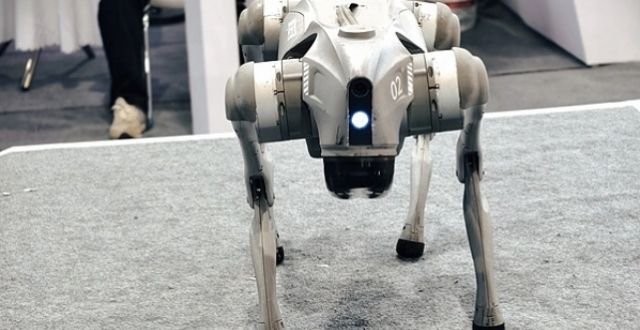
- Quadruped platforms – the Go2 and its upcoming Go3, which adds payload capacity and improved SLAM.
- Robot components – custom actuators, low‑latency control boards, and the Unitree‑AI edge inference chip.
- Embodied AI models – training pipelines for manipulation and locomotion that run on the company’s own hardware.
- Market positioning – Unitree’s pricing strategy (the Go2 sells for ~US$3,500) has already broadened access for university labs and hobbyists, a contrast to Boston‑Dynamics‑priced quadrupeds. Its humanoid effort is still in prototype stage, but the company claims to have 10‑meter‑per‑second joint torque figures comparable to early Tesla Optimus demos.
Limitations and open questions
- Financials are thin – The latest audited report shows ¥1.2 bn in revenue for 2025, driven almost entirely by quadruped sales. Humanoid hardware contributed less than 5 % of total income, and the R&D expense line remains above ¥800 m, indicating a heavy cash burn that will need sustained capital.
- Manufacturing scale – Unitree’s current production lines are located in Suzhou and handle up to 5,000 units per year of quadrupeds. Scaling to the tens of thousands of humanoids required for a viable commercial model would demand new factories, supply‑chain contracts for lightweight alloys, and a robust quality‑control regime that the company has not yet demonstrated.
- Regulatory risk – The Chinese government has recently tightened oversight on AI‑driven autonomous systems. While Unitree’s robots are marketed as research tools, any move toward “service‑grade” humanoids (e.g., retail assistants) could trigger additional safety certifications and data‑privacy reviews.
- Competitive pressure – Tesla’s Optimus, Fourier Intelligence, and Figure AI all claim higher payload capacities and longer autonomy runs. Unitree’s advantage lies in cost, but without a clear path to mass‑production or a differentiated application niche, the company may struggle to capture market share beyond the academic segment.
Why the listing matters (and why it may not be a silver bullet)
A public listing on the STAR Market would give Unitree access to RMB 1–2 bn in primary and secondary financing, assuming a valuation similar to other robotics entrants (roughly 10× 2025 revenue). That capital could fund:
- Expansion of the X‑Bot humanoid line into a limited‑run commercial version.
- Construction of a high‑throughput actuator fab to reduce per‑unit costs.
- Hiring of additional embodied‑AI researchers to improve perception and manipulation pipelines.
However, the infusion of cash does not automatically solve the underlying engineering challenges. Humanoid robots still suffer from:
- Energy density limits – current lithium‑polymer packs give under 30 Wh/kg, restricting continuous operation to less than an hour for a 70 kg robot.
- Control latency – real‑time whole‑body control at 1 kHz remains computationally expensive; Unitree’s in‑house AI chip is still in prototype, and off‑the‑shelf GPUs add weight and heat.
- Safety certification – public deployment in crowded spaces will require compliance with GB/T 38500‑2022 (robot safety standards), a process that can take years.
In short, the IPO hearing is a milestone for the Chinese robotics ecosystem, but investors should treat the listing as a valuation event rather than a guarantee of near‑term commercial success.
What to watch next
- June 1 hearing outcome – The STAR Market will release a decision within two weeks; watch for any conditional approvals tied to R&D milestones.
- Prototype demos – Unitree has promised a live demo of the X‑Bot at the 2026 International Conference on Robotics and Automation (ICRA) in May; performance data will be a better indicator of market readiness than the IPO filing.
- Policy signals – Follow announcements from the Ministry of Industry and Information Technology (MIIT) regarding subsidies for “intelligent manufacturing” robots; favorable policy could tip the economics in Unitree’s favor.
For more details on the STAR Market listing requirements, see the official Shanghai Stock Exchange guidelines. The full IPO prospectus is available on the SSE’s document portal.
Comments
Please log in or register to join the discussion