The United States is reportedly close to finalizing a trade agreement with Taiwan that would reduce tariffs on Taiwanese exports while securing a commitment from Taiwan Semiconductor Manufacturing Company (TSMC) to construct five or more advanced semiconductor fabrication plants in Arizona.
According to sources cited by the New York Times, the United States and Taiwan are nearing a trade deal that represents a significant development in semiconductor supply chain strategy. The agreement would reportedly reduce tariffs on Taiwanese exports to the US market while securing a substantial commitment from the world's largest contract chipmaker, Taiwan Semiconductor Manufacturing Company (TSMC), to expand its American manufacturing footprint.
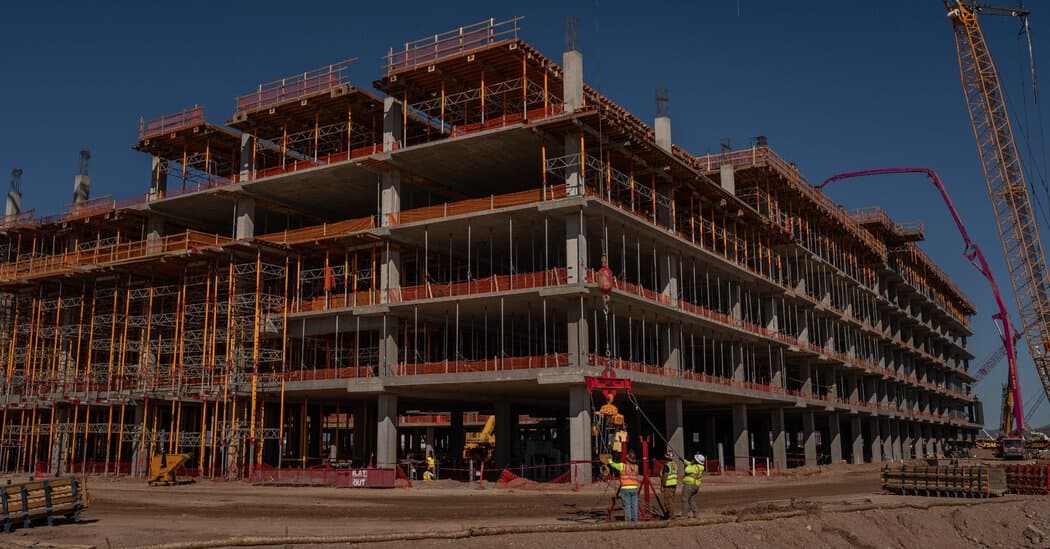
The deal's centerpiece is TSMC's commitment to build five or more fabrication facilities in Arizona. This builds upon TSMC's existing Arizona investments, which already include two advanced fabs under construction in Phoenix. The first fab, which began production in late 2024 using 4nm process technology, represents TSMC's first major overseas expansion beyond Taiwan. The second fab, currently under construction, will produce more advanced 3nm chips. Additional fabs would further cement TSMC's US presence and align with American goals for domestic semiconductor production.
This development occurs within the broader context of the CHIPS and Science Act, which allocated $52 billion to bolster US semiconductor manufacturing. The US government has been actively encouraging allied nations to establish semiconductor production on American soil, viewing domestic chip manufacturing as critical for both economic competitiveness and national security. Taiwan currently produces over 60% of the world's semiconductors and nearly 90% of the most advanced chips, creating significant supply chain concentration risks.
The trade agreement reportedly addresses longstanding Taiwanese concerns about market access while serving US strategic interests. For Taiwan, reduced tariffs provide economic benefits and strengthen the bilateral relationship. For the US, the deal helps diversify semiconductor production away from East Asia while maintaining access to cutting-edge chip technology. The arrangement could also serve as a model for similar agreements with other key semiconductor players like South Korea, home to Samsung and SK Hynix.
However, several challenges and perspectives warrant consideration. Building advanced semiconductor fabs in the US faces significant hurdles, including higher construction costs, labor shortages, and less mature supply chains compared to Taiwan's semiconductor ecosystem. TSMC founder Morris Chang has previously noted that manufacturing costs in Arizona could be 50-100% higher than in Taiwan. The company has also faced difficulties recruiting Taiwanese engineers willing to relocate to the US.
From a geopolitical standpoint, some analysts question whether concentrating more chip production in Arizona truly reduces risk, given that Taiwan faces more immediate geopolitical threats. The island's semiconductor industry represents both a strategic asset and vulnerability. If Taiwan were to face a crisis, having some production capacity in the US might not fully compensate for losing access to Taiwan's most advanced facilities and engineering talent.
Additionally, the deal's tariff reductions could impact domestic US semiconductor manufacturers like Intel, which are attempting to compete with TSMC's advanced process technologies. While Intel has committed to becoming a major foundry player, it still lags behind TSMC in process technology and production volume. Some policymakers may view preferential treatment for Taiwanese imports as potentially undermining US manufacturing goals.
The reported agreement also intersects with ongoing US-China technology tensions. China views Taiwan's semiconductor industry as strategically important and has invested heavily in domestic chip production to reduce reliance on foreign technology. A strengthened US-Taiwan semiconductor partnership could further strain cross-strait relations and potentially accelerate China's push for technological self-sufficiency.
For the broader semiconductor industry, this deal could influence how other countries approach semiconductor policy. Japan, South Korea, and European nations have all implemented their own semiconductor support programs. A successful US-Taiwan arrangement might encourage similar partnerships, potentially fragmenting the global semiconductor supply chain into regional blocs.
The timing of this report coincides with other significant semiconductor industry developments, including continued investment in AI chip production and ongoing concerns about supply chain resilience. As AI applications drive demand for advanced chips, securing reliable access to cutting-edge semiconductor manufacturing has become increasingly critical for technology companies and governments alike.
While the trade deal has not been finalized, its reported terms suggest a pragmatic approach to balancing economic interests with strategic priorities. The arrangement acknowledges Taiwan's semiconductor leadership while addressing US concerns about supply chain concentration. However, the success of this strategy will depend on TSMC's ability to efficiently scale US production while maintaining the technological edge that has made it indispensable to global technology companies.
The agreement's impact extends beyond semiconductors, potentially reshaping US-Taiwan economic relations more broadly. Reduced tariffs could benefit other Taiwanese exports, including electronics, machinery, and agricultural products, while creating new opportunities for US companies seeking to enter the Taiwanese market. This broader economic integration may strengthen the bilateral relationship at a time when both nations face shared challenges from an increasingly assertive China.
As negotiations continue, industry observers will be watching for official announcements and detailed terms of the agreement. The deal's ultimate success will depend on how effectively it addresses the complex technical, economic, and geopolitical factors that shape the global semiconductor industry.
Comments
Please log in or register to join the discussion