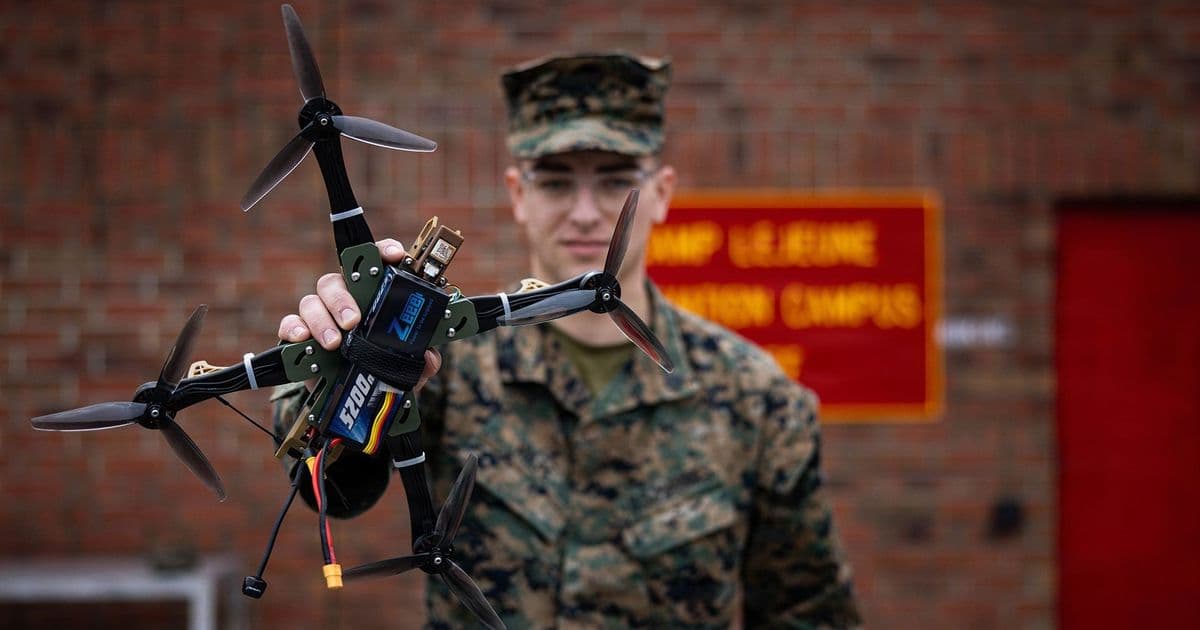
The Marine Corps' HANX drone represents a breakthrough in military drone manufacturing, using 3D printing to create a modular, adaptable platform that avoids Chinese components and can be rapidly produced in-house.
The U.S. Marine Corps has achieved a significant milestone in military drone development with the creation of HANX, the first drone fully compliant with the National Defense Authorization Act (NDAA) that contains no components from adversary nations, particularly China. Developed by the 2nd Maintenance Battalion in just 90 days, this innovative platform demonstrates how additive manufacturing can transform military procurement and supply chains.
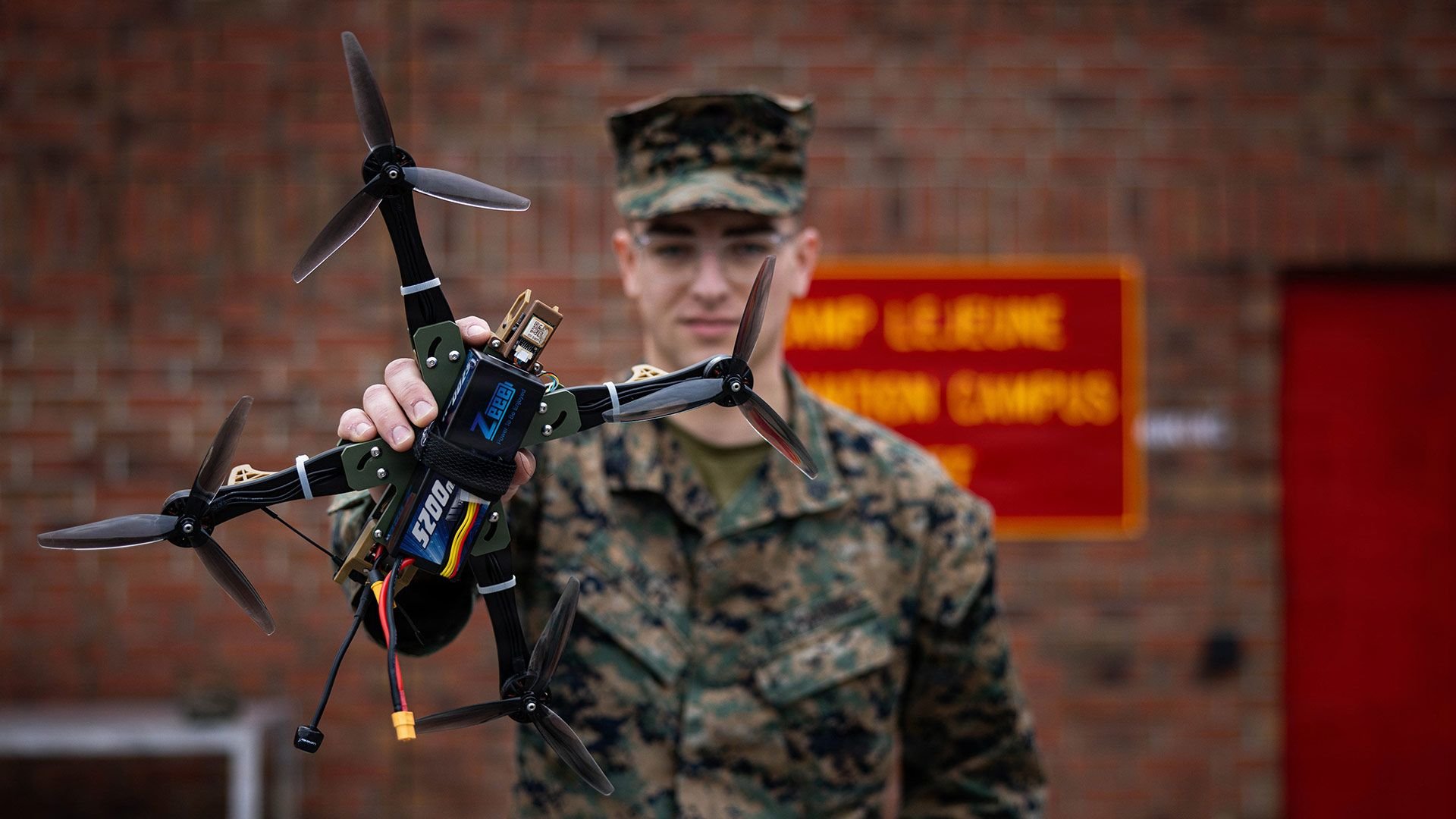
From Hobbyist to Military Innovation
The driving force behind HANX is U.S. Marine Corps Sgt. Henry David Volpe, whose background in 3D printing and Lego robotics from seventh grade through college automotive maintenance studies uniquely positioned him for this breakthrough. After completing boot camp and his military occupational specialty training in 2022, Volpe joined the II Marine Expeditionary Force Innovation Campus, where Marines receive training in robotics, 3D printing, and advanced manufacturing techniques.
Volpe's approach was straightforward yet revolutionary: "make something far cheaper without sacrificing too many features." His vision extended beyond cost savings to eliminate the traditional contracting model that relies on third and fourth-party suppliers. By bringing production entirely in-house, the Marine Corps gains unprecedented control over the manufacturing process and supply chain security.
Rapid Development Through Collaboration
The HANX project benefited from a skilled team including Chief Warrant Officer 3 Matthew Pine, Cpl. Liam Smyth, Staff Sgt. Jonathan Borjesson, Cpl. Isauro Vazquezgarcia, and Cpl. Corven Lacy. This collaborative effort resulted in a complete design, prototyping, refinement, and production cycle completed in just three months—a fraction of the time typically required for military procurement.
NDAA Compliance: Security Through Domestic Manufacturing
The most critical feature of HANX is its NDAA compliance, which mandates that no components originate from countries deemed adversaries by U.S. defense policy. For drone technology, this requirement effectively eliminates the use of many readily available Chinese components that dominate the commercial market.
This compliance addresses a fundamental security concern in military electronics: the risk of hardware backdoors, firmware compromises, and software vulnerabilities embedded in components from potentially hostile nations. By ensuring complete domestic sourcing or using 3D printed parts, HANX eliminates these supply chain security risks while maintaining operational capability.
Modular Design for Mission Flexibility
HANX's architecture emphasizes adaptability through its modular design. The drone can be quickly reconfigured for various mission profiles, from reconnaissance and surveillance to one-way attack missions. This flexibility allows a single platform to serve multiple operational needs, reducing the logistical burden of maintaining different specialized drone types.
The modular approach also simplifies maintenance and repair. Since many components are 3D printed, damaged parts can be rapidly reproduced on-site rather than waiting for replacement parts through traditional supply chains. This capability is particularly valuable in forward operating environments where resupply may be challenging or delayed.
Current Limitations and Future Development
Despite its innovative design, HANX faces some implementation challenges. The current production model relies on specialized infrastructure and equipment available at the Innovation Campus, meaning not all components can yet be manufactured or repaired in field conditions. Additionally, the drone's sophisticated modular system requires skilled operators for assembly, maintenance, and calibration.
These limitations point to future development areas: expanding the capability to produce and repair components in field environments and developing training programs to create a larger pool of qualified HANX operators. The Marine Corps is likely to address these challenges as part of broader efforts to field this technology more widely.
Part of a Broader 3D Printing Revolution
HANX represents just one example of how the U.S. military is embracing additive manufacturing. The Hawkeye Platoon recently deployed 3D printers to fabricate, assemble, and maintain quadcopter reconnaissance drones during military exercises, demonstrating the technology's operational viability in field conditions.
Similarly, the U.S. Army Aviation Center of Excellence now offers training courses for troops to produce, operate, and maintain first-person view (FPV) drones, supported by 3D printing equipment. This institutional adoption signals a fundamental shift in how the military approaches equipment manufacturing and maintenance.
Implications for Military Supply Chains
The success of HANX suggests a potential transformation in military logistics and procurement. Traditional military equipment acquisition involves lengthy development cycles, multiple contractors, and complex supply chains vulnerable to disruption. The 3D printing approach demonstrated by HANX offers several advantages:
- Reduced development time: From concept to operational capability in 90 days
- Cost efficiency: Lower production costs through in-house manufacturing
- Supply chain resilience: Reduced dependence on external suppliers and vulnerable logistics networks
- Customization capability: Rapid adaptation to specific mission requirements
- Security enhancement: Elimination of foreign-sourced components and associated risks
Looking Forward
As the Marine Corps continues to refine and expand the HANX program, several developments seem likely. First, efforts will focus on making more components field-replaceable through portable 3D printing solutions. Second, training programs will expand to create a larger cadre of qualified operators and maintainers. Third, the modular design philosophy will likely influence future drone development across all military branches.
The HANX drone represents more than just a new piece of military equipment—it embodies a shift toward agile, secure, and domestically controlled defense manufacturing. In an era of increasing geopolitical tension and supply chain vulnerabilities, this approach offers a model for maintaining technological superiority while reducing dependencies on potentially hostile nations.
For the U.S. military, HANX may be just the beginning of a broader transformation in how military equipment is designed, produced, and maintained. The combination of NDAA compliance, 3D printing technology, and modular design creates a template for future military systems that are both more secure and more adaptable to evolving operational requirements.
Comments
Please log in or register to join the discussion