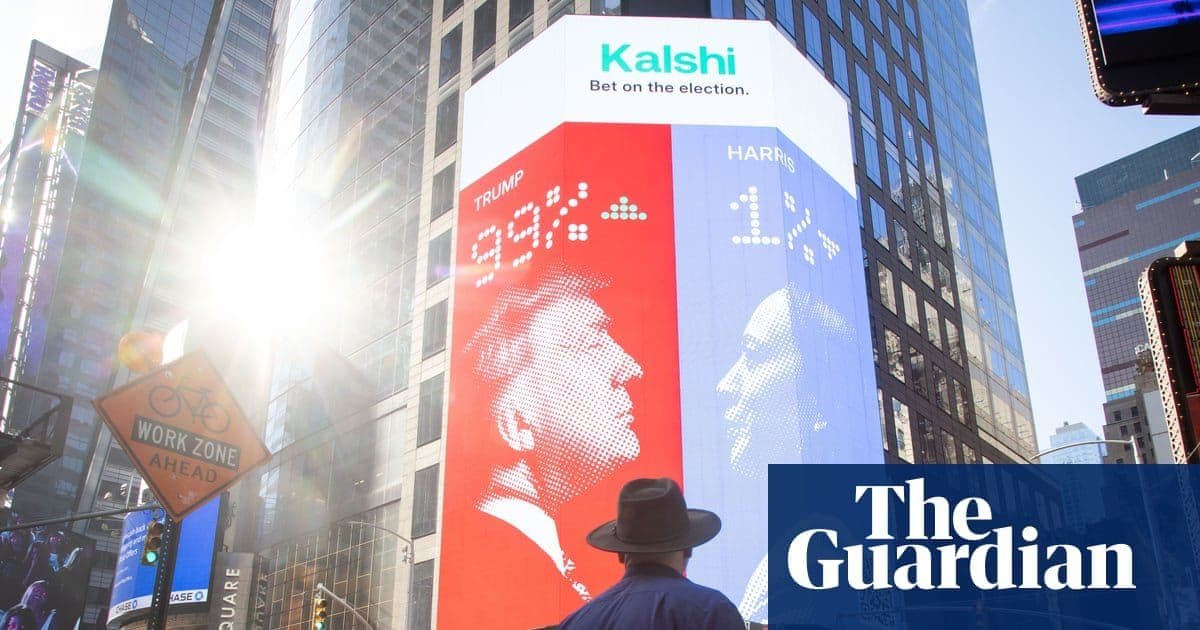
A bipartisan coalition in Utah’s legislature is moving to outlaw prediction markets, arguing they constitute gambling and pose consumer‑protection risks. The effort targets platforms like Kalshi, which recently raised $70 million and is expanding its U.S. footprint, raising questions about how state‑level bans will intersect with federal oversight and the emerging market for regulated event‑based contracts.
Utah’s Legislative Push Against Prediction Markets
A group of Utah state senators and representatives has introduced a bill that would prohibit any form of prediction market operating within the state’s borders. The proposal, backed by both the Republican majority and a handful of Democratic legislators, frames these platforms as a form of gambling that conflicts with the state’s deeply rooted cultural opposition to wagering.
The bill’s sponsors cite the recent visibility of prediction‑market ads – such as a Kalshi billboard in New York displaying odds for the 2024 U.S. presidential election – as evidence that these services are moving from niche finance tools to mainstream betting products. While Kalshi positions itself as a regulated exchange for event‑based contracts, Utah lawmakers argue that the line between legitimate risk‑management and gambling is blurred for most consumers.
The Problem: Consumer Protection and Moral Concerns
Utah’s population, which is over 60 % members of the Church of Jesus Christ of Latter‑day Saints, traditionally opposes gambling in all its forms. Prediction markets, despite being offered through licensed brokers and subject to Commodity Futures Trading Commission (CFTC) oversight, allow users to place money on outcomes ranging from election results to sports scores. Critics worry that:
- Lack of financial literacy – Many participants treat these contracts like casual bets rather than sophisticated hedging instruments.
- Addiction risk – The instant‑feedback nature of event contracts can encourage repetitive wagering.
- Regulatory gaps – State authorities have limited tools to enforce compliance with federal rules, creating a patchwork of oversight.
Funding and Market Positioning of the Targeted Platforms
Kalshi, the most visible platform in the public debate, raised $70 million in a Series C round led by Paradigm and Andreessen Horowitz earlier this year. The funding round valued the company at roughly $300 million and signaled strong investor confidence in the nascent regulated prediction‑market sector. Kalshi’s pitch emphasizes:
- Regulated status – It operates under a CFTC‑approved futures exchange license.
- Broad event catalog – From macro‑economic indicators to entertainment awards, the platform offers contracts on a wide array of outcomes.
- Risk‑management use cases – Hedge funds and corporate treasuries can use the contracts to offset exposure to real‑world events.
Other players, such as Polymarket and Augur, rely on decentralized protocols and have attracted venture capital ranging from $15 million to $40 million. Their market positioning is more speculative, often marketed to crypto‑savvy audiences rather than traditional investors.
Legislative Details and Potential Impact
The Utah bill proposes three main provisions:
- Definition of prediction markets – Any platform that allows users to wager on the outcome of a future event, regardless of whether the contract is classified as a futures or binary option.
- Prohibition of operation – Companies must cease all marketing, onboarding, and transaction processing for Utah residents.
- Enforcement mechanisms – The Utah Department of Financial Institutions would be empowered to issue cease‑and‑desist orders and levy fines up to $250,000 per violation.
If passed, the law would force platforms to implement geo‑blocking technology or risk substantial penalties. For firms like Kalshi, which already restricts access in several states, the additional compliance burden could be manageable, but it would set a precedent for other states with similar cultural or political objections.
Broader Context: State‑Level Regulation vs. Federal Oversight
The Utah effort mirrors earlier actions in states such as Louisiana and Idaho, where lawmakers have introduced or passed restrictions on binary options and crypto‑based betting. However, the CFTC maintains that regulated prediction markets are a legitimate financial product, and it has signaled willingness to work with states to ensure consumer protection without stifling innovation.
Legal scholars note that a patchwork of state bans could push operators toward a federal‑level framework that standardizes licensing and consumer safeguards. Until such a framework emerges, companies must navigate a complex map of state statutes, each with its own definition of gambling.
What This Means for the Emerging Market
- Investor caution – Venture capitalists may scrutinize the regulatory risk of new entrants, especially those targeting U.S. consumers.
- Product adaptation – Platforms could develop stricter age‑verification, educational modules, and clearer disclosures to appease regulators.
- Potential market fragmentation – Users in restricted states may turn to offshore or decentralized alternatives, raising concerns about unregulated activity.
The Utah bill underscores a tension between the promise of prediction markets as a tool for price discovery and the cultural resistance to any form of wagering. As the sector matures, the balance between innovation, consumer protection, and local values will shape its trajectory.
Further reading:
Comments
Please log in or register to join the discussion