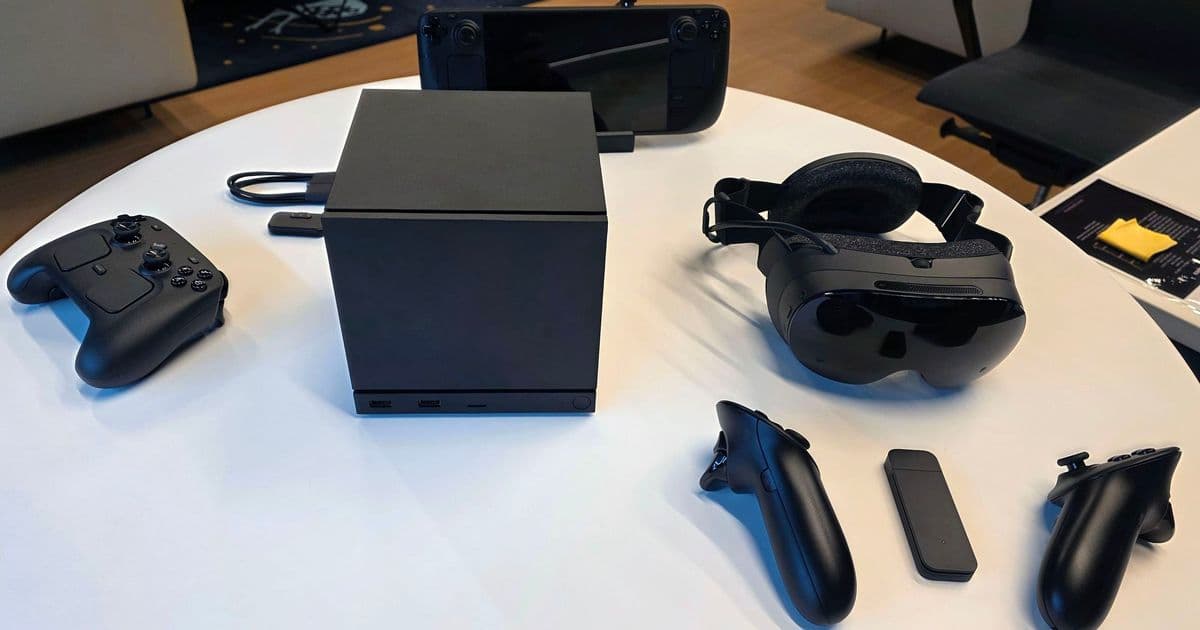
Valve has detailed its game verification requirements for Steam Frame and Steam Machine, establishing 30 FPS at 1080p for Steam Machine Verified and 90 FPS for standalone VR titles on Steam Frame, with no UI legibility requirements for the console but strict readability standards for the VR headset.
Valve has provided official details about its game verification programs for the upcoming Steam Frame and Steam Machine, establishing clear performance targets and classification systems for each platform. The company presented these specifications at GDC 2026, confirming earlier statements about the verification process.
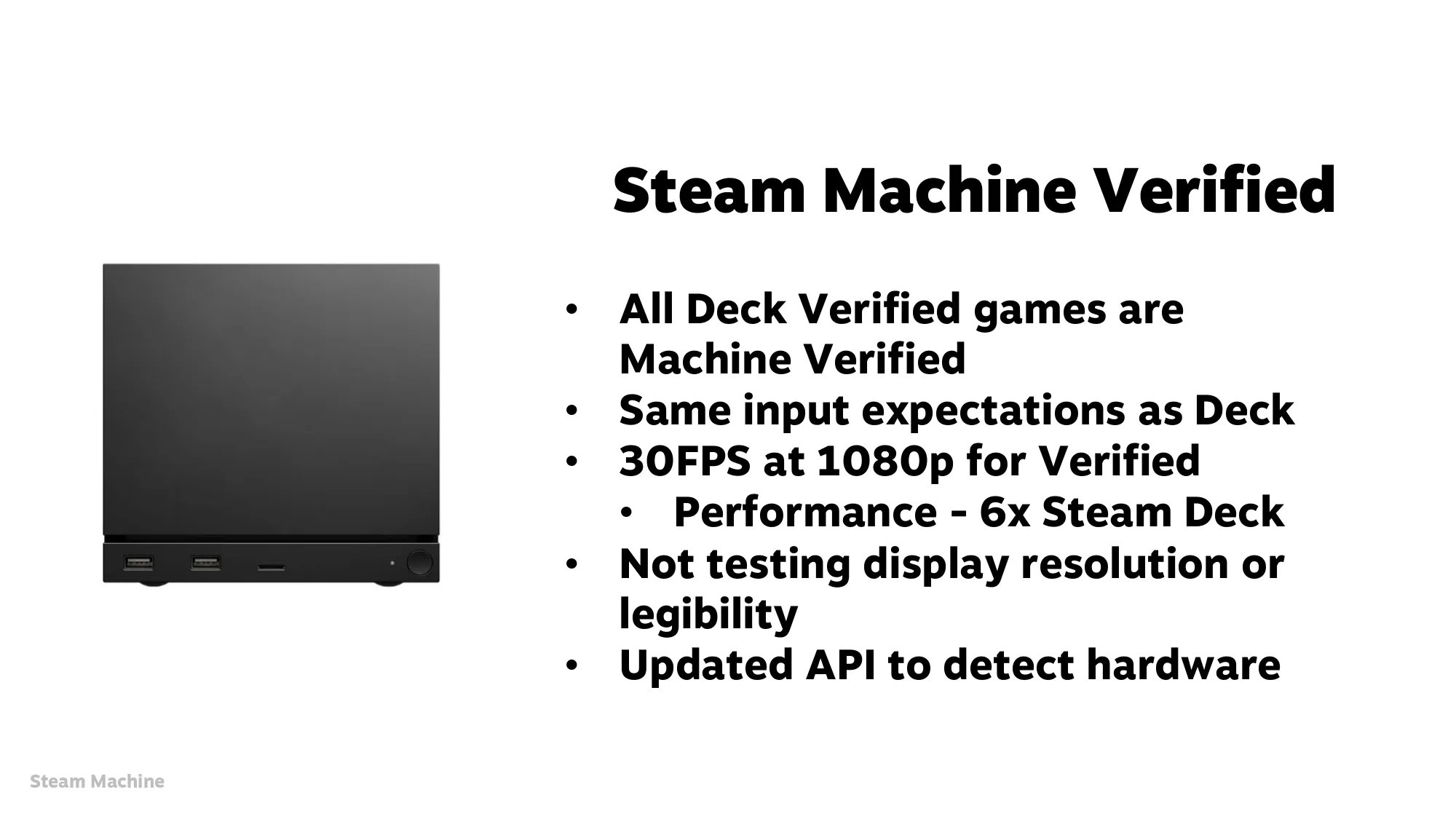
For the Steam Machine, the verification requirements align closely with the Steam Deck's standards. Games that earned the Deck Verified badge will automatically qualify as Machine Verified, running at a stable 30 FPS at 1080p resolution. This creates a significant advantage for the Steam Machine's launch library, as the extensive work done for Steam Deck verification carries over directly.
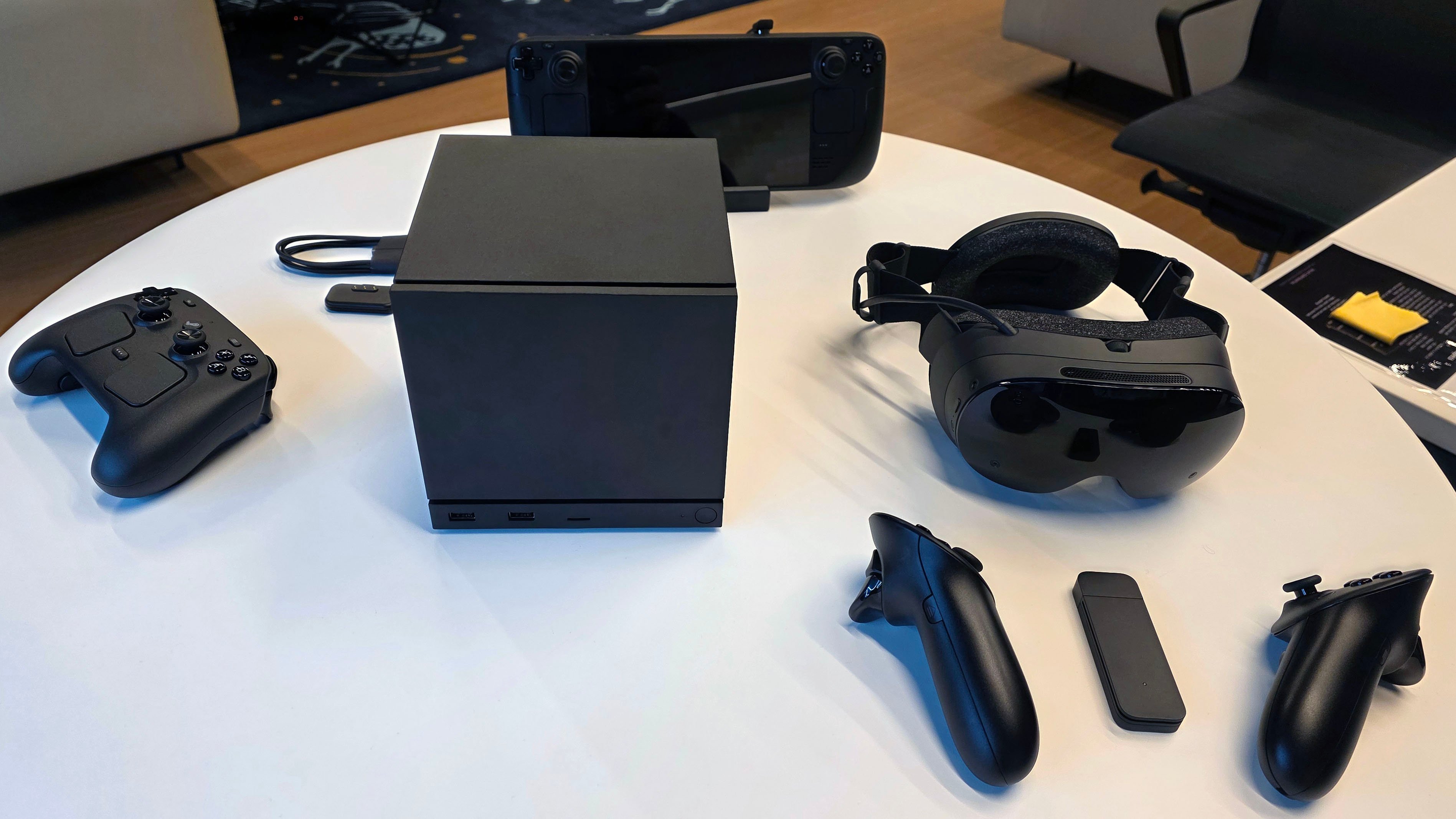
However, the Steam Machine's more powerful hardware configuration - featuring 28 RDNA 3 CUs that approach PS5 performance levels - means some games that struggled on the Steam Deck will still achieve Machine Verified status. Titles that were merely "Deck Playable" but suffered from performance issues on the handheld should run better on the Steam Machine, earning them the Verified designation.
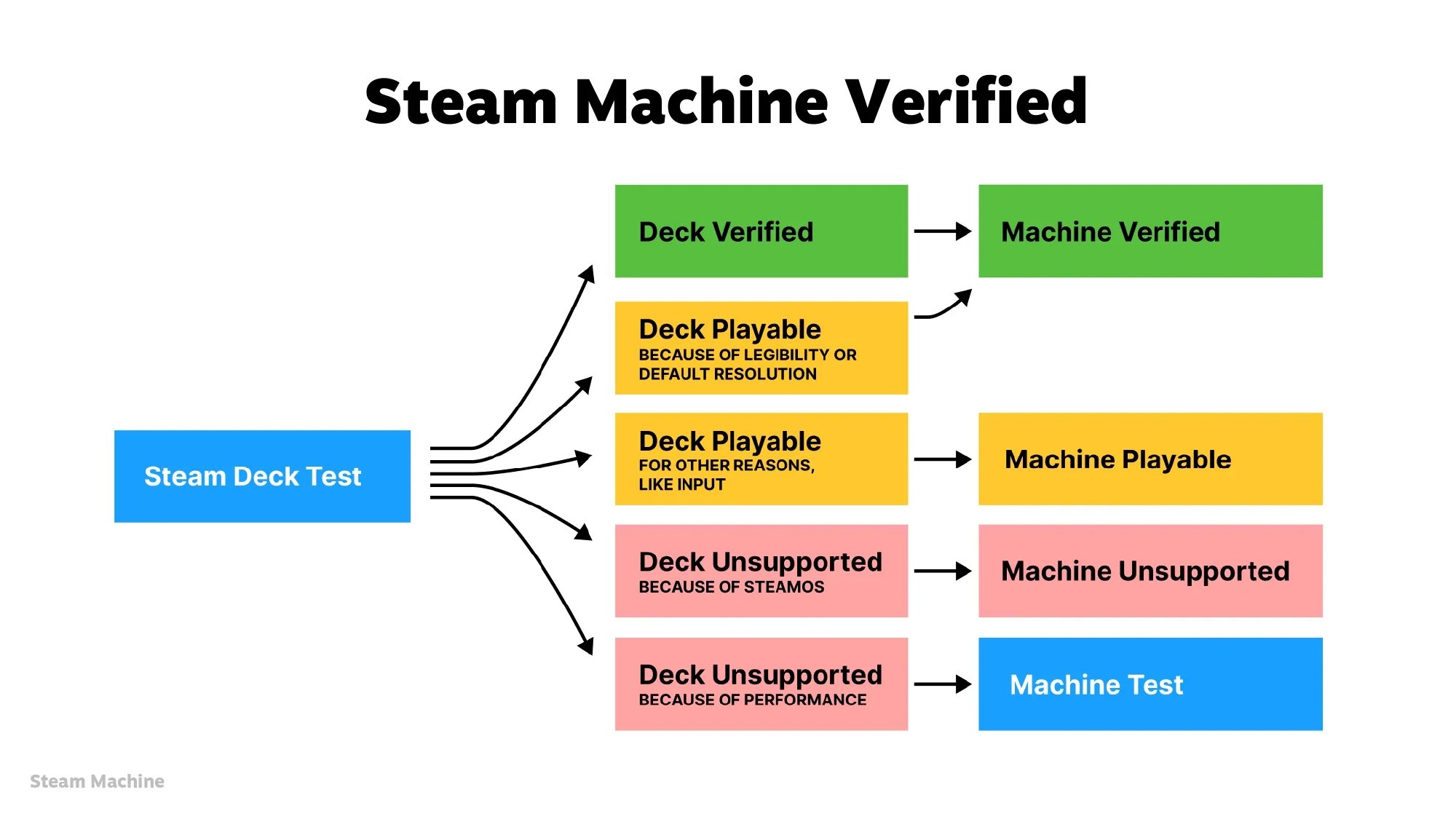
The verification hierarchy for Steam Machine follows a logical progression. Games that were Deck Playable but had control or other non-performance issues become "Machine Playable." Titles that were Deck Unsupported due to power limitations are reassessed and designated "Machine Test" if they can run on the Steam Machine's hardware. Games blocked by SteamOS compatibility issues remain "Machine Unsupported."
By contrast, the Steam Frame takes a different approach with no formal Verified program for streaming games. Valve states that if a game runs well on your host PC, it will perform adequately on the Steam Frame. This simplified approach reflects the streaming nature of the device, where local hardware performance is less critical than network stability.
For standalone VR titles on the Steam Frame, the verification system is more structured. There are only two tiers: Frame Test and Frame Unsupported. Any game that was previously Deck Verified, Deck Playable, or Deck Unsupported due to VR compatibility receives the Frame Test badge and undergoes reevaluation for headset compatibility.
Games that were Deck Unsupported due to performance limitations or SteamOS compatibility are automatically disqualified and receive the Frame Unsupported designation. This creates a clear distinction between games that can be adapted for VR use and those that cannot meet the hardware requirements.
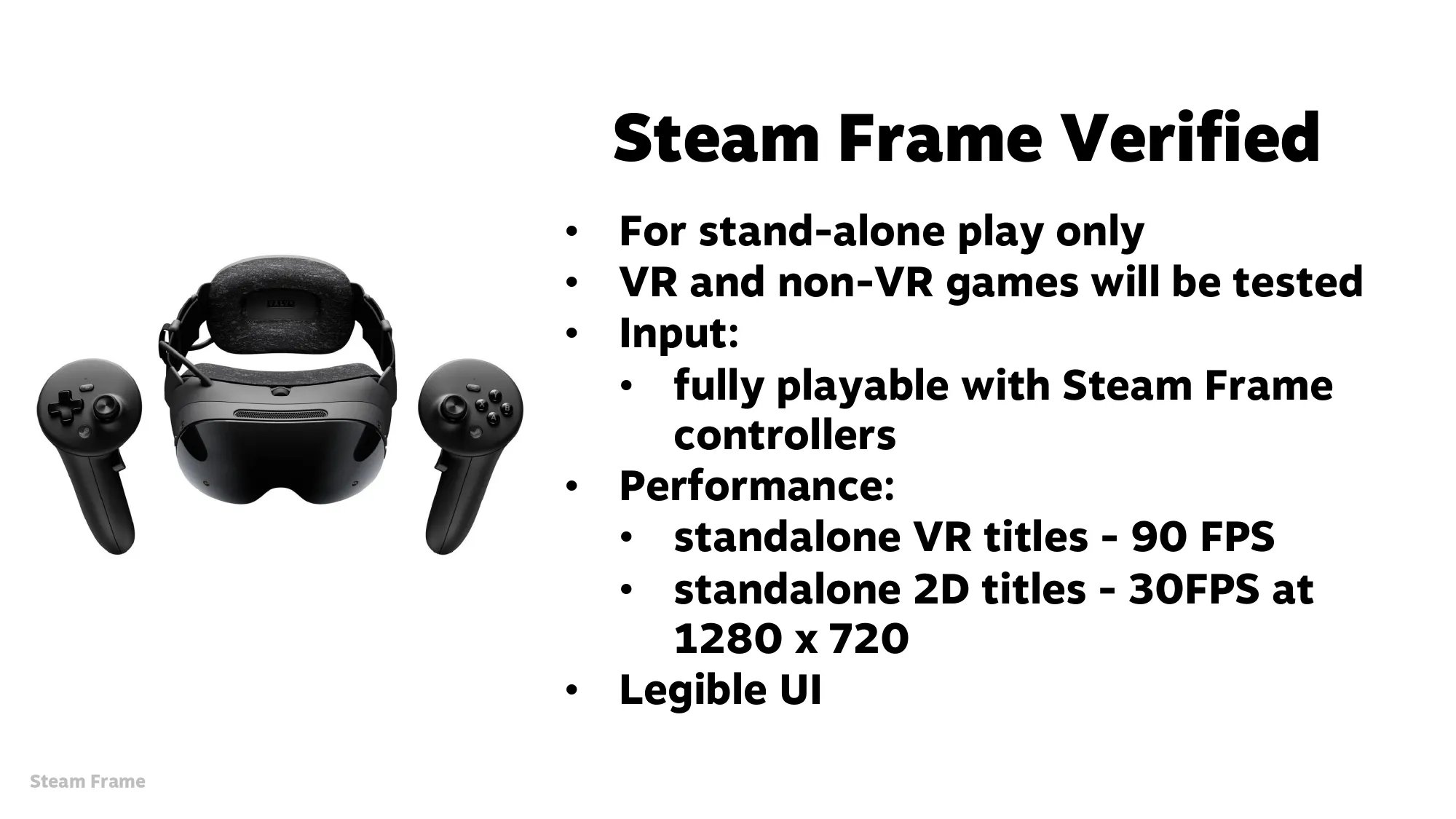
The specific performance requirements for Steam Frame are notably different from the Steam Machine. Standalone VR titles must achieve 90 FPS, though Valve has not mandated a specific resolution. This high frame rate target reflects the need for smooth, comfortable VR experiences that prevent motion sickness and maintain immersion.
For "2D" games running on the Steam Frame, the requirements are more modest: 720p resolution at a stable 30 FPS. This lower target acknowledges the different use case for non-VR content on a VR headset, where resolution may be less critical than consistent performance.
Both VR and non-VR games are eligible for Frame testing, provided they fully support the Frame controllers. This controller requirement ensures that games can be played effectively in the VR environment without requiring external input devices.
A key differentiator between the two platforms is the user interface requirement. Steam Frame games must feature a VR-friendly UI that remains easily legible within the headset. This legibility requirement addresses the unique challenges of reading text and navigating menus in a VR environment, where traditional UI elements may become difficult to see or interact with.
In contrast, the Steam Machine has no UI legibility requirements. This difference reflects the distinct nature of each platform - the Steam Machine functions as a traditional gaming console where UI readability is less of a concern, while the Steam Frame's VR focus makes interface design critical to user experience.
The verification programs demonstrate Valve's strategic approach to launching multiple hardware platforms with different use cases. By leveraging the existing Steam Deck verification work for Steam Machine, Valve ensures a robust launch library without duplicating effort. The simplified approach for Steam Frame streaming acknowledges the device's different role in the gaming ecosystem.
However, the global component crisis continues to impact Valve's hardware plans. The company has delayed product launches, and its decision not to subsidize the Steam Machine like traditional consoles adds complexity to the release strategy. Without the ability to sell hardware at a loss and recoup through software sales, Valve faces different economic pressures than console manufacturers.
When these devices do launch, buyers can expect a large library of verified games ready to play. The Steam Machine will benefit from the extensive Steam Deck verification program, while the Steam Frame's requirements ensure that VR and streaming experiences meet minimum quality standards. This preparation should help both platforms overcome the typical chicken-and-egg problem that new gaming hardware often faces - the need for both hardware sales and software support to succeed.
The verification programs represent a pragmatic approach to multi-platform game certification, recognizing that different hardware configurations require different standards while maximizing the reuse of existing testing infrastructure. As Valve continues to expand its hardware ecosystem beyond traditional PC gaming, these verification systems will likely evolve to address new challenges and use cases.
Comments
Please log in or register to join the discussion