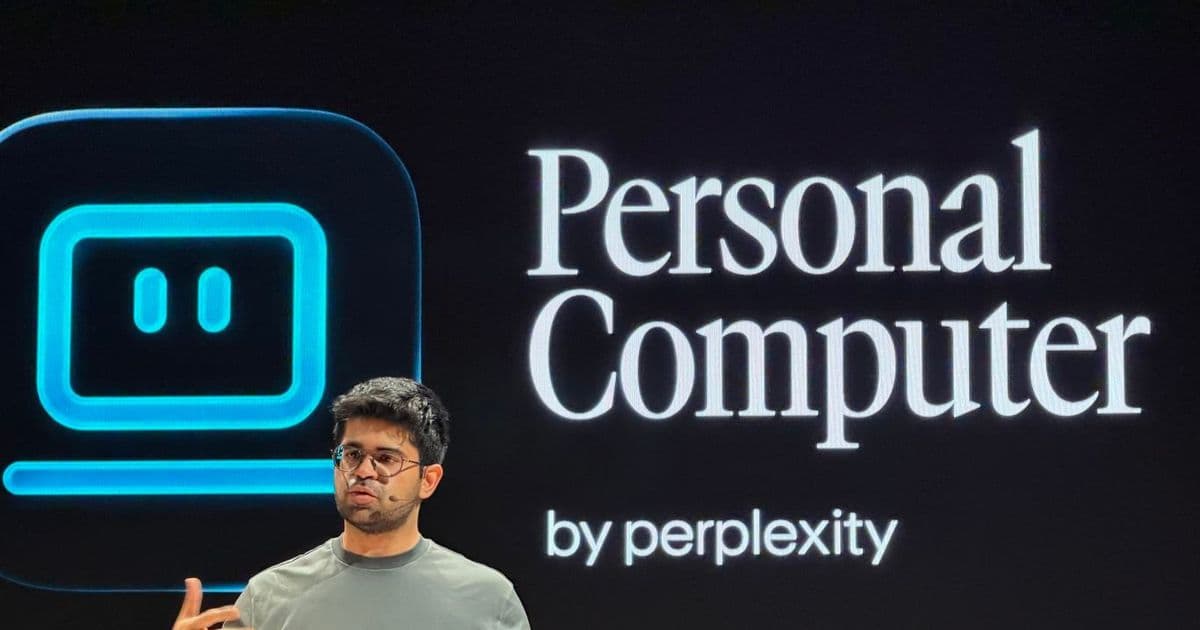
Perplexity launches two AI agent products - Personal Computer for local Mac use and Perplexity Computer for cloud-based enterprise workflows, directly competing with OpenAI's Codex and Anthropic's Claude Code.
Perplexity has unveiled its AI agent strategy with two distinct products: Personal Computer, a local Mac-based agent similar to OpenAI's Codex, and Perplexity Computer, an enterprise cloud solution that builds on the company's earlier Computer announcement. The move positions Perplexity as a direct competitor to both OpenAI and Anthropic in the rapidly evolving AI coding and automation space.
Personal Computer: The Local Agent Play
The Personal Computer product runs locally on dedicated Mac hardware, offering users an OpenClaw-like experience where AI agents can interact with desktop applications, files, and workflows without cloud dependency. This approach addresses privacy concerns and latency issues that plague cloud-based solutions, while providing the reliability needed for sensitive enterprise tasks.
Key features include:
- Native Mac integration with full filesystem access
- Local processing for sensitive data
- Offline capability for basic operations
- Seamless integration with existing Mac workflows
The local-first approach mirrors what OpenAI achieved with Codex, which has reportedly reached $1B+ in annualized revenue by January 2026. By targeting Mac users specifically, Perplexity is carving out a niche in Apple's ecosystem where competitors like Claude Code have limited presence.
Perplexity Computer: Enterprise Cloud Solution
Perplexity Computer represents the company's cloud-based offering, announced weeks prior to the Personal Computer launch. This enterprise-focused solution provides scalable AI agent capabilities for organizations that need robust processing power and centralized management.
The cloud approach offers advantages for enterprise users:
- Massive parallel processing capabilities
- Centralized management and deployment
- Easy scaling for large teams
- Continuous updates and improvements
This dual-product strategy allows Perplexity to address both ends of the market - individual developers and power users who prefer local control, and enterprises that need enterprise-grade infrastructure and management capabilities.
The Competitive Landscape
Perplexity's timing is strategic. OpenAI's Codex has established dominance in the AI coding space, while Anthropic's Claude Code is gaining traction with its Excel and PowerPoint integrations. By offering both local and cloud solutions, Perplexity is positioning itself as a comprehensive alternative that can serve users regardless of their infrastructure preferences.
The AI agent market is becoming increasingly crowded, with major players racing to capture developer mindshare. Perplexity's approach of providing choice - local vs. cloud - could appeal to organizations with diverse needs and security requirements.
Technical Considerations
Running AI agents locally on Mac hardware presents both opportunities and challenges. The Personal Computer product must optimize for Apple's M-series chips, which offer excellent performance for AI workloads but have different architecture than traditional x86 systems. Perplexity will need to ensure its agents can leverage Apple's Neural Engine and Metal framework for optimal performance.
For Perplexity Computer, the cloud infrastructure must handle the computational demands of running multiple AI agents simultaneously while maintaining low latency for real-time interactions. The company's existing search infrastructure may provide a foundation, but AI agent workloads have different requirements than traditional search queries.
Market Implications
This launch signals Perplexity's ambition to move beyond its search roots and become a major player in the AI agent ecosystem. By directly competing with established players like OpenAI and Anthropic, Perplexity is betting that its dual-product strategy will give it a competitive edge.
The success of these products will likely depend on execution quality, pricing strategy, and how well they integrate with existing developer workflows. If Perplexity can deliver reliable, performant agents that developers actually want to use, it could carve out significant market share in this rapidly growing space.
Looking Ahead
As AI agents become increasingly sophisticated, the line between local and cloud processing will likely blur. Future versions of both Personal Computer and Perplexity Computer may offer hybrid approaches that combine the privacy benefits of local processing with the power of cloud computing.
Perplexity's dual strategy also positions it well for the evolving regulatory landscape around AI. Local processing offers clear advantages for data sovereignty and compliance, while cloud solutions provide the scalability that many organizations require.
The coming months will reveal whether Perplexity's bet on providing both local and cloud AI agents pays off, or if the market consolidates around one approach or another.
Comments
Please log in or register to join the discussion