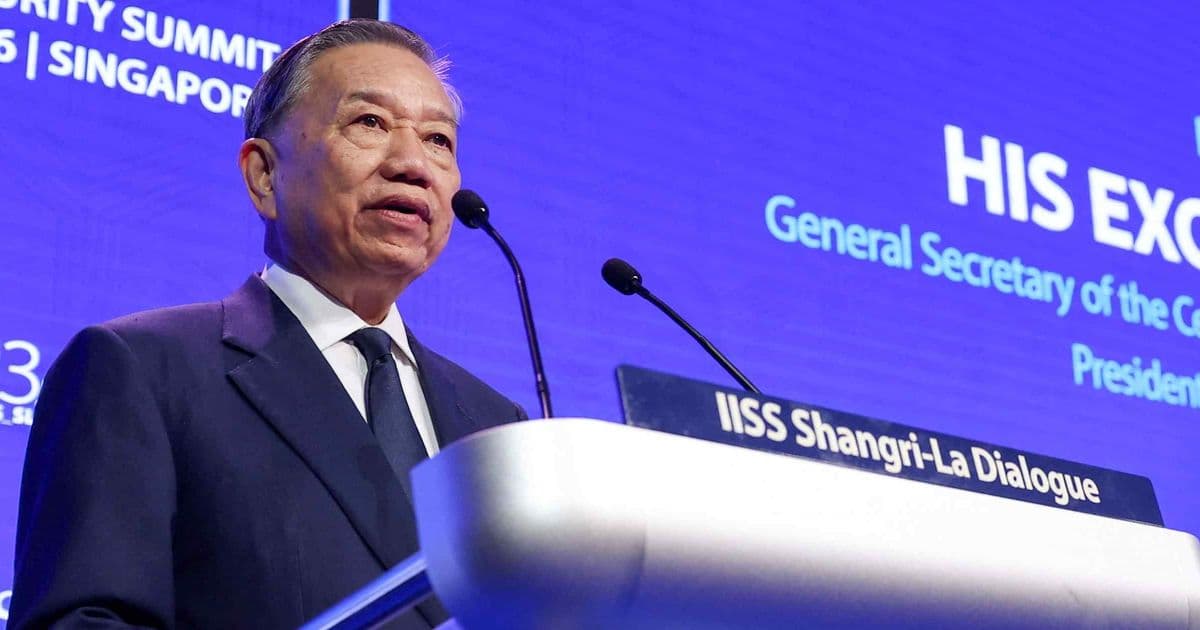
President To Lam used his Shangri‑La Dialogue keynote to outline Vietnam’s “strategic balance” approach, stressing independence while deepening ties with the United States, India and Japan. The speech signals a calibrated shift in defense spending, new missile procurement and potential participation in regional fuel reserves.
Vietnam’s strategic balance on display at the Shangri‑La Dialogue
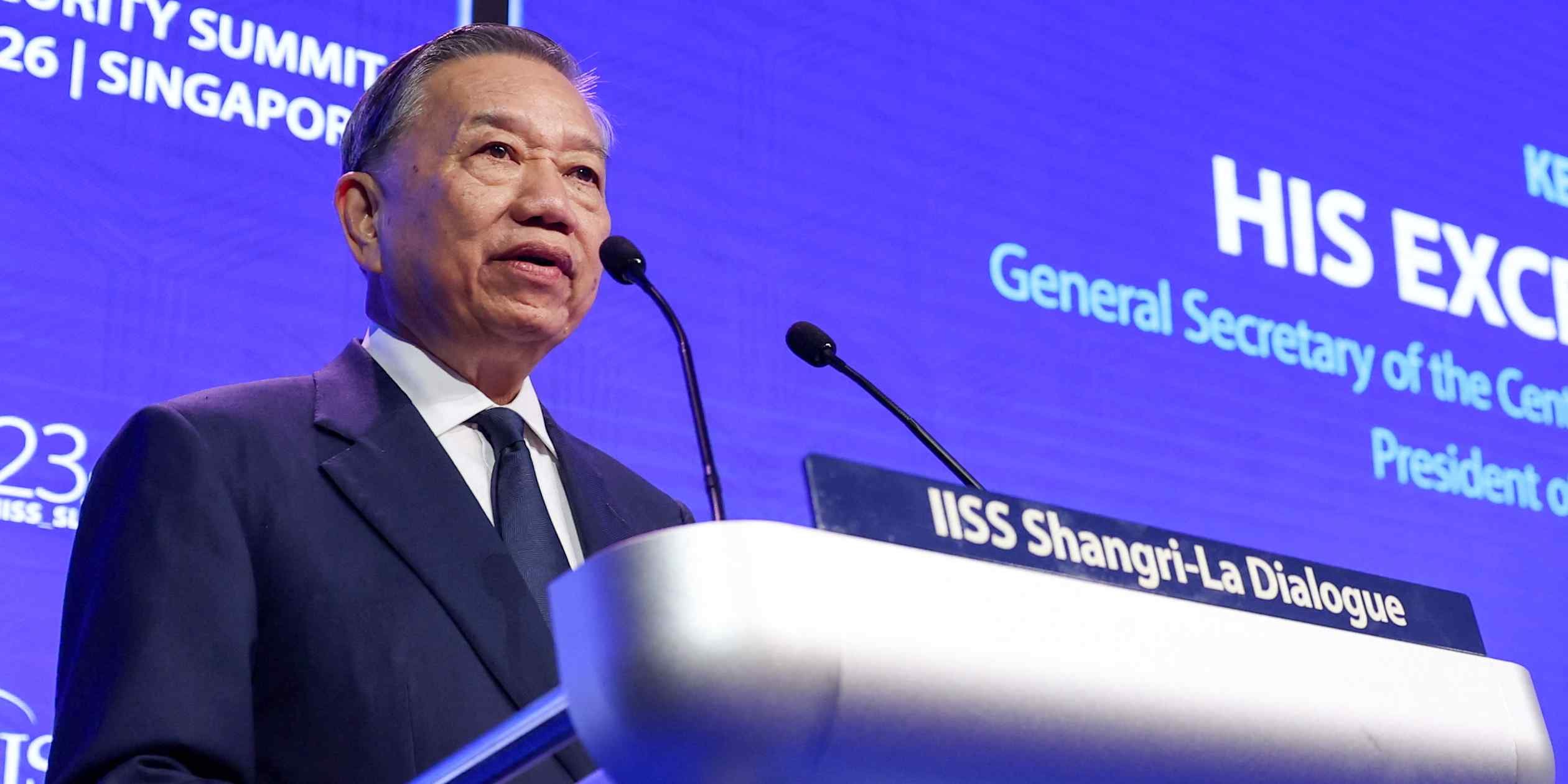
Vietnam’s president and Communist Party general secretary, To Lam, delivered a tightly scripted keynote at the IISS‑hosted Shangri‑La Dialogue in Singapore on 29 May 2026. In a 20‑minute address he framed Hanoi’s foreign‑policy posture as one of strategic autonomy – a refusal to be forced into a binary Cold‑War‑style alignment – while acknowledging the practical need for deeper security cooperation with the United States, India and Japan.
Market context: defence spending and procurement trends
Vietnam’s defence budget for FY 2026‑27 was approved at $7.2 billion, a 9 % increase over the previous year, reflecting heightened concerns over the South China Sea standoff and the broader Indo‑Pacific power competition. The budget rise is being allocated to three priority areas:
- Missile capability – negotiations with India on the BrahMos supersonic cruise missile are reported to be in the final stage. The deal, valued at roughly $1.1 billion for 120 missiles and associated launch systems, would give Vietnam a sea‑based strike option that can reach targets over 300 km away.
- Naval modernization – a planned acquisition of two offshore patrol vessels from Japan’s Mitsui Engineering & Shipbuilding, each costing about $250 million, aims to bolster maritime domain awareness.
- Joint fuel reserve – To Lam endorsed ASEAN’s proposal for a shared strategic fuel pool, a logistical step that could save member states up to $150 million annually in emergency procurement costs.
These figures illustrate that Vietnam is not merely signaling intent; it is committing tangible resources to diversify its security architecture.
What it means for regional dynamics
Strategic autonomy, not isolation – By emphasizing “balance” rather than “alignment,” Hanoi signals to Beijing that it will not be a passive by‑stander in the South China Sea, while still keeping diplomatic channels open. The BrahMos deal, in particular, sends a clear message that Vietnam is willing to acquire high‑end deterrent systems from a third party, reducing reliance on any single supplier.
Deepening trilateral ties – The United States has pledged $500 million in military assistance over the next five years, focusing on intelligence sharing and cyber‑defence capacity building. Japan’s offer of joint training exercises and technology transfer complements this, creating a multi‑layered partnership that can offset Chinese pressure without committing Vietnam to a formal alliance.
Economic spill‑overs – Increased defence spending is expected to stimulate domestic industries. Vietnam’s own shipbuilding sector, already handling parts of the offshore patrol vessel program, could see a 15 % rise in order books by 2028. Moreover, the fuel‑reserve initiative may open a market for local refineries, potentially adding $200 million in annual revenue.
Risk considerations – While the diversified approach reduces immediate coercion risk, it also raises the probability of Vietnam being drawn into great‑power disputes. The BrahMos system’s range could be perceived by China as a destabilising factor, prompting a possible escalation in naval posturing.
Bottom line
To Lam’s Shangri‑La address codified a nuanced strategy: maintain independence, broaden security partnerships, and invest in high‑value defence assets. The financial commitments disclosed – a $7.2 billion defence budget, a $1.1 billion missile contract, and multi‑billion‑dollar regional initiatives – underscore a shift from symbolic diplomacy to concrete capability building. How Vietnam balances these moves with Beijing’s sensitivities will shape the security calculus of the entire Southeast Asian region over the next decade.
Comments
Please log in or register to join the discussion