
An exploration of ordered dithering techniques that convert grayscale images into black-and-white patterns using threshold maps, examining Bayer matrices, cluster dot arrangements, and void-and-cluster methods.
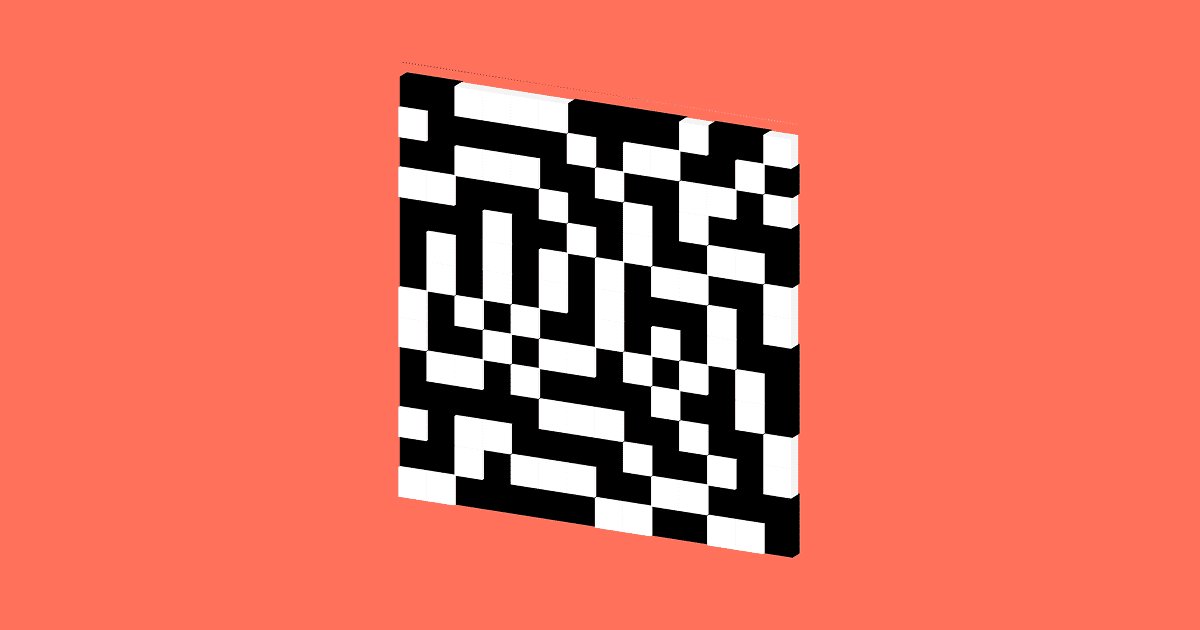
Digital displays with limited color capabilities face a fundamental challenge: accurately representing continuous-tone images using only binary pixels. Ordered dithering solves this through mathematical patterns that create optical illusions of intermediate shades. This visual exploration examines how threshold maps transform grayscale imagery into structured black-and-white patterns while preserving perceived brightness.
At its core, ordered dithering relies on quantization – reducing numerous grayscale values to binary black/white outputs. Simple thresholding uses a single cutoff value, but ordered dithering employs multiple thresholds arranged in matrices. These threshold maps create varied pixel patterns where darker grays yield more black pixels and lighter grays more white pixels, mimicking continuous tones through spatial distribution.
The Bayer matrix exemplifies this approach. A 2x2 configuration generates cross-hatch patterns that prevent visual artifacts like banding. However, its limited four thresholds create abrupt transitions. Scaling to 4x4 matrices provides sixteen distinct patterns, enabling smoother gradients. Further refinement comes through 8x8 Bayer matrices, where sixty-four thresholds produce denser patterns with nearly imperceptible transitions between shades.
Alternative arrangements create distinctive visual textures:
- Cluster dot matrices arrange thresholds concentrically, producing circular dot patterns reminiscent of newspaper halftones
- Void-and-cluster methods generate blue noise distributions that scatter pixels irregularly, avoiding rigid patterns
Each approach involves tradeoffs. Higher-order matrices improve gradation but increase computational complexity. Cluster dots offer familiarity but may obscure fine details. Blue noise provides natural blending but requires advanced algorithms. The choice depends on display characteristics, image content, and desired aesthetic.
For developers implementing these techniques, essential resources include the Libcaca halftoning study, the comprehensive Ditherpunk article, and Robert Ulichney's seminal paper on void-and-cluster dithering.
These methods extend beyond monochrome displays, influencing modern rendering techniques for e-paper devices, retro game emulation, and artistic pixel art generation. The upcoming exploration of error diffusion dithering will contrast these pattern-based approaches with diffusion-based alternatives.
Ordered dithering demonstrates how mathematical arrangements of simple thresholds can create rich visual experiences, proving that limitations in color reproduction can inspire innovative solutions.
Comments
Please log in or register to join the discussion