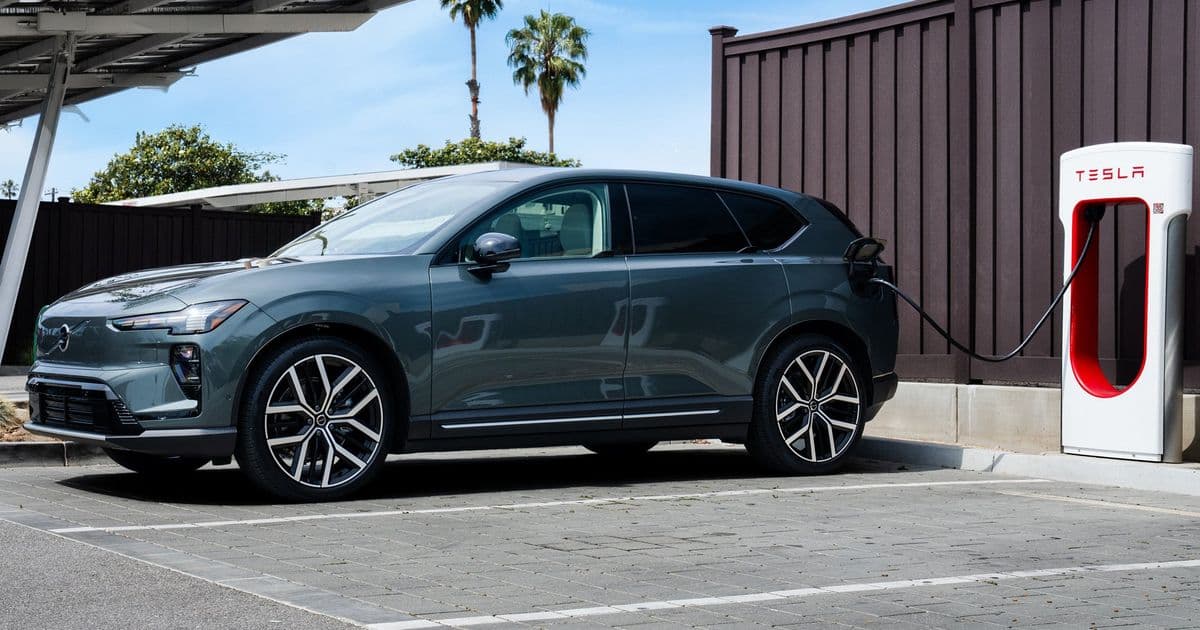
From Q4 2026 Volvo’s app will give drivers in 29 European countries direct access to more than 20,000 Tesla Superchargers via the Volvo Public Charging Service, expanding the brand’s fast‑charging network and paving the way for NACS rollout in Asia‑Pacific by 2029.
Volvo adds 20,000+ Tesla Superchargers to its public‑charging service
Starting in the fourth quarter of 2026, Volvo’s Volvo Public Charging Service will let owners of every fully electric model activate, use and be billed for Tesla Superchargers directly from the company’s smartphone app. No more third‑party accounts, no adapters – the Supercharger network becomes a native part of Volvo’s charging ecosystem.
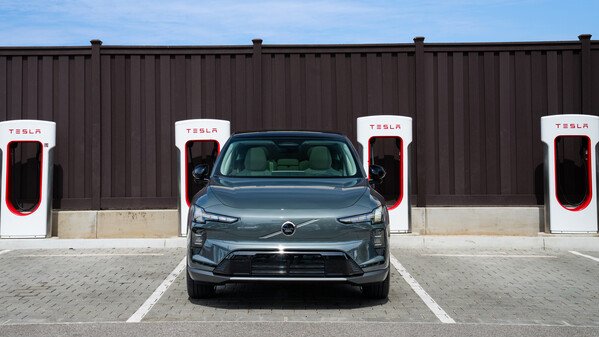
What’s new?
- 20,000+ new fast‑charging points: All stations that are part of Tesla’s European Supercharger network become reachable through the Volvo app.
- 29 European markets covered: Germany, France, the UK, Italy, Spain, Sweden, Norway and 22 others are included in the first rollout.
- Full model coverage: EX30, EX30 Cross Country, EX40, EC40, EX60, EX90 and the upcoming ES90 sedan can all tap the service.
- Future‑proofing for Asia‑Pacific: Volvo plans to adopt the North American Charging System (NACS, SAE J3400) for selected models in Japan and South Korea by 2029, which will give those markets native Supercharger access as well.
How it compares to the current situation
| Feature | Today (pre‑2026) | After rollout (Q4 2026) |
|---|---|---|
| Number of accessible fast‑chargers | ~1,200 kW of fast‑charging points in Europe (mixed networks) | +20,000 Tesla Supercharger stalls (up to 250 kW) |
| App ecosystem | Volvo app + separate Tesla or third‑party apps | Single Volvo app handles authentication, start/stop and billing |
| Adapter requirement | Needed for NACS stations in Europe | None – native support via app |
| Geographic reach | 29 European countries, North America (existing NACS access) | Same European footprint plus future NACS rollout in Japan/Korea |
| Charging speed consistency | Varies by operator (50‑150 kW typical) | Tesla’s network offers 150‑250 kW, more uniform experience |
The biggest practical gain is the removal of friction. Drivers will see the Supercharger locations in the Volvo navigation system, tap a button to start a session, and the cost will appear on their regular Volvo billing statement. This mirrors the experience Tesla owners have enjoyed for years, but now extended to non‑Tesla EVs.
Who benefits most?
Long‑distance commuters
For anyone covering 300‑400 km a day, the added high‑power nodes cut the “range‑anxiety” gap on highways such as the A7 in Germany or the A1 in Italy. A 250 kW charge can add roughly 200 km in 15 minutes, making a coffee‑break stop viable.
Urban owners of compact EVs
Even city‑focused models like the EX30 gain a practical advantage: a quick top‑up on a weekend road‑trip without hunting for a CHAdeMO or CCS‑2 station that may be occupied.
Fleet managers
Corporate fleets can now consolidate billing under a single Volvo account, simplifying expense tracking and reducing the administrative overhead of juggling multiple charging providers.
Technical notes on the integration
Volvo’s app will use the Open Charge Point Protocol (OCPP) 2.0.1 bridge to communicate with Tesla’s backend, translating the NACS authentication token into a format Tesla’s servers accept. The move sidesteps the need for physical adapters because the NACS connector is already present on the Supercharger stalls; Volvo’s vehicles will be equipped with a dual‑port inlet (CCS‑2 + NACS) as part of the 2025 model refresh.
Battery‑management software in the EX40 and EX60 has been updated to recognize the higher power ceiling of Tesla’s 250 kW stalls, allowing the car to draw the maximum safely without overheating the onboard charger.
What about the rest of the world?
Volvo’s North American customers have already been able to use Tesla Superchargers via a partnership announced in 2023. The upcoming Asian rollout mirrors that approach but adds a hardware change: new models destined for Japan and South Korea will ship with a native NACS inlet, eliminating the need for the bulky CCS‑to‑NACS adapters that are currently required in those markets.
Bottom line
Volvo’s integration of the Tesla Supercharger network is a pragmatic step toward reducing the fragmented charging experience that has long hampered BEV adoption. By adding over 20,000 high‑power stalls to its own service, the Swedish brand gives drivers a more predictable, faster, and administratively simple charging solution across Europe, while laying the groundwork for similar benefits in Asia‑Pacific.
For anyone weighing an EV purchase, the expanded fast‑charging coverage makes the EX30‑to‑EX90 line‑up considerably more appealing for both city driving and long‑haul trips.
Sources: Volvo Press Release, Tesla Supercharger Map, NACS Standard (SAE J3400)
Comments
Please log in or register to join the discussion