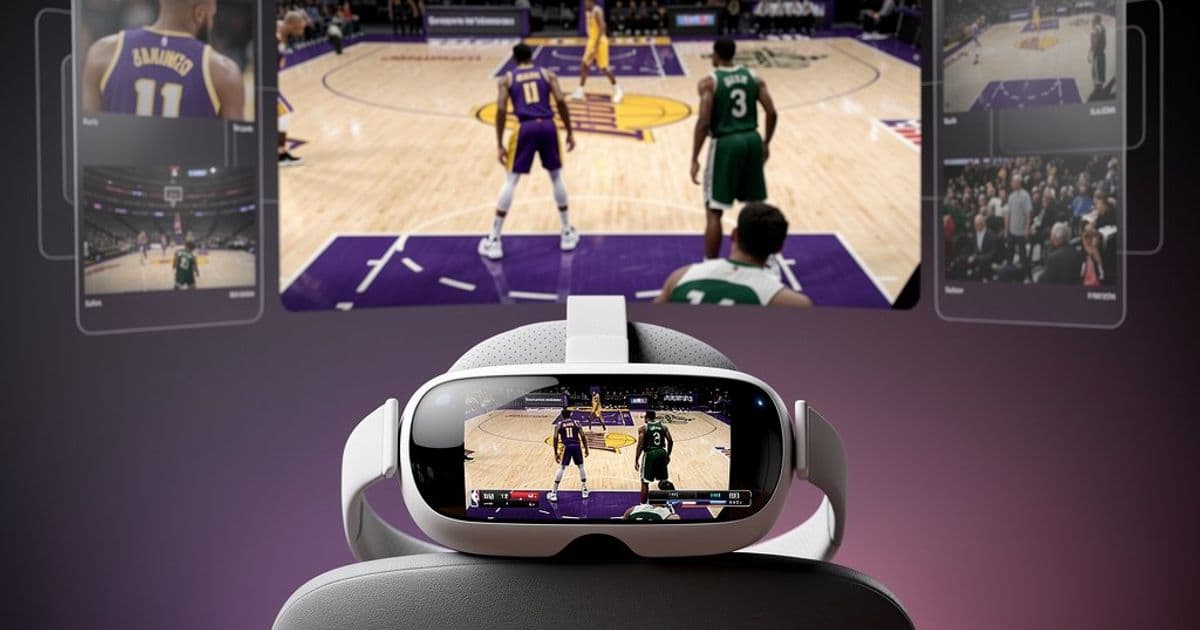
After waiting since the initial WWDC 2023 demo, I finally watched a full NBA game in Apple Immersive Video. The Lakers-Bucks broadcast delivered seven camera angles, smart cut management, and a viewing experience that nearly replicated sitting courtside—complete with the same obstructions you'd deal with in real life.
When I first tried Apple Vision Pro at WWDC 2023, the sports demo left a lasting impression. Watching immersive clips from NBA and MLB games showed me immediately where this technology was headed. Two and a half years later, I finally experienced the full promise: a complete NBA game in Immersive Video.
The Lakers-Bucks matchup this weekend represented the first of six planned live NBA broadcasts in Apple's format. What made this possible was a separate broadcast entirely—Spectrum SportsNet created a dedicated Vision Pro feed with its own production team and commentary crew.
The Production Setup
Instead of simply wrapping the traditional TV feed in a spherical video, the Vision Pro broadcast operated as a parallel production. The commentary team provided specific cues for the immersive audience, things like "Look to your right, and there's JJ Redick, head coach of the Lakers" or "Look to your right, and you'll see the Lakers inbounding the ball." These directional prompts matter because Immersive Video gives you actual spatial freedom—you can look around naturally within the 180-degree field of view.
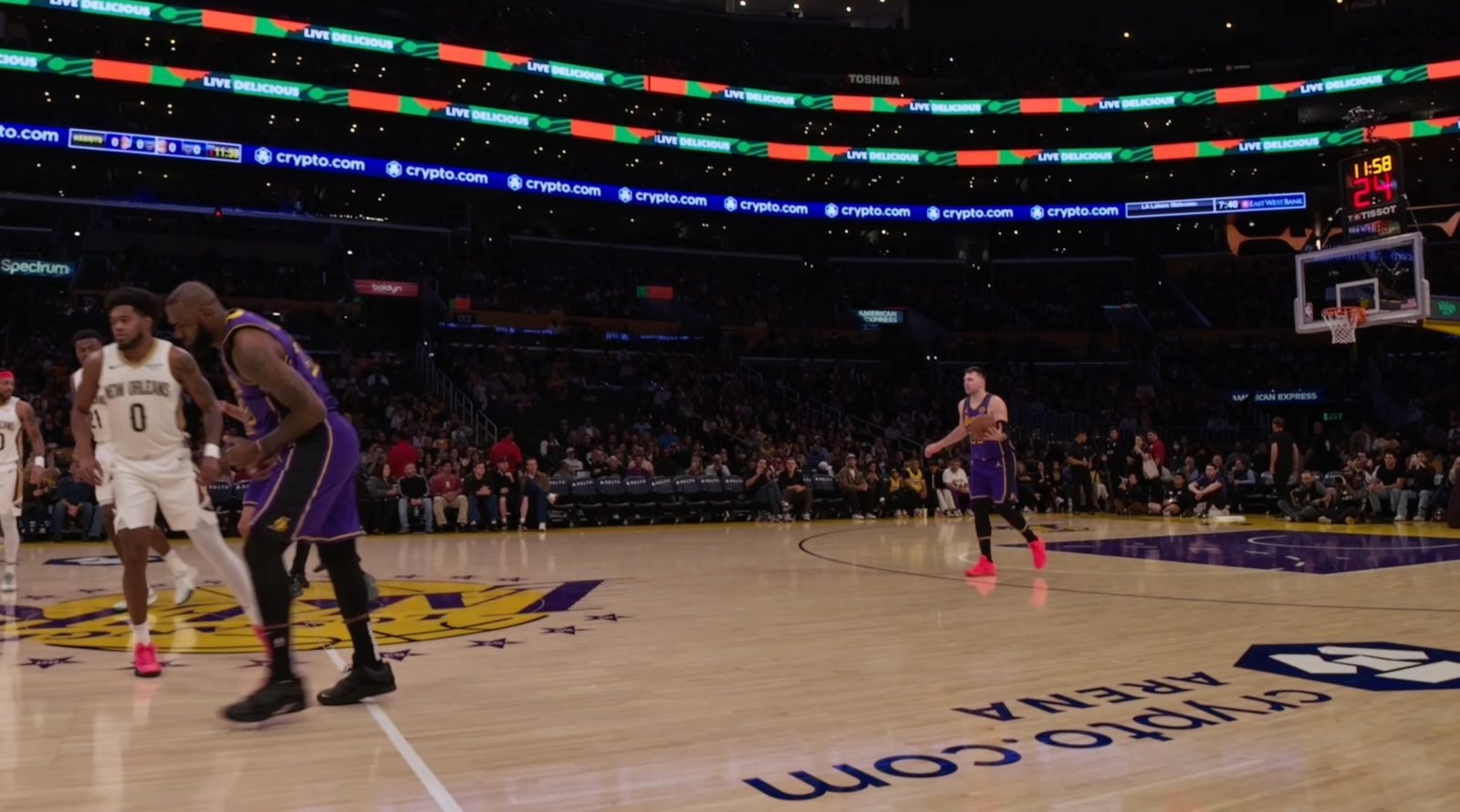
The production utilized seven distinct camera positions:
- Courtside at the scorer's table: The primary view, positioned perfectly to see plays develop
- Under each basket: Two cameras capturing the action from the rim's perspective
- Player's tunnel: Used mostly between quarters and during timeouts
- Roaming on the court: Positioned for pre-game festivities, national anthem, in-game reports from courtside host Stephen Nelson, and Lakers Girls performances
- High-and-wide arena view: Provided context during breaks
- Broadcast booth: Used sparingly for between-quarters content
The majority of actual gameplay time switched between the courtside scorer's table view and the two under-basket cameras. This limited rotation proved crucial for comfort.
Cutting Through the Motion Sickness Problem
One of my biggest concerns going in was the cutting frequency. Previous Immersive Video content, particularly the MLS Cup Playoffs sports film, suffered from excessive perspective switches that bordered on nauseating. The production team clearly learned from this.
The Lakers-Bucks broadcast used cuts sparingly. During live gameplay, transitions were limited to moving between the three primary game cameras. The disorienting moments only appeared during replays, when the broadcast would quickly jump in and out of alternate angles.
This restraint makes a massive difference. When you're settling into a view, watching plays develop from a consistent perspective, your brain adapts to the spatial context. Constant cutting prevents that adaptation, breaking the illusion of presence. The production team understood that the goal is to make you feel like you're sitting in a seat, not watching a highlight reel.
The Reality of Courtside Viewing
What struck me most was how authentically the experience replicated actual courtside seats—including the drawbacks.
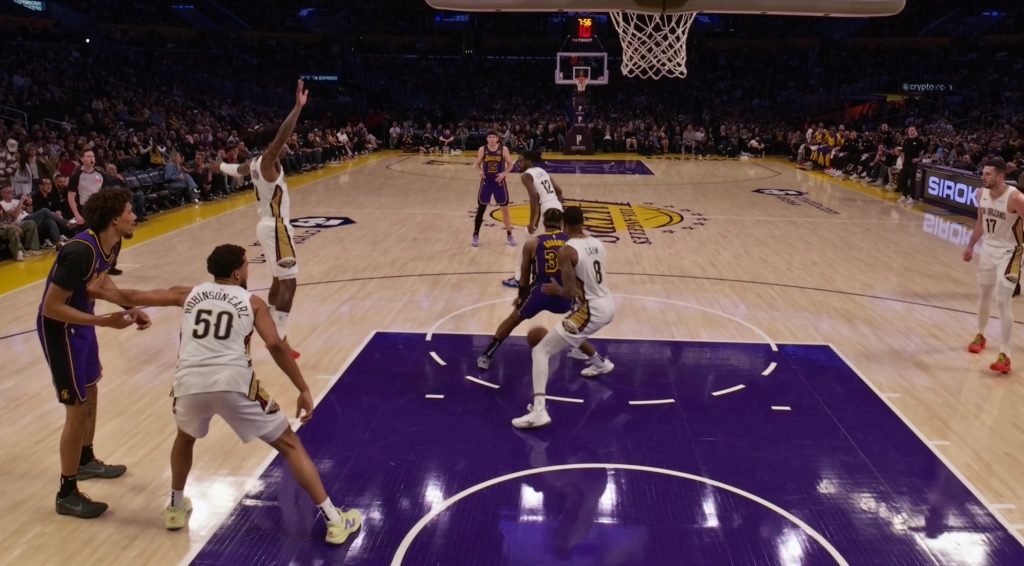
Doc Rivers, the Bucks' head coach, repeatedly stood directly in front of the camera during the game, completely blocking the view of the court. This isn't a bug in the system; it's exactly what happens when you're physically sitting courtside. The production didn't artificially fix these obstructions, which actually adds to the authenticity.
The video quality impressed me overall, though fast breaks revealed some motion blur. It wasn't distracting enough to break immersion, but it's a reminder that capturing high-speed action in immersive formats still presents technical challenges.
The spatial audio had moments of brilliance and some limitations. When someone behind me in the stands screamed "Giannis," I instinctively turned my head to locate the source—a genuine spatial audio success. However, the overall sound felt somewhat tinny and lacked the fullness I'd expect from a premium experience. I also missed hearing the PA announcer, which would help follow in-game ceremonies and updates.
The Interface Question
One feature I desperately want: user control over camera selection. While the automated switching worked well, I would gladly trade that for the ability to lock into the scorer's table view for the entire game. The current system offers no such autonomy.
Interestingly, I barely used the on-floor score bug. After an adjustment period, I found myself naturally glancing up at the real arena scoreboard and watching the shot clock above the baskets—exactly as I would if physically present. This unconscious behavior speaks volumes about how natural the experience felt.
The Broader Sports Ecosystem
This broadcast represents more than a single game. Apple currently streams every MLS match and multiple MLB games weekly. Starting this year, they'll also be the home for F1 races. The infrastructure for immersive sports is building rapidly.
The question now becomes content production scaling. Creating a dedicated immersive broadcast requires separate cameras, production staff, and commentary. For the Lakers-Bucks game, this meant a parallel operation running alongside the traditional broadcast. The six-game NBA commitment serves as a testing ground, but the production quality already feels remarkably polished.
After experiencing one full game this way, going back to traditional 2D broadcasts feels like a significant downgrade. The spatial context, the sense of presence, the ability to naturally look around and absorb the arena atmosphere—it all combines into something that 16:9 video simply cannot replicate.
What Needs to Improve
The path forward involves several key improvements:
Camera control: Let viewers choose their perspective or at least bias toward a favorite camera.
Audio refinement: The spatial audio works, but needs fuller frequency response and PA announcer integration.
Reduced motion blur: Better frame rates or processing for fast action sequences.
More content: The six-game test run needs to expand into full-season coverage if this is going to become a real viewing option.
The Bottom Line
I've never sat courtside at an NBA game. Nothing will ever replace the actual experience of being there—the sounds, the smells, the energy of the crowd. But this came remarkably close. The difference between watching the Lakers-Bucks game in Immersive Video versus pulling up highlights on the NBA website is staggering. One feels like a memory you're constructing; the other feels like content you're consuming.
Apple has proven the technical capability. The production quality is there. The viewing experience works. Now it's about scale—turning six test games into hundreds, and eventually every game in the league. If they can solve the production scaling challenges, this might fundamentally change how sports fans consume basketball.
For now, I have one game in the books. And like any good courtside seat, it leaves you wanting more.
Images provided by Apple show camera angles from the broadcast. The Lakers-Bucks game represented the first of six planned NBA Immersive Video broadcasts.
Comments
Please log in or register to join the discussion