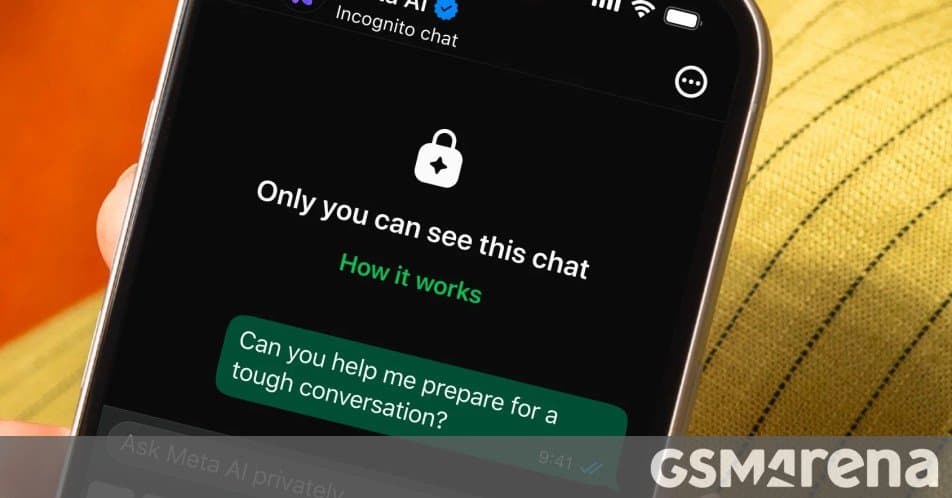
WhatsApp has launched private chats with Meta AI that claim to offer unprecedented privacy, with messages disappearing by default and even Meta allegedly unable to access the conversations. The feature represents a significant step in private AI interactions within messaging platforms.
WhatsApp has announced the introduction of incognito chats with Meta AI, a new feature that promises to deliver "truly private" conversations with the AI chatbot directly within the messaging app. This development marks a notable evolution in how AI assistants integrate with communication platforms and addresses growing privacy concerns surrounding AI interactions.
What Are Incognito Chats with Meta AI?
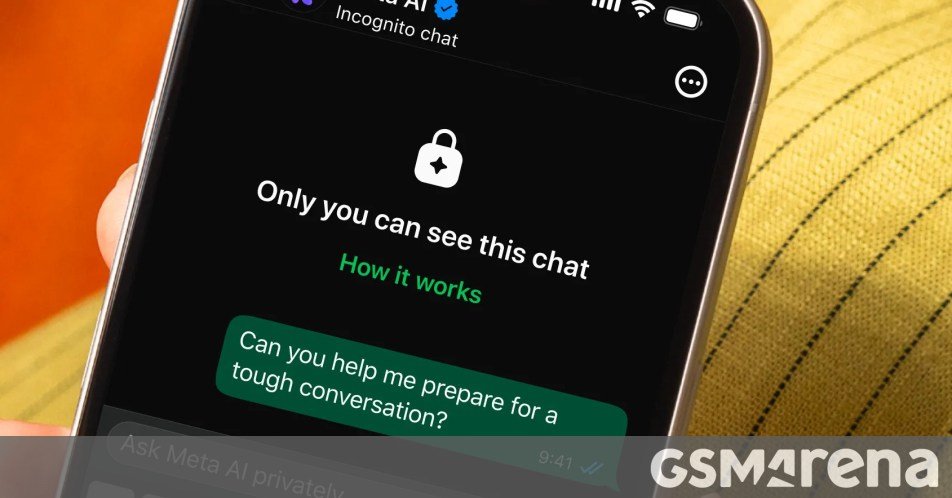
The new feature allows users to engage in private conversations with Meta's AI assistant within WhatsApp, with Meta emphasizing that these chats offer a level of privacy that competitors cannot match. According to Meta, these conversations are processed in a secure environment that even the company itself cannot access. By default, messages within these chats disappear, and the conversations are not saved to Meta's servers.
This approach directly contrasts with how most AI chatbots operate, where user queries and responses are typically logged and used for training purposes. Meta's positioning suggests these incognito chats are designed specifically for users who want to interact with AI without their conversations being stored or potentially reviewed.
The Privacy Claims and Technical Implementation
Meta makes a bold claim that competing AI chatbots cannot match the privacy offered by WhatsApp's incognito chats because "the makers of those chatbots can still see the questions coming in and the answers going out." This statement positions Meta's offering as uniquely private in the AI assistant space.
While Meta hasn't disclosed the full technical implementation, the company indicates that these conversations are processed in a "secure environment" that is inaccessible even to Meta itself. This suggests a technical architecture where:
- The AI processing happens locally on the user's device
- Or occurs in a secure enclave that is isolated from Meta's regular infrastructure
- The conversation metadata is not logged or stored
Such implementation would require significant technical infrastructure to maintain the AI's capabilities while ensuring privacy—a challenging balance that Meta claims to have achieved. For more details on Meta's approach to AI privacy, you can check their official announcement.
Future Development: Side Chat Protected by Private Processing
Looking ahead, Meta has announced that "Side Chat protected by Private Processing" will be introduced in the coming months. This feature aims to provide "private help with any chat, with context of what's being discussed, without disrupting the main conversation."
This enhancement suggests Meta is working toward a more integrated AI experience that can understand context from ongoing conversations while maintaining privacy. The "side chat" concept appears to be a way for users to get AI assistance related to their active conversations without needing to switch contexts or leave the privacy protections of the incognito mode.
Ecosystem Context and Strategic Implications
The introduction of incognito chats with Meta AI fits into several broader strategic contexts:
First, it represents Meta's continued investment in AI across its ecosystem. Following the integration of Meta AI into Instagram, Facebook, and Messenger, WhatsApp becomes another key platform for Meta's AI assistant. This cross-platform deployment helps establish Meta AI as a ubiquitous presence in users' digital lives. For more information on Meta AI's integration across platforms, see Meta's AI overview page.
Second, the privacy emphasis reflects Meta's attempt to address privacy concerns that have historically plagued the company. By positioning WhatsApp's incognito chats as more private than competitors, Meta is attempting to rebuild trust in its AI offerings.
Third, this move could potentially lock users into Meta's ecosystem. As Meta AI becomes more integrated across platforms, users may find increasing value in staying within Meta's services to maintain consistent AI experiences and privacy protections. WhatsApp's privacy policy provides additional context on how user data is handled.
User Implications and Adoption Considerations
For users, incognito chats with Meta AI offer a new way to interact with AI assistants without the typical privacy trade-offs. This could be particularly valuable for:
- Sensitive inquiries that users don't want logged
- Brainstorming sessions where privacy is essential
- Professional consultations requiring confidentiality
- Personal discussions that users prefer not to have stored
However, users should approach Meta's privacy claims with appropriate skepticism. While the technical implementation may indeed provide strong privacy protections, users should remember that:
- Meta's past privacy practices have faced scrutiny
- The company's definition of "private" may differ from user expectations
- Future policy changes could affect how these conversations are handled
The Competitive Landscape
Meta's claims about competitors' privacy limitations highlight the increasingly competitive AI assistant market. By positioning WhatsApp's incognito chats as uniquely private, Meta is attempting to differentiate its offering in a crowded field.
Competitors like OpenAI (ChatGPT), Google (Gemini), and Anthropic (Claude) would need to implement similar privacy features to match Meta's offering. However, their business models and technical architectures may present different challenges in achieving true privacy protections. For comparison, OpenAI's data usage policy and Google's AI privacy principles offer insight into how these companies approach AI privacy.
Conclusion
WhatsApp's incognito chats with Meta AI represent a significant development in the intersection of messaging platforms and AI assistants. By emphasizing privacy and disappearing messages, Meta is addressing key user concerns while positioning itself at the forefront of private AI interactions.
As the feature rolls out and the promised "Side Chat" functionality arrives, users will gain more insight into how practical and effective these privacy claims truly are. For now, the introduction marks an important step toward more private AI interactions within mainstream messaging platforms.
The move also signals Meta's continued commitment to AI integration across its ecosystem, potentially setting new standards for privacy in AI-assisted communications. As users become increasingly aware of how their data is used by AI services, features like incognito chats may become differentiating factors in platform choice and user trust.
Comments
Please log in or register to join the discussion