A developer discovers Google's AI search incorrectly flagged their website as offline, revealing how AI systems can misinterpret website content and potentially harm businesses through inaccurate search results.
When Google's AI Thinks Your Website Is Down: A Cautionary Tale About AI Search Interpretation
As search engines evolve from traditional link-based results to AI-powered answers, website owners face a new challenge: ensuring their content is interpreted correctly by increasingly sophisticated algorithms. A recent experiment by a developer testing Google's AI search capabilities revealed a concerning issue that could affect any website owner.
The shift from traditional search to AI chatbots represents a fundamental change in how users interact with search engines. Google's AI answers now dominate most of the page real-estate, and users increasingly treat these responses as authoritative truth. This creates a critical dependency: if Google's AI misinterprets your website, potential customers might receive incorrect information about your business.
Testing Google's AI Search with Structured Data
The developer began by adding JSON-LD structured data to their website, aiming to make information more accessible for Google's crawlers. This approach makes sense—structured data helps search engines understand content context and relationships. The test focused on a pricing page, examining whether Google could correctly parse and present pricing information.
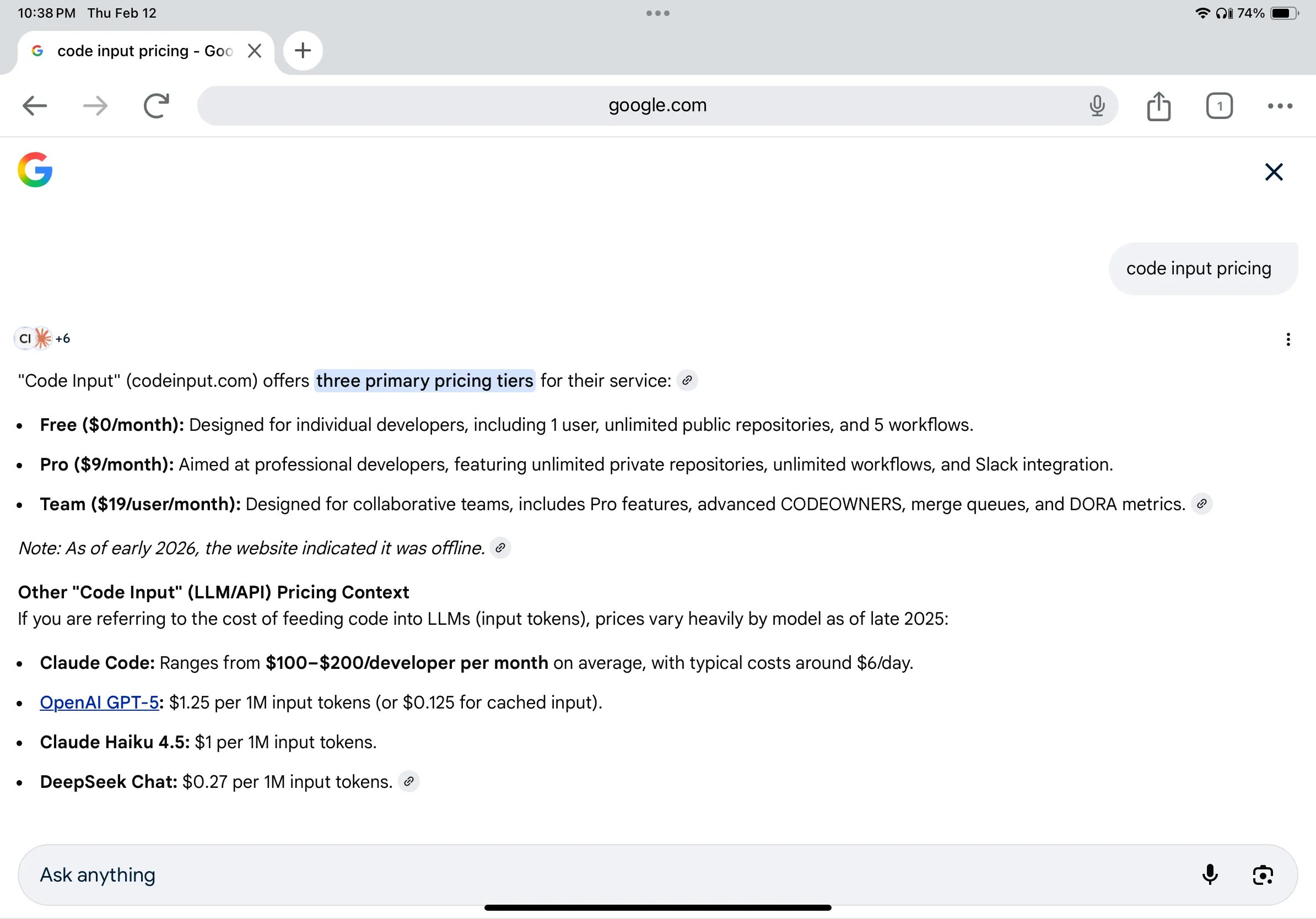
Initially, the results appeared promising. Google successfully read the pricing table, though it remained unclear whether this information came from HTML content, JSON-LD markup, or a combination of both sources. The accuracy of the extracted data suggested that structured data implementation was working as intended.
The Unexpected "Website Down" Error
However, a troubling discovery emerged. Google's AI search displayed a note stating: "As of early 2026, the website indicated it was offline." This claim raised immediate red flags for several reasons:
First, the website runs on Cloudflare Workers, a platform known for high availability and minimal downtime. Cloudflare's infrastructure is designed to handle massive traffic loads with exceptional uptime records, making an unexplained outage highly unlikely.
Second, Google lacks any special capability to detect whether websites are down, particularly for services behind login walls. The developer's internal service, if experiencing issues, would remain invisible to Google's crawlers.
Third, the phrasing "the website indicated" rather than "users indicated" suggests an automated detection rather than user reports. However, in the age of large language models and AI interpretation, this distinction may have lost its traditional meaning.
Fourth, the timeframe mentioned—"early 2026"—is particularly puzzling since the website didn't exist before mid-2025. This temporal inconsistency suggests Google's AI is working with relatively fresh information, but potentially misinterpreting it.
Understanding How Google's AI Interprets Content
The investigation revealed that Google still includes source links for its AI-generated answers, though this practice may not persist as AI search becomes more prevalent. The source link pointed to the developer's website, but the content Google's AI used to reach its "website down" conclusion came from an unexpected place.
Google's AI search pulled information from both the pricing page and the signup page, despite the search query specifically targeting pricing information. This cross-page content aggregation demonstrates how AI systems can combine information from multiple sources to generate responses, sometimes leading to inaccurate conclusions.
The root cause appeared to be a status popup component that displayed service availability information. This React component, either crawled as static HTML during server-side generation or failed to return proper responses during client-side rendering, contained information that Google's AI misinterpreted as indicating the entire website was down.
Implications for Website Owners
This incident highlights several critical concerns for website owners in the AI search era:
Content Misinterpretation Risk: Any element on your website, no matter how minor or contextual, could be misinterpreted by AI systems and presented as authoritative information. A status indicator meant for logged-in users might be read as a general website status.
Cross-Page Influence: AI search systems may combine content from multiple pages to answer a single query, even when those pages contain unrelated or contradictory information. Your pricing page answer might include details from your signup page, blog posts, or even user-generated content sections.
Outdated Information Persistence: Forgotten pages or outdated content can resurface through AI search, potentially presenting obsolete information as current. A pricing page from two years ago might be combined with current information, creating confusion.
User-Generated Content Vulnerabilities: Websites allowing user comments, forum posts, or other user-generated content face additional risks. Malicious users could post fake support contact information or misleading content that AI systems might surface to genuine customers.
Lack of Transparency: Unlike traditional search where you can see exactly which pages rank for which queries, AI search operates as a black box. You cannot easily determine how Google's AI assembled its answer or which specific content influenced its conclusions.
Mitigation Strategies
While the developer ultimately removed the status popup to eliminate the confusion, this represents a reactive rather than proactive solution. The fundamental challenge remains: we don't fully understand how AI systems assemble information from multiple sources to generate answers.
Website owners should consider:
- Auditing all website content for potential misinterpretation
- Implementing clear content hierarchies and relationships
- Monitoring AI search results for their brand and key pages
- Considering the implications of user-generated content in an AI search context
- Preparing for the possibility that traditional SEO practices may need evolution
The Broader Context of AI Search Evolution
This incident reflects a larger transition in how we access information online. As AI systems become primary interfaces for information discovery, the accuracy and interpretation of website content becomes increasingly critical. The stakes are higher when AI systems present information as definitive answers rather than suggesting multiple sources for users to evaluate.
The "website down" error demonstrates that even sophisticated AI systems can make fundamental misinterpretations based on incomplete context or incorrect data aggregation. As these systems become more prevalent, website owners must adapt their content strategies to account for AI interpretation patterns, even as those patterns remain somewhat opaque.
For now, the developer's experience serves as a warning: in the age of AI search, your website's reputation may depend not just on what you say, but on how AI systems understand and combine what you've said across your entire digital presence.
The incident also raises questions about accountability and recourse. When AI systems provide incorrect information about businesses, who bears responsibility? How can website owners correct AI misinterpretations when the underlying algorithms remain proprietary black boxes?
As we move further into the AI search era, these questions will become increasingly important for businesses, developers, and users alike. The "website down" error may be just the beginning of challenges we'll face as AI systems mediate more of our information interactions.
Comments
Please log in or register to join the discussion