A former Uber software engineer reveals how following HR's own guidance led to his termination, exposing the gap between employee expectations and corporate self-protection.
When HR Protection Becomes HR Punishment: An Uber Engineer's Story

A former Uber software engineer has shared a troubling account of workplace dynamics that raises serious questions about how tech companies handle internal conflicts and employee protection. The anonymous former employee's story, published recently on Medium, details a Kafkaesque sequence of events that began with a coworker conflict and ended with termination for the crime of "annoying a coworker."
The situation started innocuously enough. The engineer, who worked at Uber as a software developer, found himself dealing with a colleague who consistently made disrespectful comments in front of other teammates. These remarks implied the engineer wasn't well-read and created an uncomfortable work environment. Following standard protocol, the engineer reported these issues to both his manager and HR department.
What happened next reveals a disturbing pattern in corporate conflict resolution. After an investigation, HR concluded that the engineer had violated Uber's No Sexual Harassment Policy. The basis? Messages the engineer had sent to the coworker about feeling uncomfortable with her behavior. The engineer maintains these messages were matter-of-fact and contained no sexual undertones whatsoever.
When pressed for specifics about which messages violated policy, HR refused to elaborate. The engineer was placed on a final warning and instructed to limit communication with the coworker to work topics only.
Here's where the situation takes a particularly ironic turn. A few weeks later, the same coworker approached the engineer about non-work topics. Given the final warning hanging over his head, the engineer returned to HR for guidance on how to handle the situation. HR verbally advised him that he could let the coworker know he wasn't comfortable discussing non-work topics for the time being.
The very next day, the coworker approached again in a non-work context. Following HR's explicit verbal instructions, the engineer communicated via Slack that he'd prefer to keep communication to work topics for now.
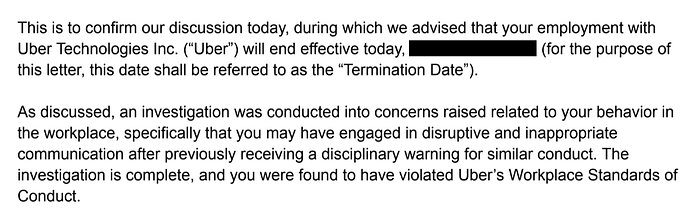
This seemingly reasonable action triggered a reopening of the investigation. Days later, the engineer was fired via Zoom call and immediately locked out of his work laptop. The termination certificate, notably, made no mention of sexual harassment. Instead, it cited "disruptive and inappropriate communication" and a violation of Uber's Workplace Standards of Conduct.
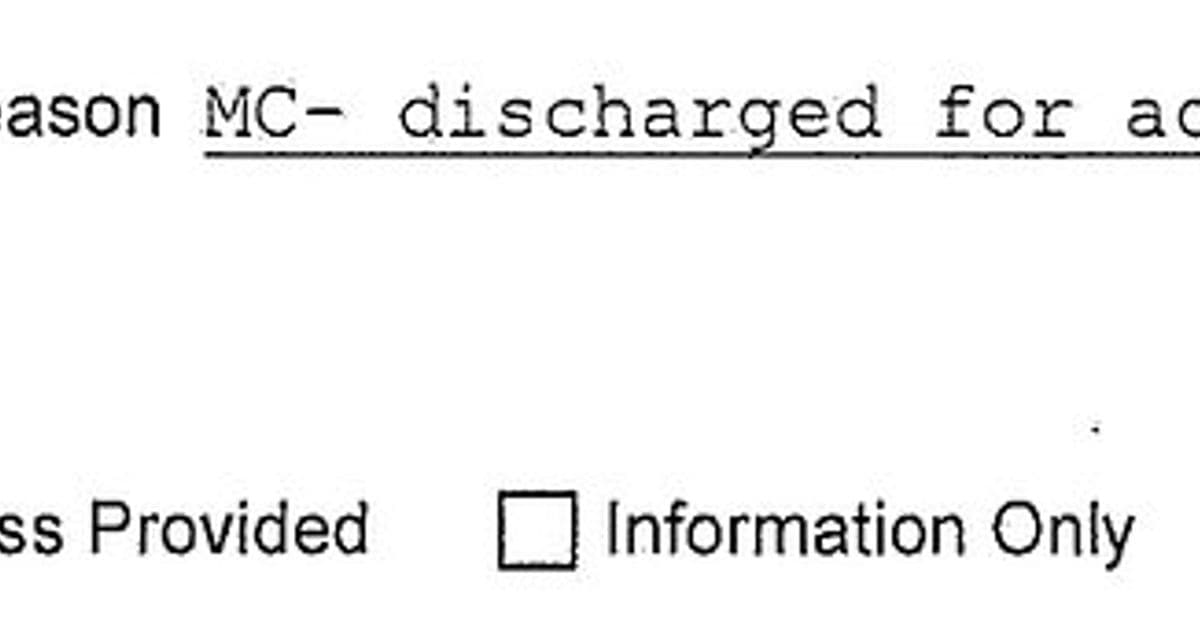
The aftermath proved equally frustrating. Without severance on the table, the engineer applied for unemployment benefits. Uber reported to the state that he was discharged for actions which "annoyed a coworker." This characterization initially resulted in the denial of unemployment benefits.

The engineer appealed the decision, provided testimony to a judge, and ultimately had the denial overturned. The judge recognized what should have been obvious from the start: "annoying a coworker" does not constitute willful misconduct justifying denial of unemployment benefits.
Attempts to pursue further legal action hit a wall. Uber Legal made it clear there was no path forward, and the engineer struggled to secure legal counsel willing to take the case.

After months of deliberation, the engineer decided to share this experience publicly. The motivation wasn't revenge or publicity, but rather to illustrate a crucial lesson that many employees don't consider until it's too late: HR departments exist primarily to protect the company, not individual employees.
The engineer's story highlights several systemic issues in corporate America. First, the disconnect between written policies and their application in practice. Second, the danger of verbal instructions that can't be documented or verified. Third, the power imbalance that leaves employees vulnerable when HR investigations go against them.
This case also raises questions about Uber's workplace culture, particularly in light of CEO Dara Khosrowshahi's recent announcement that he expects employees to work on weekends. The engineer's experience suggests a company culture where employee concerns may be dismissed or weaponized against them, rather than addressed constructively.
The broader implications extend beyond Uber. This story serves as a cautionary tale for employees at all companies about the limitations of HR protection and the importance of documenting workplace interactions. It also challenges companies to examine whether their conflict resolution processes truly serve justice or merely protect corporate interests.
For the tech industry specifically, this account adds to ongoing discussions about workplace culture, employee rights, and the responsibilities of large corporations to their workforce. As companies continue to demand more from their employees, stories like this remind us that the relationship between employer and employee remains fundamentally imbalanced, with HR often serving as the company's first line of defense rather than the employee's advocate.
The engineer's decision to share this story, despite months of hesitation, represents a brave act of whistleblowing that may help other employees recognize the limitations of internal complaint processes and the importance of understanding their rights and protections under the law.
Comments
Please log in or register to join the discussion