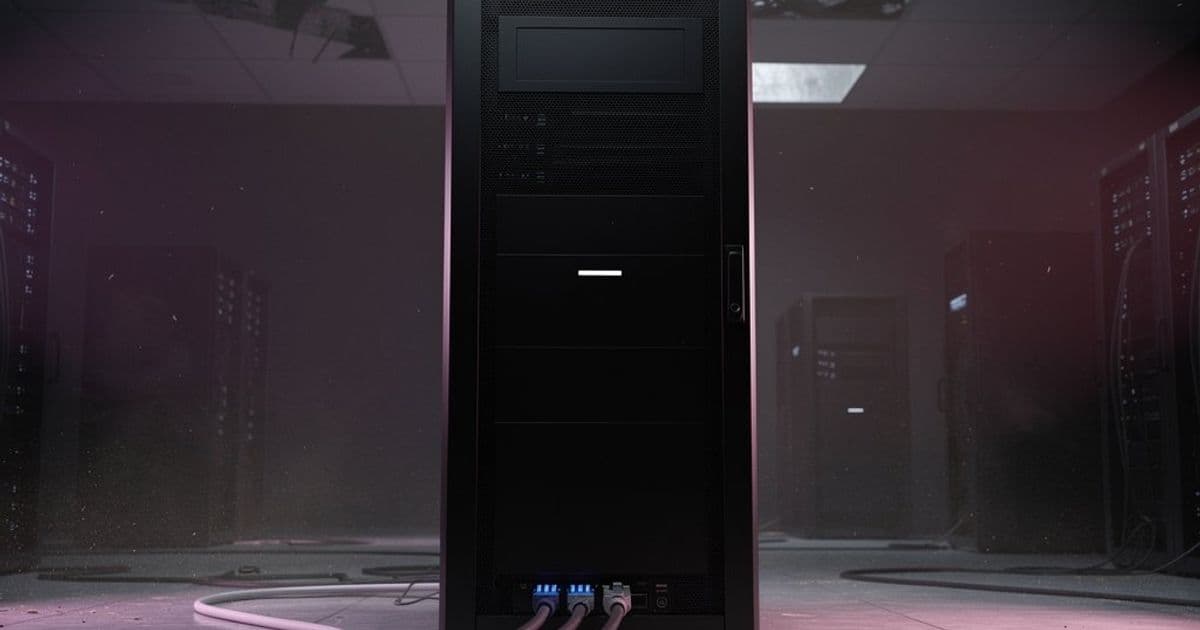
Cory Doctorow's short story explores a world where coordinated global attacks cripple civilization, leaving a small group of systems administrators trapped in a data center as they grapple with the collapse of society and the role of the internet in both destruction and potential rebuilding.
Cory Doctorow's 2006 short story "When Sysadmins Ruled the Earth" presents a chillingly plausible scenario where the internet becomes both the weapon and the last bastion of organized society. The story follows Felix Tremont, a systems administrator who finds himself trapped in a Toronto data center during a coordinated global catastrophe that includes biological weapons, cyberattacks, and conventional destruction.
The Collapse Begins
The narrative opens with Felix responding to a routine network outage at 2 AM, a scenario familiar to any IT professional. The initial problem appears to be a massive flashworm attack exploiting Windows vulnerabilities, causing routers to fail under the load of Monte Carlo probes. This technical crisis quickly escalates when Felix receives a final, garbled phone call from his wife Kelly, who mentions their infant son "2.0" is sick before the line goes dead.
What makes Doctorow's apocalypse compelling is its technical specificity. The attacks aren't vague "cyberwar" scenarios but detailed, plausible exploits:
- IPv6 router vulnerabilities: The worm targets Cisco routers' administrative interfaces over IPv6, which collapse under simultaneous probes
- DNS poisoning: Zone transfers are corrupted, breaking domain name resolution
- Social engineering trojans: Email malware sends personalized messages using harvested data to trick recipients
- Coordinated timing: Attacks hit infrastructure globally, suggesting opportunistic exploitation of chaos
The Data Center as Fortress
The story's central setting—a Tier 4 data center with independent power, air filtration, and security—becomes both sanctuary and prison. Doctorow, who worked as a freelance sysadmin, brings authentic detail to the environment:
- Physical security: "Like guards in a Minuteman silo" with dual-key access
- Environmental controls: Microparticulate air filters that might protect against bioagents
- Power redundancy: Generators with limited fuel, creating a ticking clock
- Network architecture: Multiple netblocks, independent routers, and layered infrastructure
The sysadmins themselves are portrayed with nuance. They're not heroic action figures but flawed, exhausted professionals:
- Felix: Type-one admin (overweight, methodical, "Hello Cthulhu" t-shirt)
- Van: Type-two admin (tall, ponytail, "CHOOSE YOUR WEAPON" t-shirt, Asperger's)
- Will Sario: The antagonist who wants to shut down the internet entirely
- Queen Kong: A rare female admin running Google's data center
The Distributed Republic of Cyberspace
As society collapses outside, the sysadmins attempt to build a new government online. Doctorow explores fascinating questions about digital sovereignty:
Governance Mechanics
- Usenet newsgroups: Using existing, decentralized infrastructure (alt.november5-disaster.recovery)
- Voting systems: Leveraging 20-year-old Usenet voting mechanisms for elections
- Regional representation: Attempting to create a global government from data centers
- Resource management: Coordinating food, fuel, and supplies across disconnected facilities
The Internet's Dual Nature
The story presents the internet as both weapon and salvation:
As a weapon: Coordinated attacks show how interconnected systems can be turned against civilization. The "flashworm" demonstrates how a single vulnerability can cascade globally.
As salvation: The network becomes the only remaining communication infrastructure. Survivors coordinate, share information, and maintain some semblance of global connection.
Technical Realism and Limitations
Doctorow's background shows in the technical details that ground the story:
Network Infrastructure
- BGP (Border Gateway Protocol): The routing protocol that holds the internet together
- IPv6 vulnerabilities: Specific, plausible technical weaknesses
- DNS poisoning: How corrupting zone transfers can break name resolution
- Load balancing: The challenge of keeping services online under extreme conditions
Resource Constraints
- Generator fuel: Limited power creates a hard deadline
- Food and water: Physical needs that digital governance can't address
- Human factors: Stress-induced eczema, caffeine withdrawal, sleep deprivation
- Communication breakdown: Phones fail, IRC becomes the primary coordination tool
The "Fuckrag" Debate
The story's central conflict revolves around two philosophies:
- Sario's position: Shut down the internet to deny terrorists a tool, accepting that the network will die slowly anyway
- Felix's position: Keep the network alive as a lifeline, even if it's just "one packet being routed"
This debate mirrors real-world discussions about internet governance, security vs. openness, and the role of infrastructure in crisis.
The Human Element
What elevates the story beyond technical speculation is its emotional core. Felix's personal loss—his wife and infant son—drives his need to build something new. The story explores:
- Grief in isolation: Felix's delayed reaction to his family's death
- Found family: The bonds between sysadmins in crisis
- Purpose through maintenance: The therapeutic value of keeping systems running
- The weight of responsibility: "Five nines of uptime" becomes a moral imperative
Real-World Parallels
Doctorow's story predates many real-world events that make it increasingly relevant:
Post-2006 Developments
- Stuxnet (2010): Demonstrated industrial control system vulnerabilities
- WannaCry (2017): Global ransomware attack using NSA exploits
- SolarWinds (2020): Supply chain attack compromising government networks
- COVID-19 pandemic: Global disruption requiring digital coordination
Current Threats
- AI-powered malware: Adaptive attacks that evolve
- Critical infrastructure targeting: Power grids, water systems, hospitals
- Information warfare: Coordinated disinformation campaigns
- Supply chain attacks: Compromising software dependencies
The Story's Legacy
"When Sysadmins Ruled the Earth" appears in Doctorow's collection Overclocked: Stories of the Future Present (2007), licensed under Creative Commons Attribution-NonCommercial-ShareAlike 2.5. The story is available at craphound.com/overclocked and can be purchased through traditional retailers like Amazon.
Doctorow's introduction reveals his personal connection to sysadmin work, describing it as "one of the best gigs" he ever had, working "in the steam tunnels of the information age." This authenticity permeates the story, making the technical details feel lived-in rather than researched.
Technical Takeaways
For modern IT professionals, the story offers several sobering lessons:
- Infrastructure fragility: The internet's resilience is often overstated
- Single points of failure: Even distributed systems have critical chokepoints
- Human factors: Technical solutions fail without addressing psychological needs
- Ethical responsibilities: The moral weight of maintaining critical infrastructure
- Decentralization benefits: Usenet's survival highlights the value of distributed systems
Conclusion
Doctorow's story succeeds because it treats systems administration not as a technical footnote but as a profound human activity. The sysadmins aren't heroes because they're technical experts, but because they're willing to maintain order in the face of chaos. Their tools—command lines, routers, protocols—become instruments of civilization itself.
The story's final image is telling: Felix, years later, still maintaining systems, still fighting entropy. The apocalypse didn't end the world; it just changed the context of the work. The sysadmin's job—keeping the digital world running—remains eternal, whether in a corporate data center or a post-apocalyptic government facility.
In an age of increasing cyber threats, "When Sysadmins Ruled the Earth" serves as both warning and testament: the people who maintain our digital infrastructure may be our last line of defense when civilization's foundations begin to crack.
Related Resources:
- Cory Doctorow's official website
- Creative Commons license deed
- Baen's Universe Magazine archive (original publication)
- EFF's work on digital rights (Doctorow is a former EFF fellow)
Comments
Please log in or register to join the discussion