Longtime Xfce users highlight the desktop environment's consistent focus on usability and performance as a counterpoint to feature-bloated alternatives.
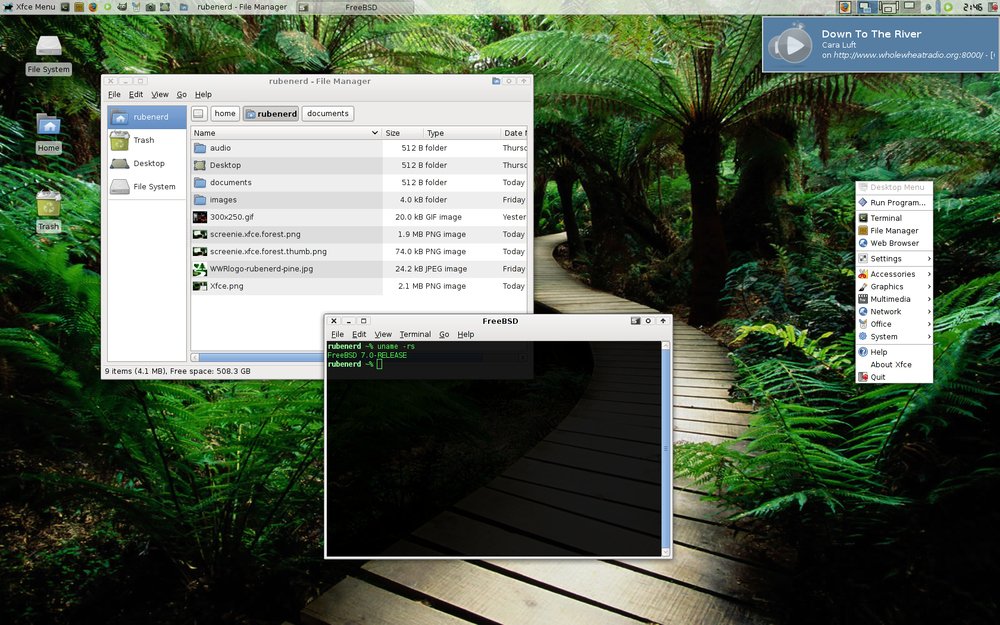
For nearly two decades, the Xfce desktop environment has maintained a remarkably consistent design philosophy that continues to resonate with users prioritizing functionality over flashy innovations. Unlike desktop environments that undergo radical interface changes with major version updates, Xfce's incremental approach has preserved its core identity since its emergence in the mid-2000s.
David Gerard's 2012 analysis of Xfce's design balance remains relevant today. He observed that minimal desktop environments must navigate a narrow path between simplicity and practicality - removing too much creates usability gaps, while adding too much defeats the purpose. Xfce's current 4.16 release continues demonstrating this balance, providing essential functionality like panel applets, window management controls, and system configuration tools without accumulating the feature creep plaguing other environments.
Technical users particularly value Xfce's resource efficiency. With memory footprints typically under 500MB on modern systems, it remains viable for older hardware and resource-constrained devices where heavier environments like GNOME or KDE Plasma struggle. The transition to Thunar as the default file manager in 2006 exemplifies Xfce's thoughtful evolution - replacing the aging Xffm without disrupting user workflows or adding unnecessary complexity.
Above: An Xfce desktop from 2008 showing consistent design principles still present in current versions
What sets Xfce apart isn't technological innovation but design restraint. While competitors frequently overhaul interfaces to chase trends, Xfce's configuration dialogs, menu structures, and panel systems retain logical consistency across versions. This allows knowledge transfer between installations years apart - a user's familiarity with Xfce 4.12 remains largely applicable to 4.16. The project's resistance to disruptive changes stands in stark contrast to GNOME's transition from GNOME 2 to GNOME 3 or KDE's shift from version 4 to 5, both of which fractured user communities.
Critics argue this conservatism risks stagnation, noting Xfce lacks Wayland support and modern features like gesture controls. However, the project's roadmap prioritizes stability and gradual improvement over reinvention. Core components like the Xfwm window manager receive performance optimizations rather than visual overhauls, and theming APIs maintain backward compatibility with decades-old icon sets.
For users weary of desktop environments that treat their workspace as a perpetual beta test, Xfce offers a sanctuary of predictability. Its value proposition remains unchanged since its early days: a complete graphical environment that stays out of the user's way. As development continues at its deliberate pace, Xfce demonstrates that in desktop environments, sometimes the most radical choice is refusing to change for change's sake.
Comments
Please log in or register to join the discussion