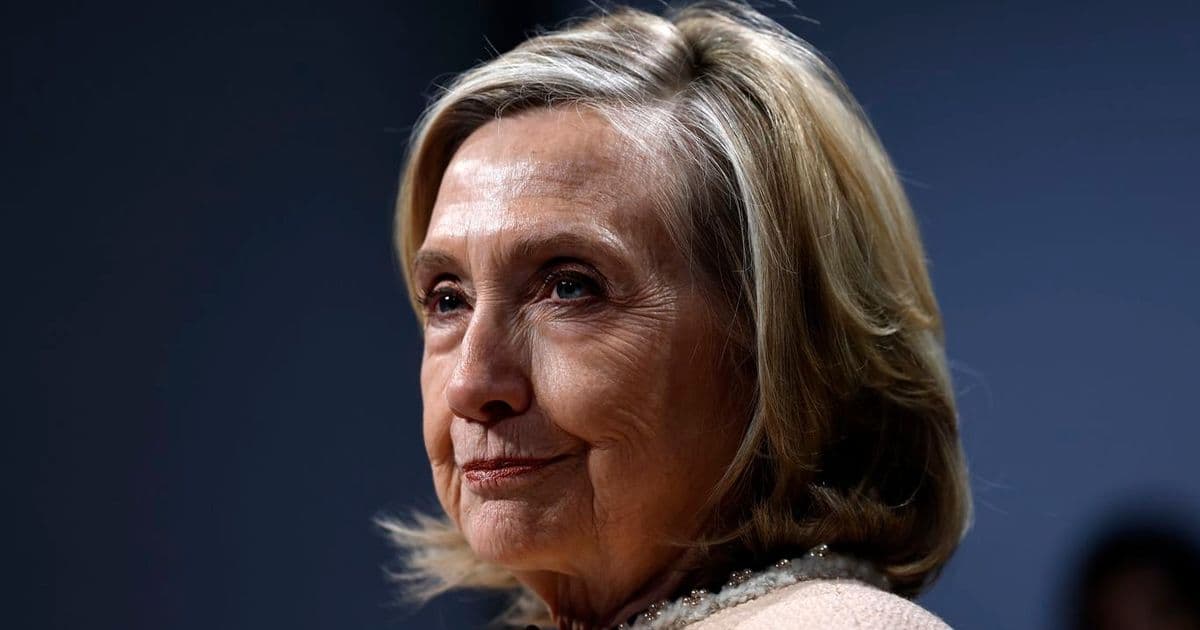
Former Secretary of State Hillary Clinton testified under oath that she has never met Jeffrey Epstein and accused Republicans of orchestrating a political 'cover-up' regarding unsubstantiated allegations linking her to the convicted sex offender.
Former Secretary of State Hillary Clinton testified under oath that she has never met Jeffrey Epstein and accused Republicans of orchestrating a political 'cover-up' regarding unsubstantiated allegations linking her to the convicted sex offender.
Clinton's testimony came as part of a broader legal proceeding where she was questioned about various conspiracy theories that have circulated online since Epstein's arrest and subsequent death in 2019. The former presidential candidate emphatically denied any connection to Epstein, stating she had no personal or professional relationship with the financier.
The accusation of a GOP-led 'cover-up' appears to reference ongoing Republican efforts to investigate various Clinton-related matters, including the handling of classified emails during her tenure as Secretary of State and the 2012 Benghazi attacks. Clinton characterized these investigations as politically motivated attempts to damage her reputation and credibility.
This testimony represents one of the most direct public statements Clinton has made regarding the Epstein allegations, which have been repeatedly debunked by fact-checkers but continue to circulate in certain online communities. The claims typically involve fabricated documents and manipulated images attempting to place Clinton at events or locations associated with Epstein.
Clinton's legal team has consistently maintained that these allegations are part of a broader disinformation campaign aimed at undermining her political influence and distracting from substantive policy discussions. The former Secretary of State has faced numerous unsubstantiated conspiracy theories throughout her public career, dating back to her time as First Lady in the 1990s.
The testimony comes amid heightened political tensions in Washington, with Republicans controlling the House of Representatives and pursuing various investigations into Democratic officials. Clinton's appearance under oath marks a significant development in the ongoing battle over political narratives and the weaponization of conspiracy theories in American politics.
Legal experts note that Clinton's sworn testimony could have implications for future defamation cases against those who continue to spread the false Epstein allegations. By testifying under oath, Clinton has created a legal record that could be used to pursue action against individuals or organizations that persist in promoting the debunked conspiracy theories.
The Epstein case itself remains a subject of intense public interest and ongoing legal proceedings, with multiple civil lawsuits and criminal investigations continuing years after his death. However, investigations by multiple law enforcement agencies and independent journalists have found no credible evidence linking Clinton to Epstein's criminal activities.
Political analysts suggest that Clinton's decision to testify publicly and directly address these allegations represents a strategic shift in how prominent Democrats are responding to conspiracy theories. Rather than ignoring or dismissing such claims, there appears to be a growing willingness to confront them directly through legal and public channels.
The testimony also highlights the broader challenge facing American political discourse, where unsubstantiated allegations can gain significant traction through social media and partisan news outlets, regardless of their factual basis. Clinton's case exemplifies how conspiracy theories can persist and evolve even in the face of overwhelming evidence to the contrary.
As the 2024 election cycle approaches, the persistence of these debunked allegations underscores the continuing challenge of maintaining factual integrity in political discourse. Clinton's sworn testimony may represent an attempt to establish an official record that could help counter future attempts to revive these conspiracy theories during campaign seasons.
The legal proceedings surrounding Clinton's testimony remain sealed, with details emerging only through official statements from her representatives. This limited disclosure strategy appears designed to balance the need to address false allegations while avoiding providing additional oxygen to conspiracy theories that thrive on controversy and attention.
Moving forward, Clinton's testimony could set a precedent for how other public figures respond to similar unsubstantiated allegations, potentially establishing a framework for addressing conspiracy theories through formal legal channels rather than purely through public relations efforts.
Comments
Please log in or register to join the discussion