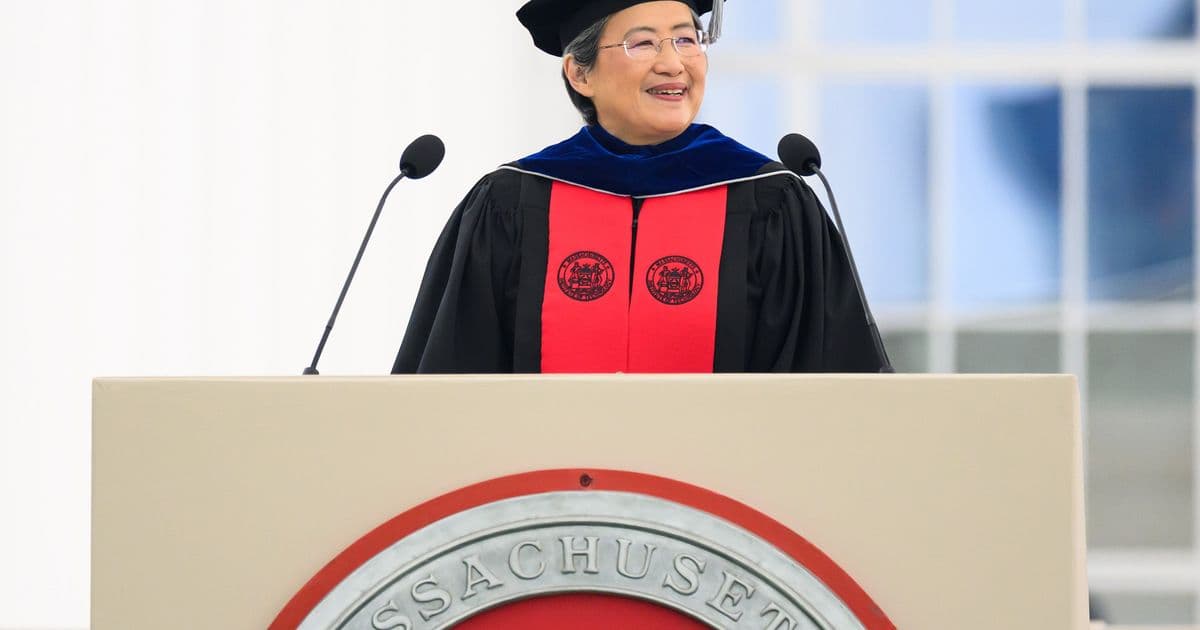
In her OneMIT commencement address, AMD CEO and MIT alumna Lisa Su reflected on her own journey from the labs of Building 39 to the boardroom, highlighted the transformative potential of AI in medicine and climate, and challenged graduates to pair technical skill with purpose‑driven judgment.
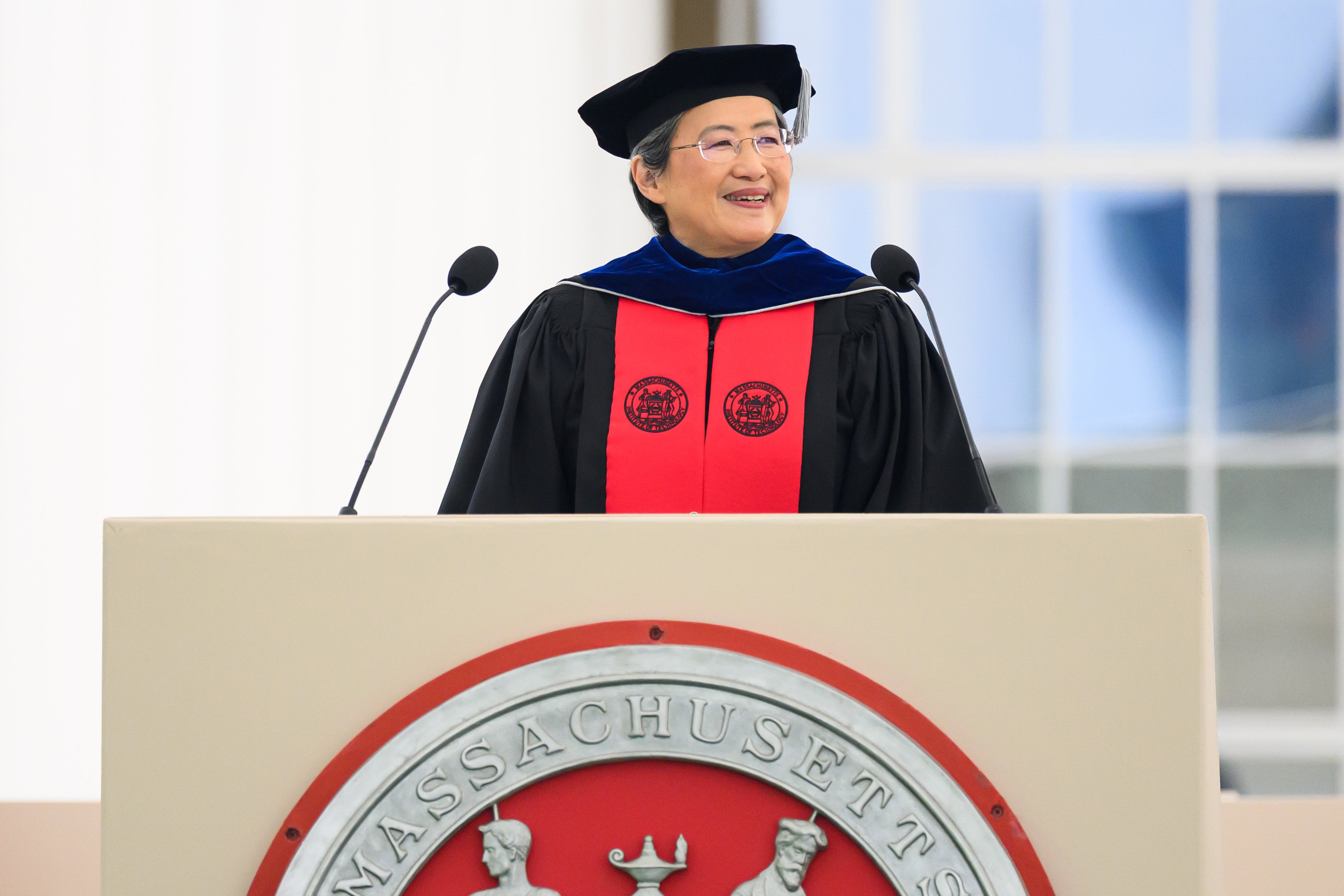
MIT’s 2026 graduates received a stirring call to action from one of their own – AMD chair and CEO Lisa Su, ’90, SM ’91, PhD ’94. In a speech that blended personal anecdotes with a forward‑looking view of technology, Su reminded the audience that technology alone does not decide the future; people do.
From the clean room to the C‑suite
Su’s story begins in the fall of 1986, when a 17‑year‑old freshman stepped off the campus shuttle at Next House and walked into the legendary 6.001 and 6.002 courses. She recalls the shock of seeing peers who could solve problems that felt “super hard” and the exhilaration of pulling all‑nighters with classmates. Those early experiences cemented a habit that would define her career: treat every failure as a data point and keep iterating.
The first turning point was a UROP in Professor Hank Smith’s lab, where she donned a bunny suit and fabricated X‑ray lithography mask blanks on 2‑inch wafers. The work was messy – wafers broke, experiments flopped – but each setback forced her to ask why and redesign the process. This hands‑on mindset, she says, is the essence of MIT’s motto mens et manus – mind and hand.
A later PhD project with Professor Dimitri Antoniadis deepened that lesson. Weeks in the clean room produced devices that behaved nothing like theory predicted. The resolution came not from a single insight but from a disciplined loop of hypothesis, test, and refinement. “That was where I grew the most,” Su notes, “because I learned to trust that I could figure it out even when I didn’t yet have the answer.”
Engineering instinct at scale
After graduation Su joined IBM, where she discovered that engineers are judged on the performance of ideas, not on seniority. A mentor’s advice – run toward the hardest problems – became a personal mantra. When the opportunity to lead AMD arrived, she applied the same instinct: break a daunting challenge into smaller, tractable steps and empower a team to own each piece.
Under her leadership AMD placed a long‑term bet on high‑performance computing, delivering chips that power today’s supercomputers and AI accelerators. The company’s success, she explains, hinges on two technical pillars:
- Heterogeneous architecture – integrating CPU, GPU, and specialized AI cores on a single die to maximize data locality and energy efficiency.
- Advanced process technology – leveraging sub‑5 nm nodes to pack more transistors while managing leakage and variability through innovative lithography and packaging.
These advances illustrate the “engineer’s instinct”: identify an unsolvable‑seeming problem, decompose it, and iterate relentlessly.
AI as an accelerator, not a replacement
Su frames the current AI wave as distinct from previous revolutions (Internet, mobile, cloud). Rather than being a productivity tool, AI can compress the scientific discovery cycle:
- In medicine, generative models can propose novel drug candidates, while multimodal AI assists clinicians by aggregating patient history, imaging, and genomics into actionable insights.
- In climate science, AI‑driven surrogate models accelerate simulations of atmospheric dynamics, enabling faster evaluation of mitigation strategies.
- In energy, reinforcement‑learning controllers optimize grid operations in real time, reducing waste and integrating renewable sources.
She stresses that AI does not make value judgments. Humans must decide which problems merit the massive compute budgets AI demands and must retain responsibility for outcomes.
What the class should take away
- Purpose‑driven skill – technical expertise must be coupled with a clear sense of why a problem matters.
- Collaborative instinct – the most complex challenges are solved by teams that share the engineer’s mindset.
- Luck is engineered – Su argues that luck is the product of repeatedly choosing hard problems, surrounding oneself with better people, and persisting through failure.
“Run toward the hardest problems. Trust your engineer’s instinct. That is how you make your luck.”
Looking ahead
The next decade could see AI‑augmented research outpace the cumulative output of the previous three decades. For the MIT class of 2026, the invitation is clear: use the tools built in labs like Building 39, apply the disciplined iteration learned in clean rooms, and direct that power toward societal challenges that matter.
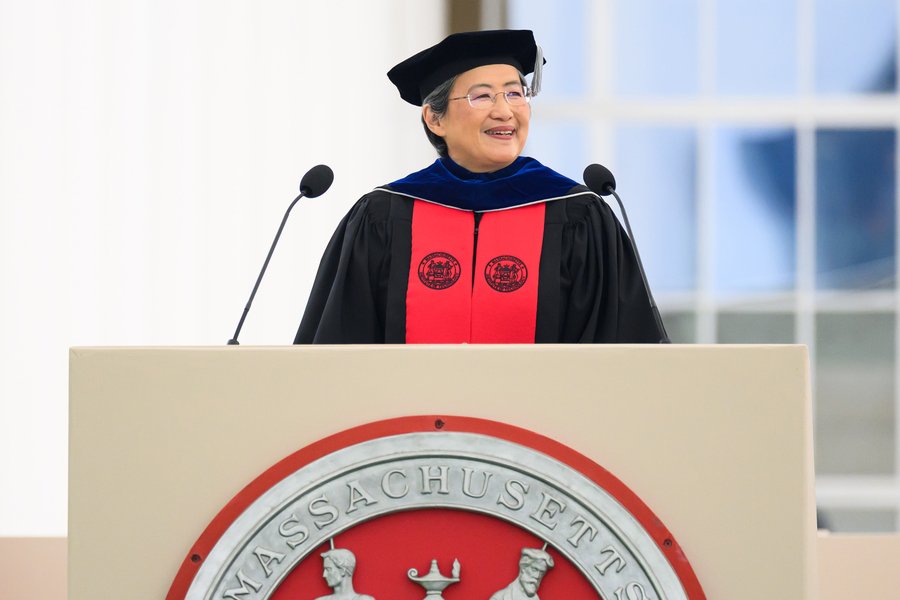
Lisa Su’s address reminds us that the most valuable output of an MIT education is not a résumé of patents, but a mindset that can turn uncertainty into opportunity.
Comments
Please log in or register to join the discussion